

Variations
-
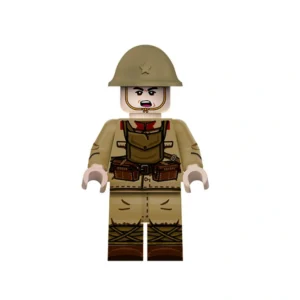
Minifigure – Imperial Japanese Army War Correspondent / Combat Specialist IJA Soldier WWII
$9.99 -
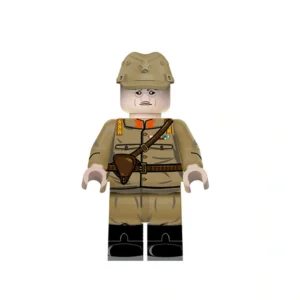
Minifigure – Imperial Japanese Army General / High-Ranking Officer (Hideki Tojo likeness) WWII
$9.99 -
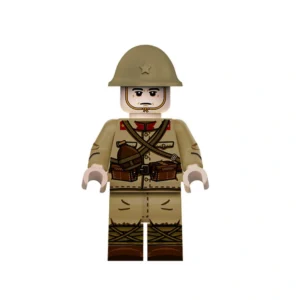
Minifigure – Imperial Japanese Army (IJA) Infantry Soldier WWII
$9.99 -
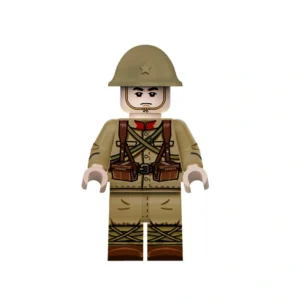
Minifigure – Imperial Japanese Army (IJA) Infantry Rifleman (Y-Strap Webbing Variant) WWII
$9.99 -
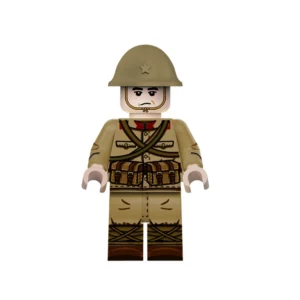
Minifigure – Imperial Japanese Army (IJA) Infantry Rifleman (Heavy Ammo Loadout) WWII
$9.99
Introduction
Group Identification: WWII Imperial Japanese Army (IJA) Collection
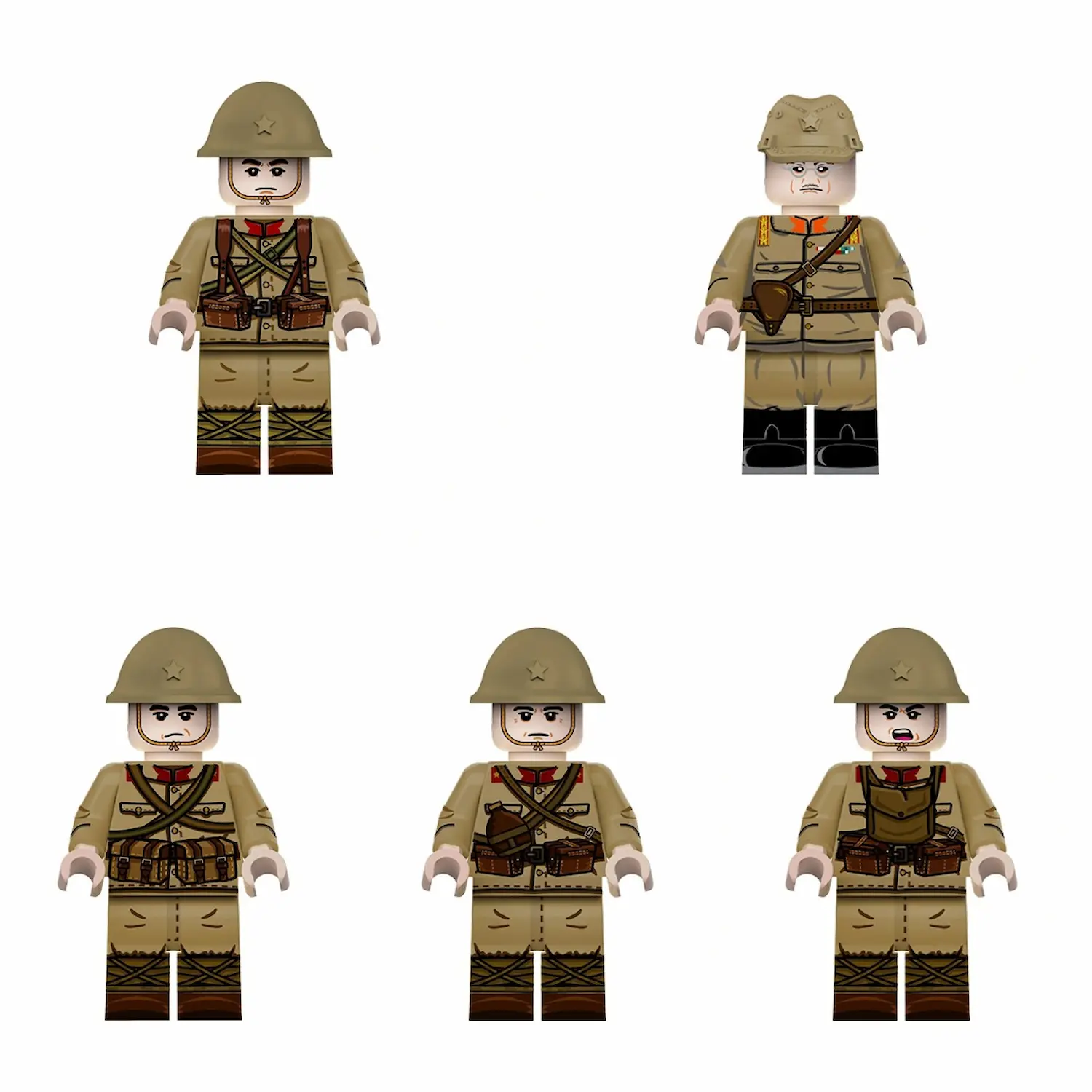
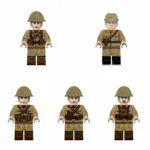
This image displays a collection of five distinct custom-printed building block minifigures representing various ranks and loadouts of the Imperial Japanese Army (IJA) during World War II. They are outfitted primarily for the harsh combat environments of the Pacific Theater and the Asian mainland.
Here is a detailed, one-by-one breakdown of each figure (reading top row, then bottom row):
1. Top Left: The Load-Bearing Infantryman
-
Specific Name: WWII Imperial Japanese Army Infantryman (Y-Strap Webbing Variant)
-
Visual Details: This figure wears the standard Type 90 Steel Helmet with the IJA star. He is dressed in the khaki Type 98 uniform with red infantry collar tabs. His defining feature is the brown leather Y-strap suspenders running vertically over his shoulders, attaching to a combat belt with two front-mounted ammunition pouches. His lower legs feature printed Kyahan (cloth leg wraps).
-
Historical Background: Because Japanese troops often fought far ahead of supply lines in dense jungles, carrying adequate ammunition was critical. The leather Y-strap harness was designed specifically to help distribute the heavy weight of lead cartridges held in the front pouches, preventing the soldier’s belt from dragging down during long jungle marches.
2. Top Right: The High-Ranking Commander
-
Specific Name: WWII Imperial Japanese Army General Officer (Hideki Tojo Likeness)
-
Visual Details: Standing out from the enlisted men, this officer wears a soft khaki Type 98 Field Cap (Sen-bou) instead of a helmet. His face features round spectacles and a mustache, strongly resembling Prime Minister/General Hideki Tojo. His uniform denotes high rank with gold braided shoulder boards (epaulettes) and medal ribbon bars. He wears a cross-body strap holding a leather pistol holster and tall black leather riding boots.
-
Historical Background: IJA Generals held immense political and military power in Imperial Japan. Instead of rifles, officers carried sidearms (like the Nambu pistol) and traditional Gunto swords. The tall riding boots were a universal symbol of the military elite’s equestrian traditions. Hideki Tojo, whom this figure resembles, was the primary architect of the Pacific War.
3. Bottom Left: The Heavily Armed Rifleman
-
Specific Name: WWII Imperial Japanese Army Rifleman (Heavy Ammo Loadout)
-
Visual Details: Wearing the standard Type 90 helmet and Type 98 uniform, this soldier’s distinct feature is his heavy combat webbing. He wears criss-crossing canvas suspenders supporting a belt crowded with three brown leather ammunition pouches spread across his front. He also wears the standard Kyahan leg wraps.
-
Historical Background: The standard Arisaka rifleman was the backbone of the IJA. While a standard loadout usually featured two pouches in the front and one in the back, models often cluster them on the front to visually represent a heavily armed frontline shock trooper carrying maximum stripper clips for an impending assault.
4. Bottom Middle: The Standard Infantryman
-
Specific Name: WWII Imperial Japanese Army Infantry Soldier (Canteen Loadout)
-
Visual Details: This is the most standard representation of a regular Japanese private. He wears the Type 90 helmet, the khaki Type 98 uniform with red collar tabs, and Kyahan leg wraps. His specific gear arrangement includes two standard front ammunition pouches and a brown military canteen slung diagonally across his chest.
-
Historical Background: In the sweltering, humid environments of Southeast Asia and the Pacific Islands (like Guadalcanal or the Philippines), access to drinking water was often the difference between life and death. A securely slung canteen was arguably as important as a soldier’s rifle in the jungle.
5. Bottom Right: The Combat Specialist
-
Specific Name: WWII Imperial Japanese Army Combat Specialist / War Correspondent
-
Visual Details: This figure features an aggressive, shouting facial expression, depicting a soldier in the heat of battle. While wearing the standard helmet and uniform, his defining piece of equipment is a large, chest-mounted canvas satchel or pouch.
-
Historical Background: This type of specialized chest rig was not standard issue for regular riflemen. It often represents a protective field case used by embedded war correspondents (Jūgun Kisha) to protect delicate camera equipment from jungle moisture, or it could represent a specialized pouch for an assault engineer carrying explosives, maps, or medical supplies.
Reviews
There are no reviews yet