

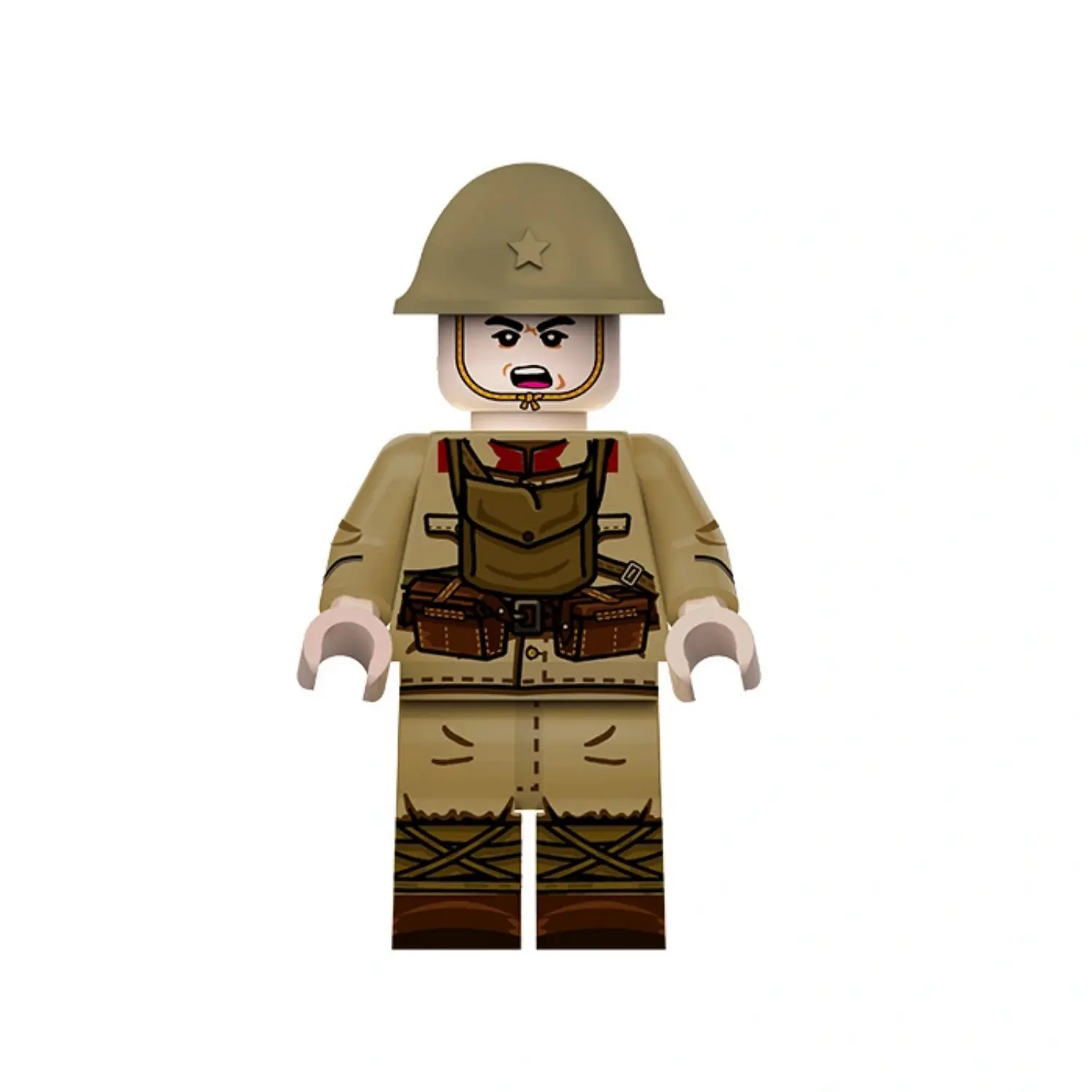
Character Identification: WWII Imperial Japanese Army War Correspondent / Specialist
This custom-printed building block minifigure represents a soldier or embedded specialist of the Imperial Japanese Army (IJA) during World War II. Because embedded journalists and photographers were required to wear standard military uniforms to blend in with combat troops, this figure possesses all the hallmarks of a Japanese infantryman, with the notable addition of a specialized chest pouch.
Specific Name and Visual Details
-
Specific Name: WWII Imperial Japanese Army War Correspondent / Combat Specialist
-
Headgear (The Type 90 Helmet): The figure wears the iconic Type 90 Steel Helmet (Tetsubou), painted in a matte olive-drab/khaki color. It features the prominent five-pointed star insignia of the Imperial Japanese Army on the front. The printed chin strap is secured tightly across the figure’s jaw.
-
Facial Features: Unlike a stoic standard soldier, this figure features an aggressive, shouting or commanding expression with an open mouth and furrowed eyebrows, capturing the intensity of a frontline combat zone.
-
The Uniform (Type 98): The figure is dressed in the standard-issue Type 98 (M98) uniform in a khaki/mustard-yellow color, widely used across the Pacific and Asian theaters.
-
Insignia: The collar features red collar tabs, which in the IJA ranking system denoted the Infantry branch.
-
Specialized Tactical Gear (Camera/Document Pouch): * The most distinct feature of this specific figure is the large, olive-drab canvas satchel or pouch mounted squarely on the chest, suspended by straps over the shoulders. In the context of a “War Correspondent,” this represents a protective field case for a camera, binoculars, or important mapping documents.
-
Below the chest satchel, he wears a standard brown leather belt equipped with two brown leather ammunition pouches for an Arisaka rifle, indicating that even correspondents were armed and expected to fight if necessary.
-
-
Lower Body and Footwear: The legs feature detailed printing of Kyahan (criss-crossed cloth puttees/leg wraps) worn over the trousers to protect against jungle brush and mud. The figure is finished with standard brown leather military boots.
Historical Background
During World War II, the Empire of Japan fought extensively across the vast distances of China, Southeast Asia, and the Pacific Islands. The Imperial Japanese Army relied heavily on propaganda to maintain morale at home and project power abroad.
-
War Correspondents (Jūgun Kisha): The Japanese military embedded thousands of journalists, photographers, and artists directly into frontline combat units. These correspondents were heavily censored and tightly controlled by the military command. Their job was to document the “glorious advance” of the empire.
-
Frontline Conditions: Because the Pacific Theater involved brutal jungle warfare, ambushes, and close-quarters combat, correspondents could not afford to stand out in civilian clothing. They were issued standard Type 98 uniforms and Type 90 helmets just like regular infantrymen.
-
The Gear: Protecting delicate photographic equipment in the humid, rain-soaked jungles of places like Burma or Guadalcanal was incredibly difficult. Heavy canvas and leather cases, like the one depicted on this figure’s chest, were essential for keeping cameras dry and functioning while navigating treacherous terrain alongside the infantry.
Reviews
There are no reviews yet