

Variations
Introduction
Group Identification: WWII Imperial Japanese Army (IJA) Military Set
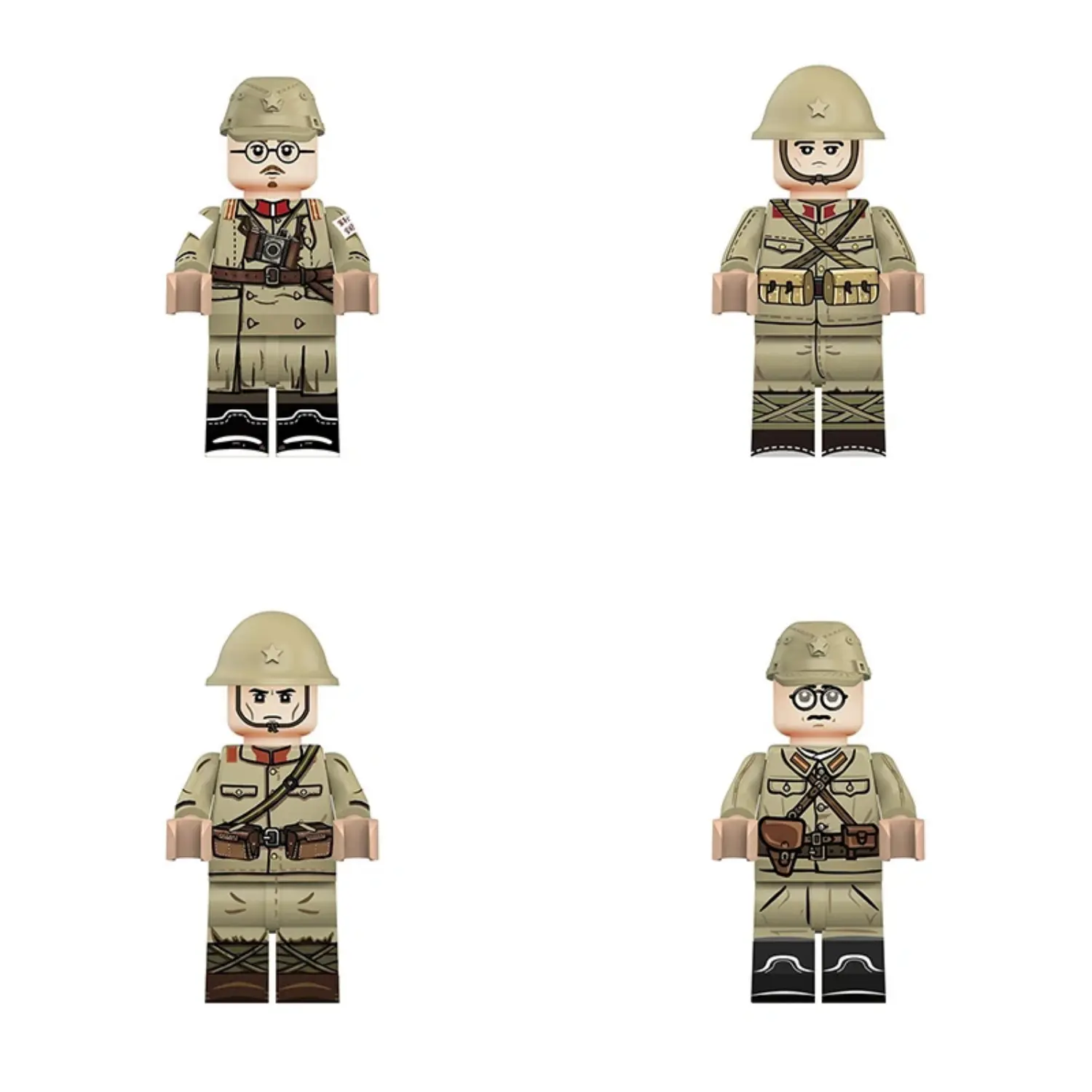
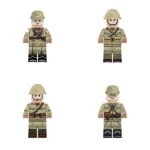
This image displays a set of four highly detailed, custom-printed building block minifigures representing different personnel within the Imperial Japanese Army (IJA) during World War II. The set highlights the distinct differences in uniforms and gear between specialized non-combatants, enlisted infantry, and commissioned officers.
Here is a detailed, one-by-one breakdown of the figures:
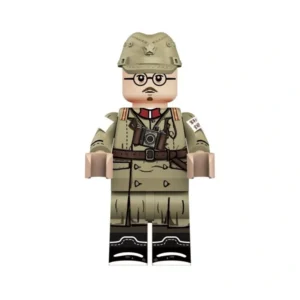
1. Top Left: The War Correspondent (Combat Photographer)
-
Specific Name: WWII Imperial Japanese Army War Correspondent (with Camera)
-
Visual Details: This figure represents a specialized military journalist. He wears a khaki Field Cap (Senbo) equipped with rear sun flaps (Havelock) to protect his neck from the harsh Pacific sun. He has round spectacles and a goatee. Printed on his chest is a highly detailed vintage field camera hanging from a neck strap. He wears a long khaki trench coat or overcoat, tall black boots, and prominently features a white armband on his left sleeve, which historically designated press or non-combatant status.
-
Historical Context: During WWII, the Japanese military heavily utilized embedded war correspondents (Jugun Kisha). These photographers and journalists marched alongside frontline troops to document victories, take photographs for state-sponsored propaganda magazines, and boost morale on the home front.
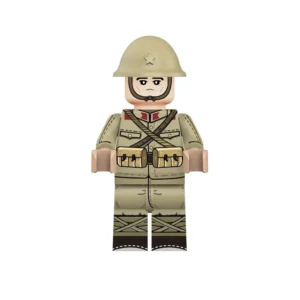
2. Top Right: The Standard Infantryman (Rifleman)
-
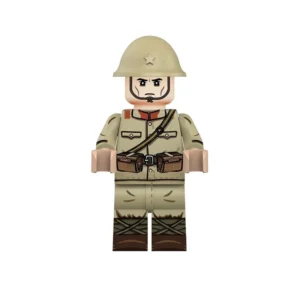
Specific Name: WWII Imperial Japanese Army Enlisted Infantryman
-
Visual Details: This figure represents the standard enlisted rifleman. He wears the classic Type 90 Steel Helmet (Tetsubou) bearing the five-pointed Army star. He is dressed in the standard Type 98 khaki summer tunic with red collar tabs, which specifically identified the Infantry branch. Across his chest are crossed leather suspenders, supporting two large ammunition pouches on his belt designed to hold stripper clips for his rifle. His lower legs feature cross-wrapped canvas puttees (leg wrappings) and dark combat boots.
-
Historical Context: The backbone of the IJA, the infantryman was equipped lightly for high mobility in dense jungles and rugged terrain. The canvas puttees were essential for preventing leeches and keeping debris out of their boots during long marches across mainland Asia and Pacific islands.
3. Bottom Left: The Battle-Worn Veteran
-
Specific Name: WWII Imperial Japanese Army Battle-Worn Soldier
-
Visual Details: This figure depicts a soldier who has been in combat for an extended period. He wears the Type 90 Steel Helmet and has a stern, exhausted facial expression with deep cheek lines. Like the standard infantryman, he wears the Type 98 uniform with red collar tabs, but his gear consists of a single diagonal chest strap and small utility pouches. The most defining feature is his ragged, torn trousers right above the knees, showing heavy battlefield wear.
-
Historical Context: As the Pacific War progressed, Allied naval blockades severed Japanese supply lines. Many island garrisons and jungle units were completely cut off from resupply. Soldiers had to fight and survive in the same uniforms for months or years, leading to the highly degraded and torn clothing accurately depicted on this figure.
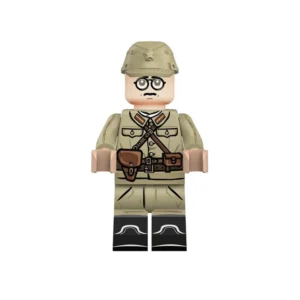
4. Bottom Right: The Commissioned Officer
-
Specific Name: WWII Imperial Japanese Army Officer
-
Visual Details: This figure represents a high-ranking commander. He wears the Field Cap with sun flaps and sports round spectacles with a small, sharp mustache (a look heavily associated with Japanese leadership of the era, such as General Hideki Tojo). He wears a tailored officer’s tunic with a diagonal “Sam Browne” style leather support strap. Crucially, he has a printed leather pistol holster on his right hip (likely for a Nambu pistol) and wears tall black leather officer’s jackboots instead of canvas leg wrappings.
-
Historical Context: There was a stark divide between enlisted men and officers in the IJA. Officers generally purchased their own tailored uniforms and high-quality leather boots. While infantry carried rifles, officers were armed with pistols and the traditional Shin Gunto sword, leading troops from the front in strict adherence to military tradition.
Reviews
There are no reviews yet