

Variations
-
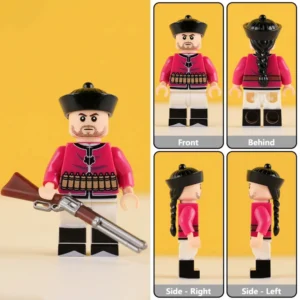
Minifigure – Qing Dynasty Old-Firearms Rifleman (LEGO Compatible)
$9.99 -
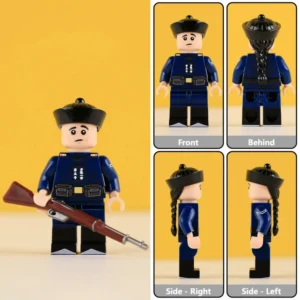
Minifigure – Qing Dynasty New Army Soldier (LEGO Compatible)
$9.99 -
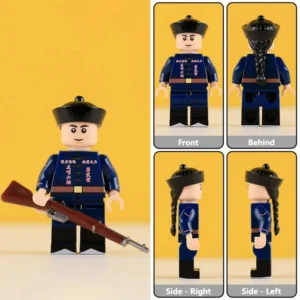
Minifigure – Qing Dynasty Infantry soldier (LEGO Compatible)
$9.99 -
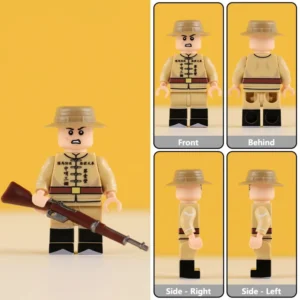
Minifigure – Qing Dynasty Cavalry Battalion NCO (Non-Commissioned Officer) (LEGO Compatible)
$9.99
Introduction
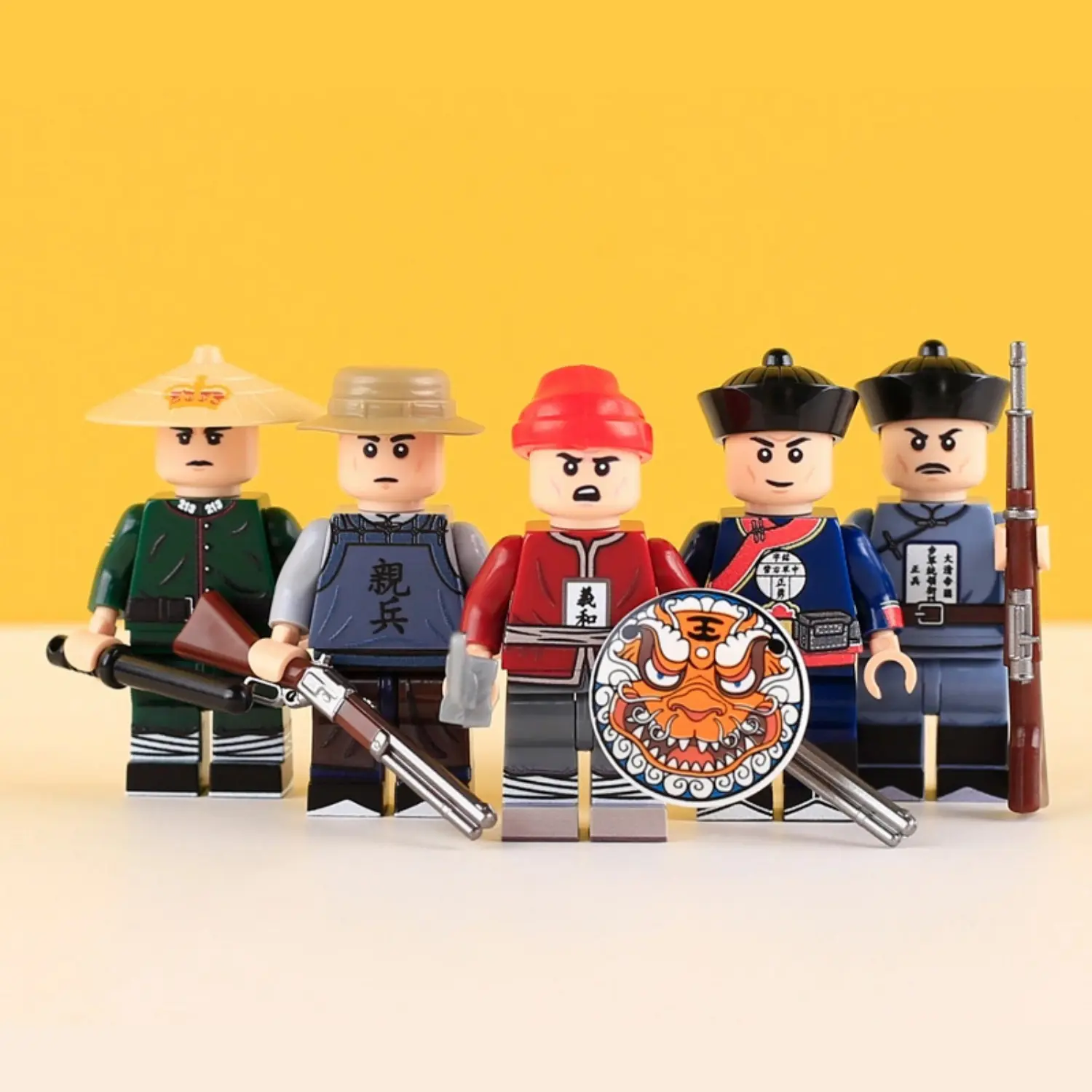
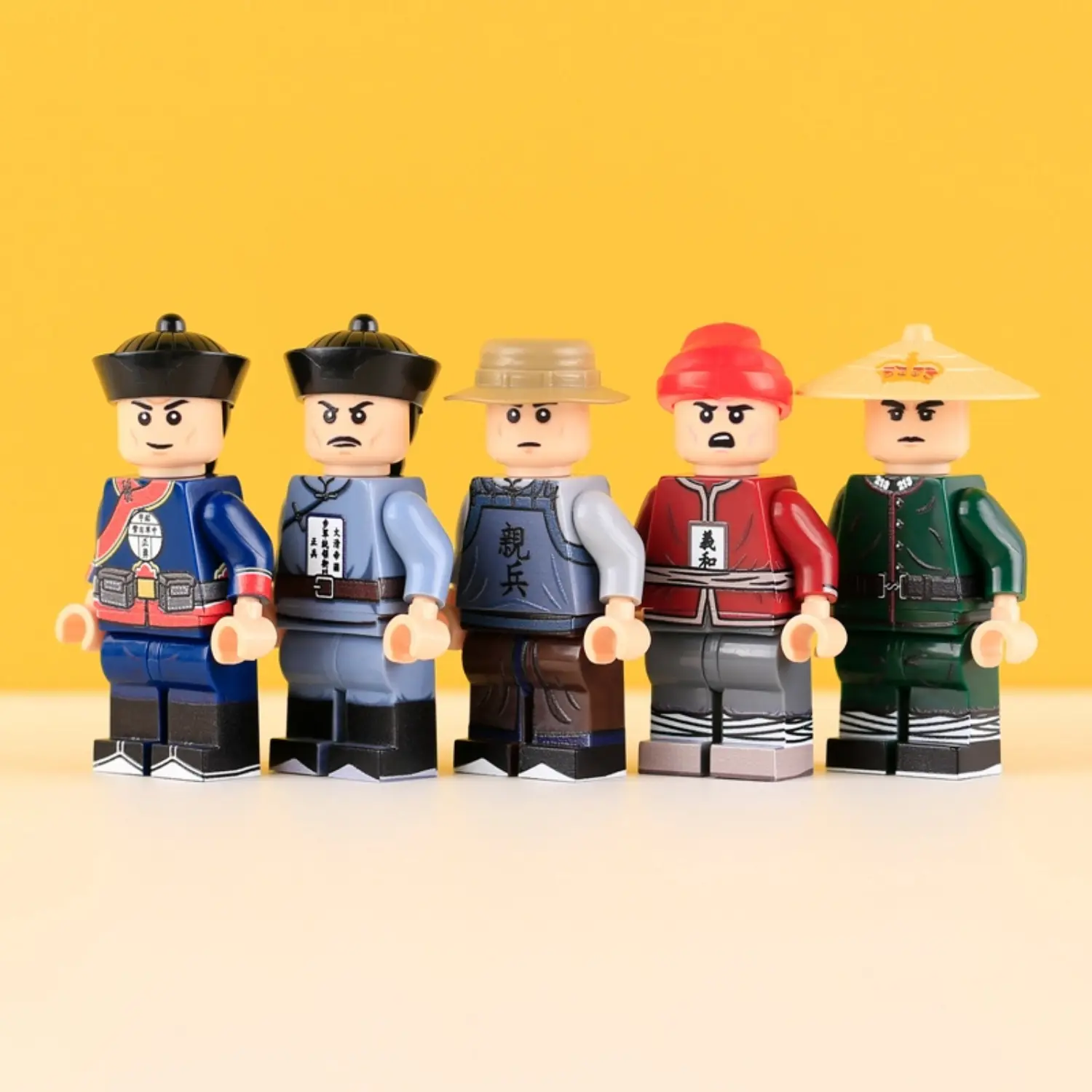
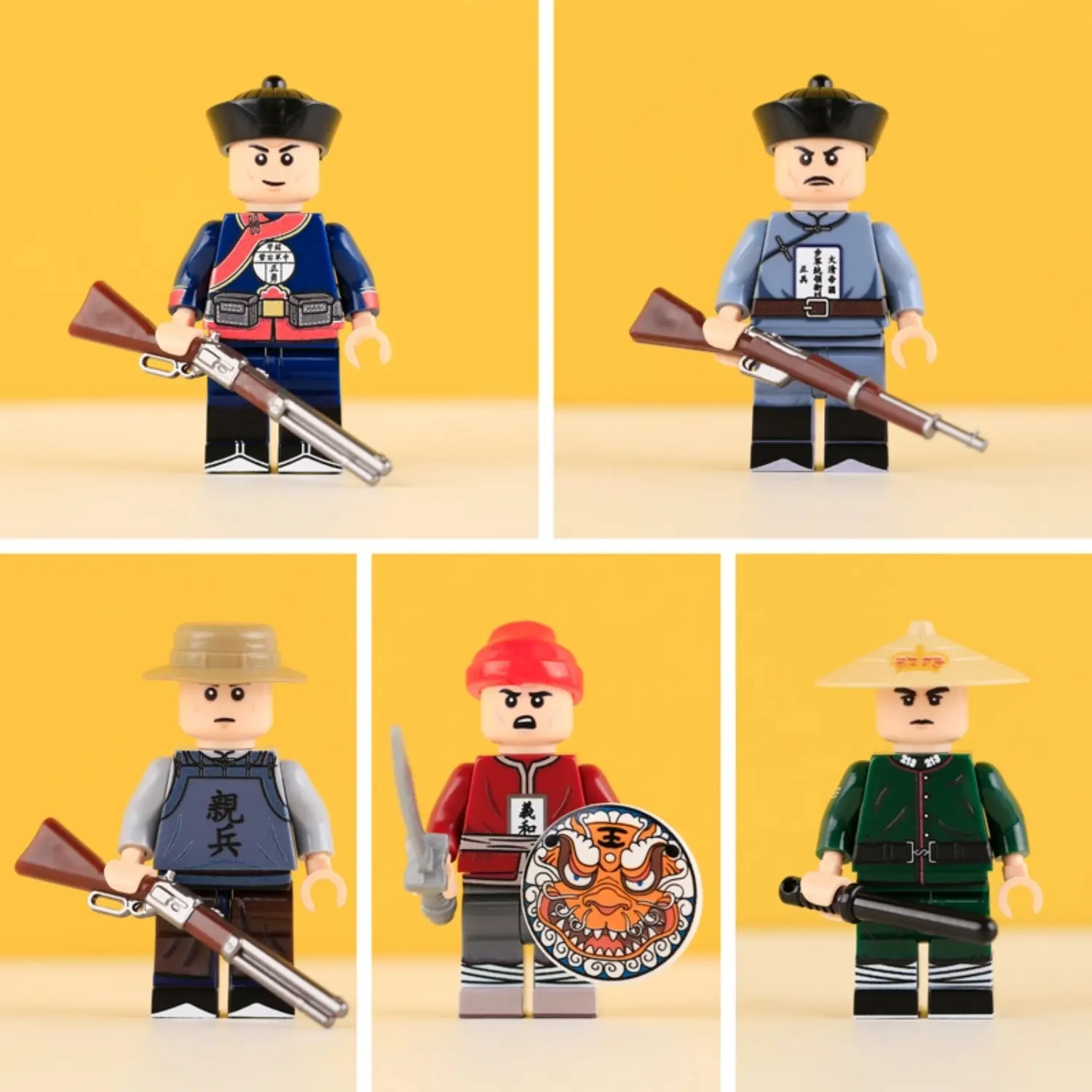
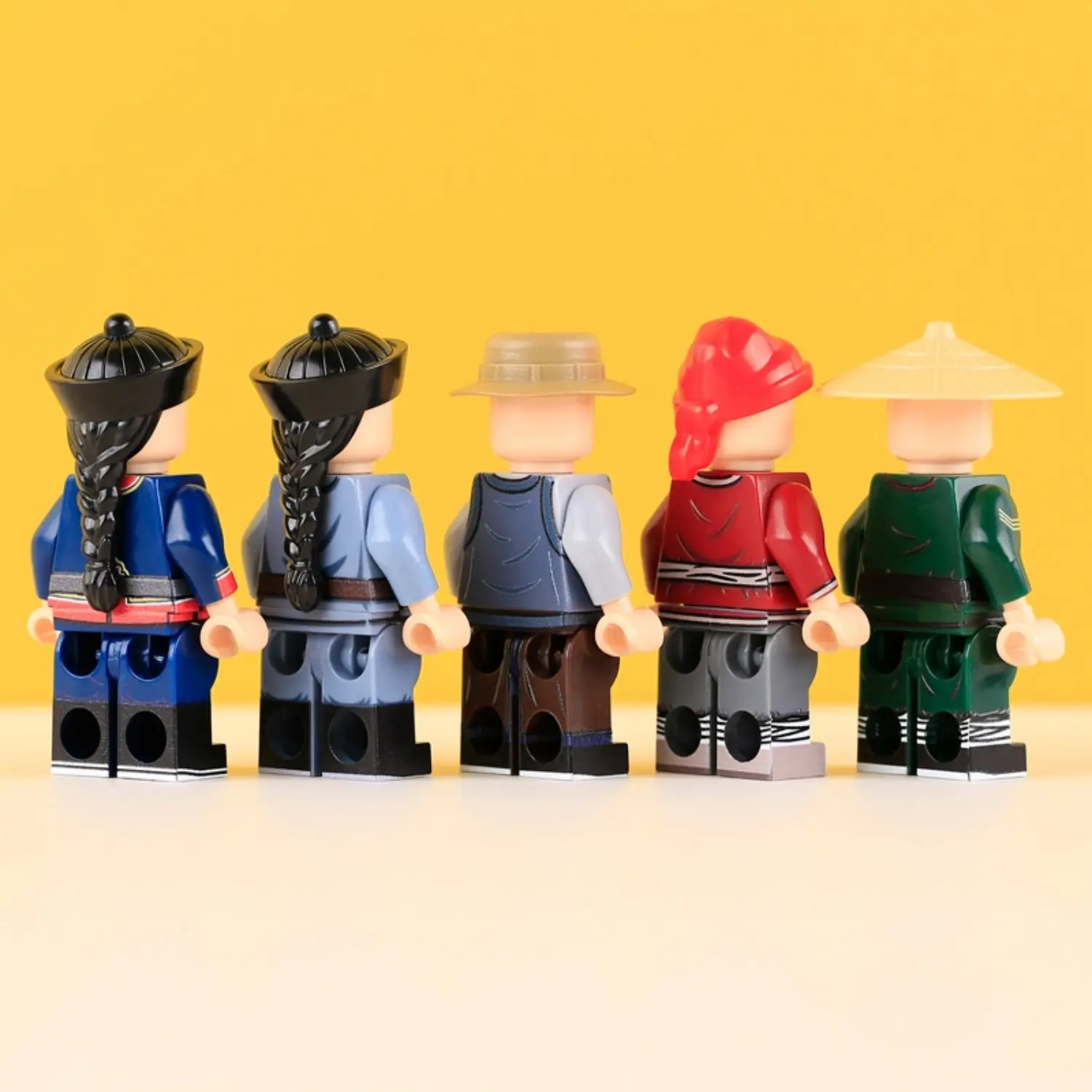
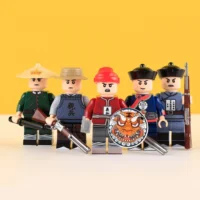
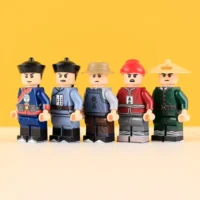
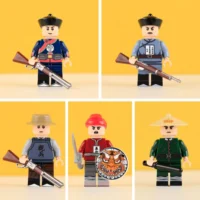
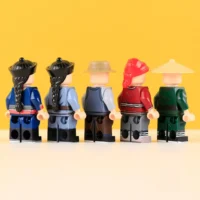
The image displays a captivating collection of five custom building block minifigures representing various military and law enforcement factions from the turbulent late Imperial Chinese and colonial era. Starting from the far left, the first figure represents a historical Royal Hong Kong Police Officer. He is dressed in a classic dark green uniform tunic featuring white collar identification numbers “213”, black and white striped leg puttees, and a highly distinctive conical bamboo hat bearing the printed red and gold British Royal Crown emblem. Equipped with a simple black police baton, this figure historically represents the Chinese constables recruited by the British colonial government in the late 19th century—nicknamed “Dai Tau Luk Yi” or Big Head Green Coats—who patrolled the bustling port city blending local Asian attire with British colonial authority.
The second figure from the left is a Qing Dynasty Imperial Guard Bodyguard, historically known as a “Qinbing”. He wears a utilitarian light blue vest over a grey shirt with the black characters “親兵” (Qinbing) prominently printed on his chest, marking his elite bodyguard status. Sporting a practical khaki wide-brimmed sun hat instead of a formal imperial hat, he is heavily armed with an American lever-action repeating rifle. Historically, these elite, hand-picked soldiers were tasked with the direct personal protection of powerful regional commanders during chaotic conflicts like the Taiping Rebellion, and they were supplied with the absolute best rapid-fire foreign weapons available to ensure their general’s survival.
The third figure in the center represents a fierce Boxer Rebellion Militia Soldier. He stands out vividly in a vibrant red traditional Chinese tunic and matching red headwrap, featuring a white chest patch with the characters “義和” (Yihe), which directly identifies him as a member of the Yihetuan, or Righteous and Harmonious Fists. Lacking modern firearms, he is armed purely for close-quarters melee combat with a silver traditional Chinese broadsword and a stunning, highly decorative tiger-faced rattan shield. This figure perfectly captures the intimidating, anti-foreign peasant fighters of 1899 who relied heavily on traditional martial arts and spiritual rituals, believing themselves magically invulnerable to Western bullets.
The fourth figure from the left is a modernized Qing Dynasty Huai Army Soldier. He is outfitted in a deeply traditional dark blue military tunic featuring red trim and a classic white circular unit patch on his chest, topped with a traditional black Qing soldier’s hat. Despite the traditional garments, his belt is equipped with modern grey ammunition pouches, and he carries a devastating lever-action rifle. Historically, the Huai Army was a highly powerful regional force that stood at the very forefront of China’s late 19th-century military modernization, representing a chaotic era where soldiers wielded cutting-edge imported firearms while strictly maintaining ancient imperial dress codes.
The fifth and final figure on the far right represents a Qing Dynasty Capital Infantry Soldier, specifically an elite guard of the Peking Gendarmerie. He wears a traditional light blue tunic featuring a large white rectangular chest patch that translates to “Great Qing Empire, Office of the General Commandant of the Infantry, Regular Soldier”. He wears the formal black Qing hat and is armed with a highly advanced bolt-action rifle. Historically, this traditional force was tasked with the absolute defense of the imperial capital of Beijing, perfectly illustrating how the desperate empire hastily equipped its deeply traditional guards with modern Western weapons to combat escalating modern threats.

Reviews
There are no reviews yet