

Variations
-
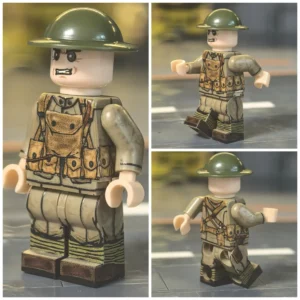
Minifigure – U.S. Army Trench Gunner (M1897 Shotgun Infantry) WWI (LEGO Compatible)
$14.99 -
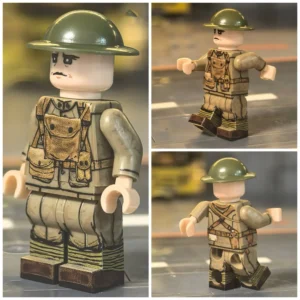
Minifigure – U.S. Army Infantryman (Rifleman) WWI (LEGO Compatible)
$14.99 -
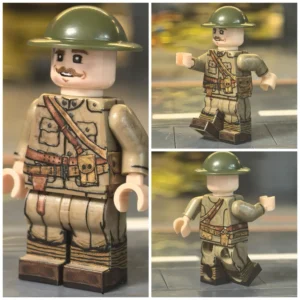
Minifigure – U.S. Army Commissioned Officer WWI (LEGO Compatible)
$14.99 -
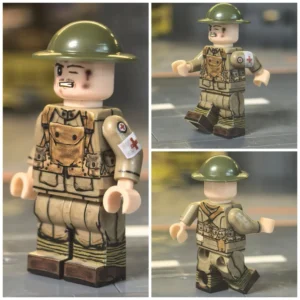
Minifigure – U.S. Army Combat Medic WWI (LEGO Compatible)
$14.99 -
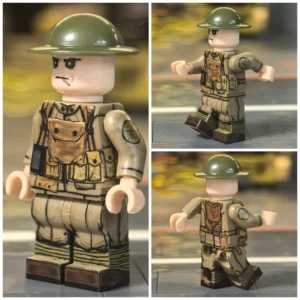
Minifigure – U.S. Army BAR Gunner (Automatic Rifleman) WWI (LEGO Compatible)
$14.99 -
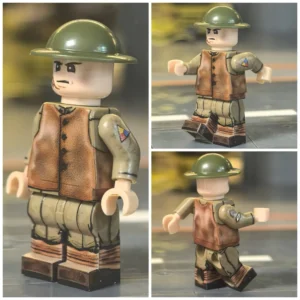
Minifigure – U.S. Army Anti-Tank Infantryman (Tank Corps) WWI (LEGO Compatible)
$14.99
Introduction
Group Identification: WWI U.S. Army Infantry Squad (American Expeditionary Forces)
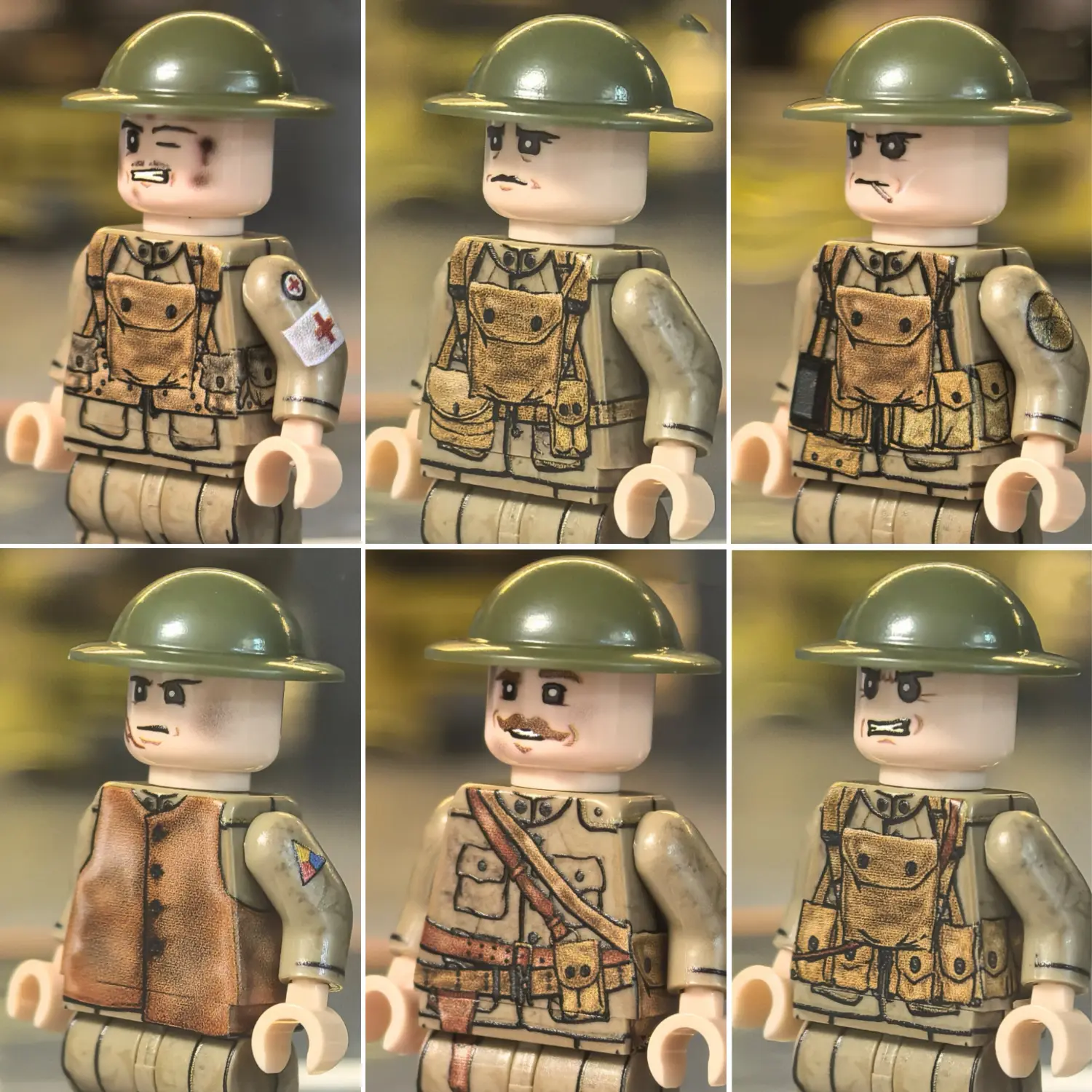
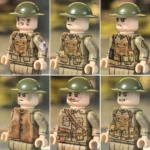
This image is a composite collage displaying six individual custom-printed building block minifigures, presented as a full squad of United States Army troops from the World War I (WWI) era (circa 1917-1918). They specifically represent members of the American Expeditionary Forces (AEF), colloquially known as “Doughboys.”
All figures wear the iconic M1917 “Brodie” Helmet—originally a British design adopted by the US to protect soldiers from shrapnel bursting in the air above trenches. The uniforms are a khaki/tan color, featuring highly detailed premium UV printing that uses cross-hatching and stylized comic-book outlines to depict heavy dirt, weathering, and combat fatigue, reflecting the horrific conditions of trench warfare on the Western Front.
Here is a detailed, one-by-one introduction of the six figures, introducing them row-by-row, from left to right:
1. Top-Left Figure: WWI U.S. Army Combat Medic
-
Visual Details: This figure has a heavily battle-worn winking face grimacing in pain or focus, with significant dirt smudges printed around his eye and mouth. His torso features webbing with a gas mask pouch. His defining feature is on his arms: a large printed white armband with a prominent Red Cross, along with a smaller Red Cross patch near his shoulder. This symbol designated him as non-combatant medical personnel according to the Geneva Conventions.
-
Historical Background: Frontline medical corpsmen (medics) played an essential role in WWI trench warfare. Armed only with bandages, tourniquets, and morphine, they were tasked with treating and evacuating wounded soldiers under heavy machine-gun and artillery fire. While the Red Cross armband theoretically protected them under international law, chemical gas attacks and artillery made the medic’s job exceedingly perilous.
2. Top-Middle Figure: WWI U.S. Doughboy Infantry Rifleman
-
Visual Details: This soldier has a stern, determined facial expression with a distinct printed mustache. He wears standard Doughboy webbing and a printed tunic with the characteristic multiple pouches of an M1910 Cartridge Belt designed to hold stripper clips of ammunition for bolt-action rifles (like the M1903 Springfield or M1917 Enfield). The lower legs feature meticulously printed canvas puttees (cloth wraps) leading down to brown trench boots.
-
Historical Background: The quintessential American soldier of the Great War. This represents the basic rifleman who composed the majority of the US infantry. The transition from early-war leather gaiters to canvas puttees was vital in WWI to provide ankle support and keep trench mud and water out of their boots.
3. Top-Right Figure: WWI U.S. BAR Automatic Rifleman
-
Visual Details: This soldier has a scowling, tough facial expression, with heavy dirt and a printed cigarette hanging from his mouth, capturing the gritty reality of a war-weary veteran. His webbing features pouches slightly heavier than standard rifle clips. His primary identifying feature is the unit insignia on his left shoulder: a divisional patch featuring a Wagon Wheel (typically associated with the 35th Infantry Division of the AEF).
-
Historical Background: This soldier is equipped for an automatic rifle, likely the Browning Automatic Rifle (BAR). Introduced late in the war in 1918, the BAR provided much-needed mobile automatic fire during assaults, allowing Doughboys to provide suppressive fire while advancing on enemy trenches. This specialized role required carrying significant amounts of heavy ammunition box magazines.
4. Bottom-Left Figure: WWI Tank Corps Anti-Tank Specialist
-
Visual Details: This figure features an angry, focused expression with a printed combat scar on his right cheek. Unlike the other figures in wool tunics, this figure wears a printed brown leather/canvas jerkin (vest) over his tunic. Critically, his left shoulder displays the WWI-era U.S. Tank Corps insignia (a tri-color triangular patch split vertically: yellow, blue, and red).
-
Historical Background: A specialist role. Leather jerkins were popular for warmth during winter. This soldier is attached to the nascent U.S. Tank Corps (led in part by a young George S. Patton). Anti-tank duty in WWI was highly dangerous and cumbersome, involving specialized armor-piercing “K-Bullets” or cumbersome anti-tank rifles (T-Gewehr) captured from the enemy.
5. Bottom-Middle Figure: WWI U.S. Junior Commissioned Officer (Lieutenant)
-
Visual Details: This figure has a mature, experienced face with a thick mustache and a confident, knowing smile. He retains the Brodie helmet for combat. His defining equipment is the clear visual printing of the Sam Browne Belt, which features a brown leather cross-strap running diagonally over the figure’s right shoulder and meeting the wide belt.
-
Historical Background: Led the squad or platoon “over the top” into machine-gun fire. Officers carried different equipment than infantrymen, usually armed with M1911 pistols (implicitly carried in a holster not fully visible in this profile view, though the Sam Browne belt was explicitly designed to distribute the pistol’s weight). The Sam Browne belt became an iconic (if dangerous) identifier of American military authority in the trenches.
6. Bottom-Right Figure: WWI U.S. Trench Gunner / Shotgunner
-
Visual Details: This soldier has a furious, aggressive facial expression with teeth bared, intense eyes, and combat dirt printed heavily around his face. His webbing appears to be a basic cartridge belt, identical to Figure 2, but the facial expression defines his role.
-
Historical Background: A combat specialist utilizing devastating close-quarters weapons. American troops were famous for bringing pump-action shotguns (the M1897 Trench Gun) to the Western Front. These weapons were absolutely lethal for sweeping and clearing German trenches. They were so brutally effective that in 1918, the German government issued a formal diplomatic protest against their use, claiming they caused “unnecessary suffering”—a rare complaint given the conflict’s horrors.
Reviews
There are no reviews yet