

Variations
-
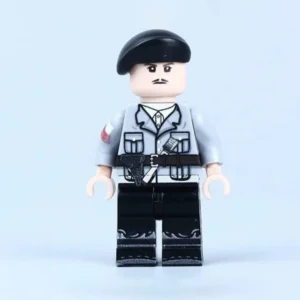
Minifigure – Polish Resistance Fighter – Armia Ludowa (AL) (People’s Army Officer / Soldier) WWII (LEGO Compatible)
$9.99 -
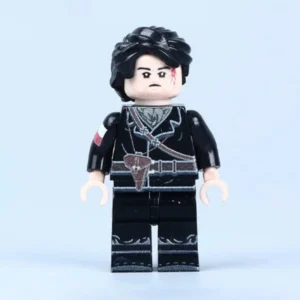
Minifigure – Polish Resistance Fighter Armia Ludowa (AL) (Female Partisan / Combatant) WWII (LEGO Compatible)
$9.99 -
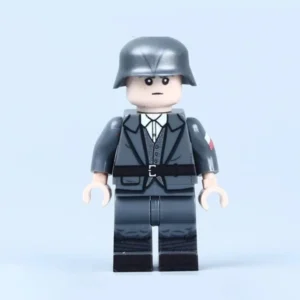
Minifigure – Polish Partisan / Resistance Fighter (Home Army / Armia Krajowa) WWII (LEGO Compatible)
$9.99
Introduction
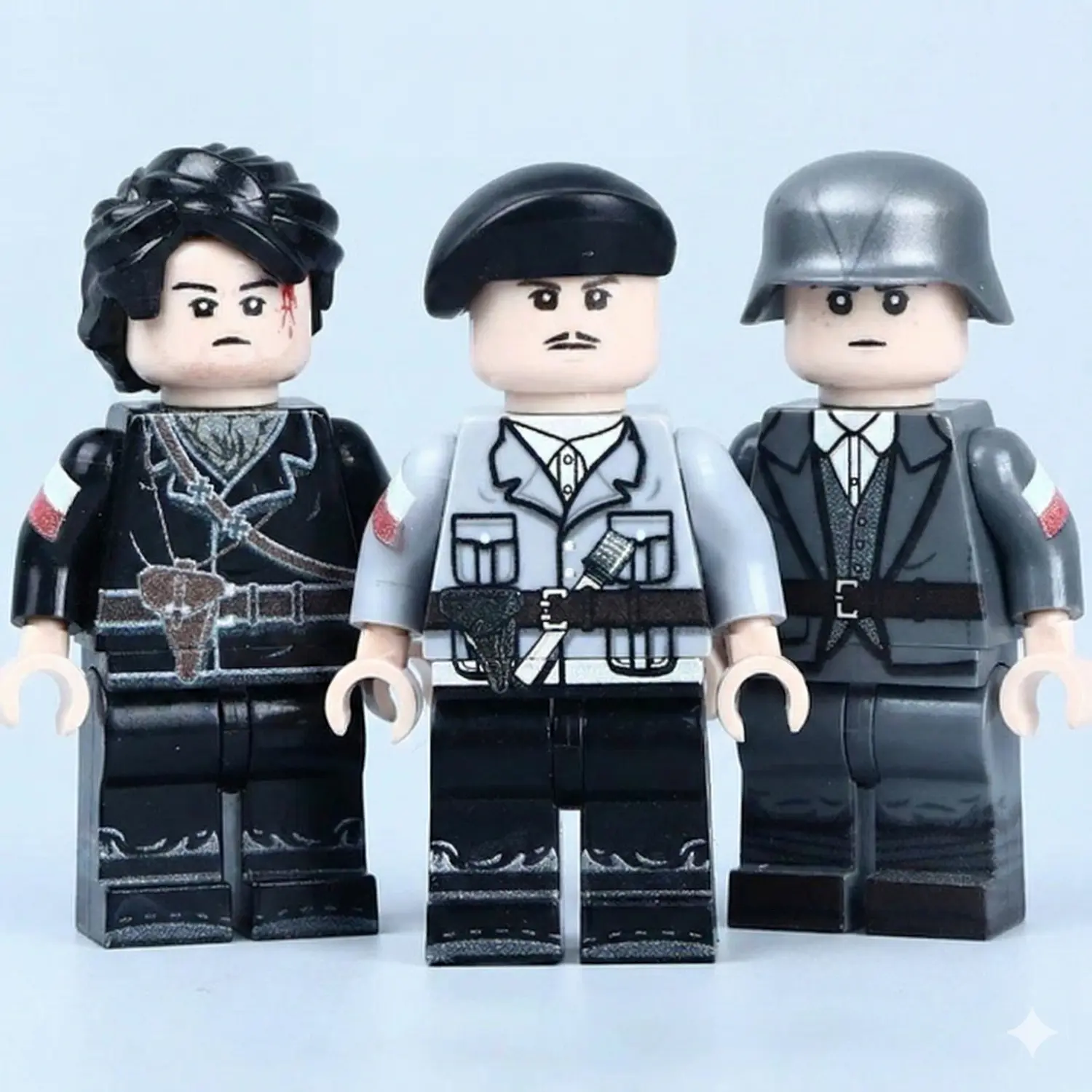
Character Identification: WWII Polish Resistance Squad (Warsaw Uprising)
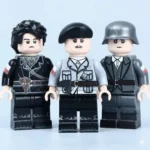
This image displays a group of three Polish Resistance Fighters from World War II. They represent the brave men and women of the underground forces—such as the Armia Krajowa (Home Army) and Armia Ludowa (People’s Army)—who fought against the German occupation, most famously during the Warsaw Uprising of 1944.
I will introduce them from Left to Right:
1. The Figure on the Left: Female Resistance Fighter / Courier
-
Visual Description: This figure represents the vital role women played in the Polish underground. She is dressed in a dark Black Combat Coat or heavy jacket, practical for urban warfare. Her face print features a Bloody Scratch/Scar on her left cheek, indicating she has recently seen combat. She has black wavy hair and wears a brown leather cross-body belt with a Pistol Holster.
-
Key Detail: On her right arm, she wears a Red and White Patch, the national colors of Poland, which identifies her as a legitimate soldier despite her irregular uniform.
-
Historical Background: Women served in all capacities during the Warsaw Uprising—as medics, couriers traveling through sewers (“Kanaly”), and frontline soldiers. This figure captures that bravery and sacrifice.
2. The Figure in the Center: Armia Ludowa (AL) Officer
-
Visual Description: This soldier appears more “uniformed” than the others, representing the organized structure of the communist-backed People’s Army (Armia Ludowa). He wears a light Grey Military Tunic with four pockets and a Black Beret. He is equipped with a black leather belt and holster.
-
Key Detail: Like the others, he bears the Polish Flag Patch on his arm. His face features a mustache, giving him the look of a disciplined commander.
-
Historical Background: The AL was a smaller resistance group compared to the Home Army, but they were heavily involved in sabotage operations and direct combat, often coordinating with the approaching Soviet forces.
3. The Figure on the Right: Warsaw Uprising Insurgent (Civilian Volunteer)
-
Visual Description: This figure is the most iconic representation of the 1944 Uprising. He wears a Grey Civilian Suit (jacket, vest, and tie), showing that he is an ordinary citizen forced to take up arms.
-
Key Detail: He is wearing a captured German Stahlhelm (Steel Helmet). This was common practice, as insurgents had no helmets of their own. They would often paint white eagles or wrap red-and-white bands around them to avoid friendly fire. He also wears the Polish Flag Armband/Patch on his left arm to signify his combatant status.
-
Historical Background: During the 63 days of the Warsaw Uprising, students, workers, and professionals fought elite German Panzer divisions using Molotov cocktails, captured weapons, and sheer determination, often wearing their Sunday best suits because they had nothing else.
Historical Context for the Group
Together, these three figures symbolize the tragedy and heroism of the Polish Underground State. They depict the “improvisational” nature of their war—using captured German helmets (right), civilian clothes (left and right), and whatever military surplus they could find (center)—united by the Red and White national colors on their sleeves.
Reviews
There are no reviews yet