

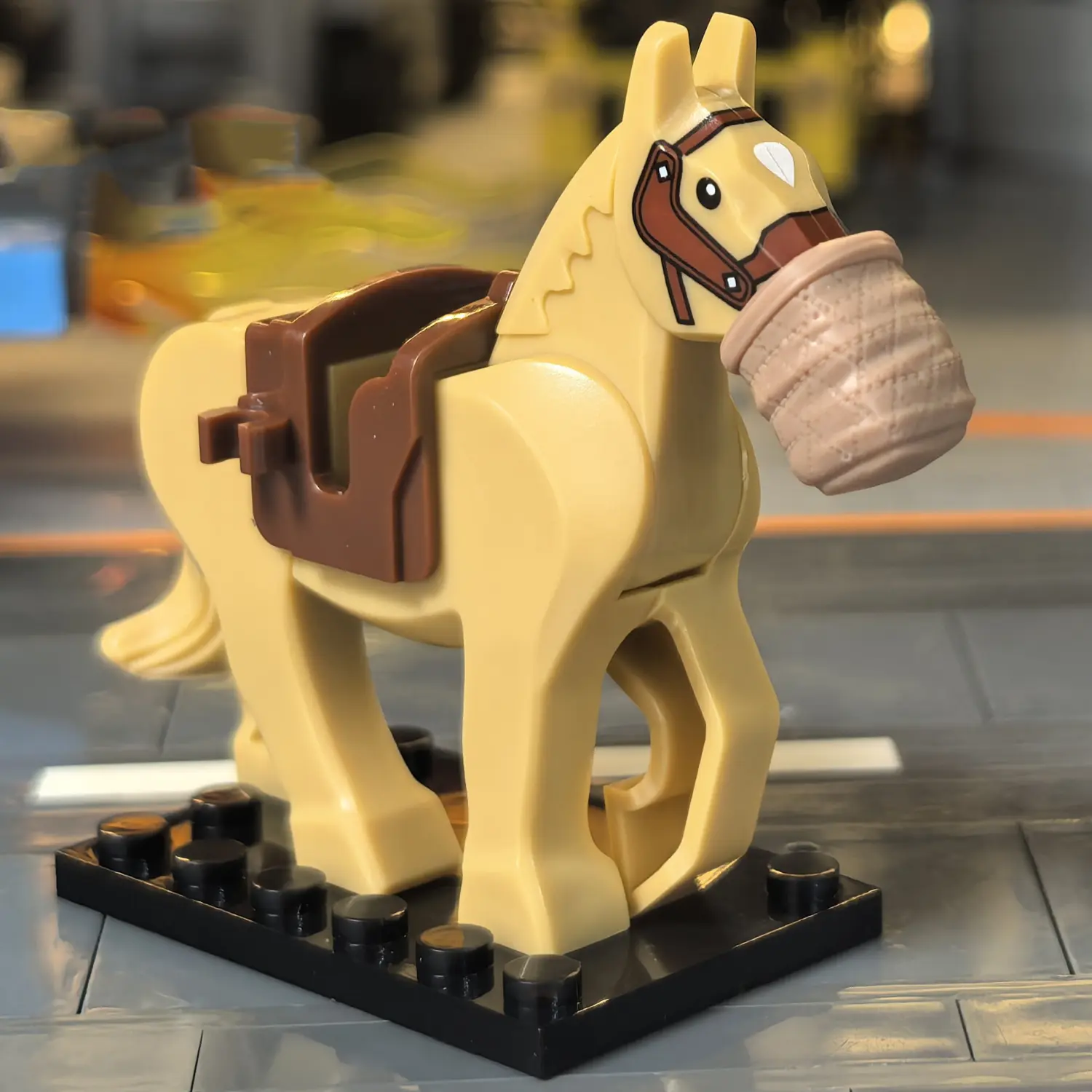
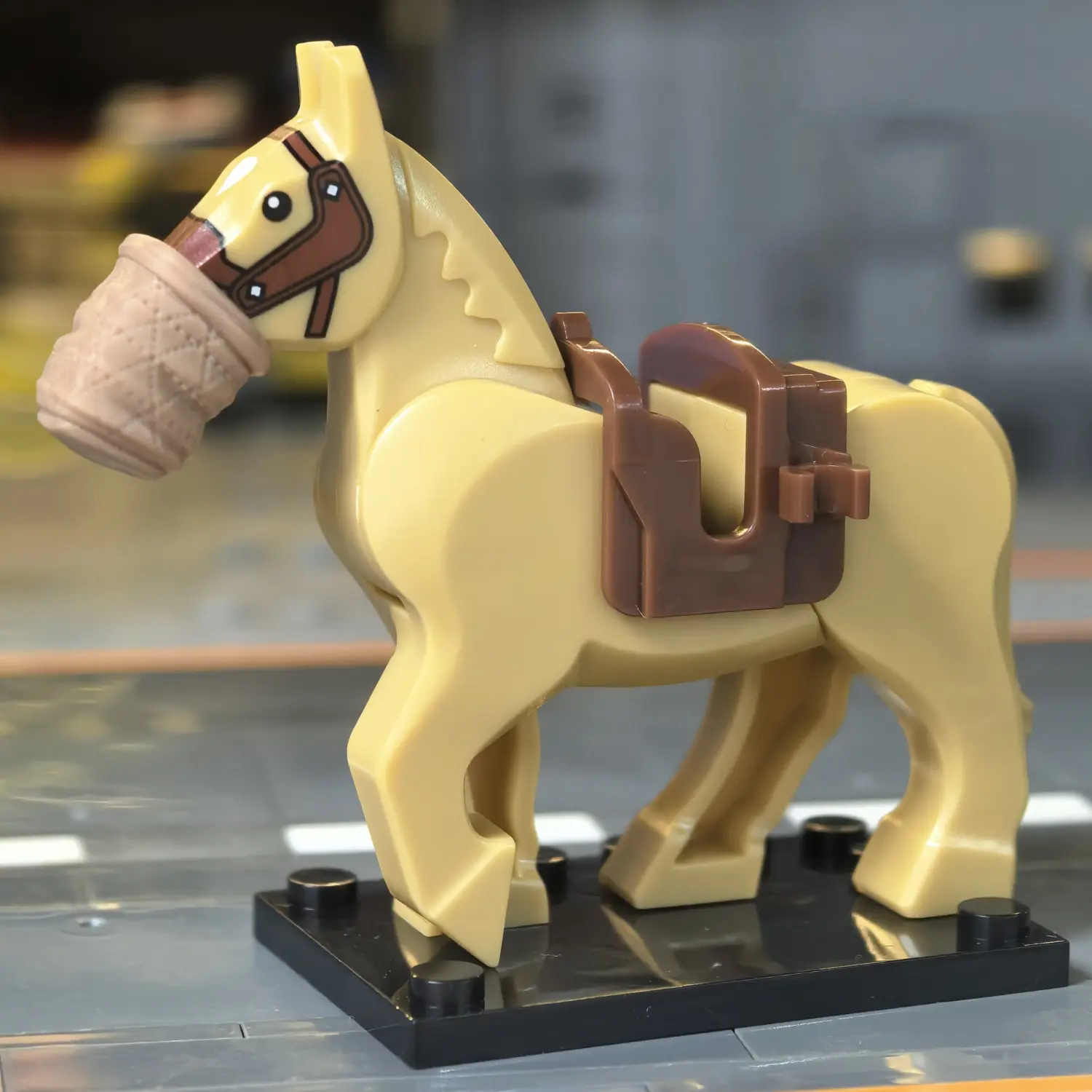
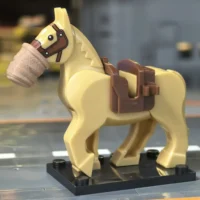
Specific Name: WWI Military Cavalry/Artillery Horse with Equine Gas Mask (Model inspired by the M1917 Equine Respirator)
Visual Description: This image features a custom building block animal figure, representing a military mount from the First World War.
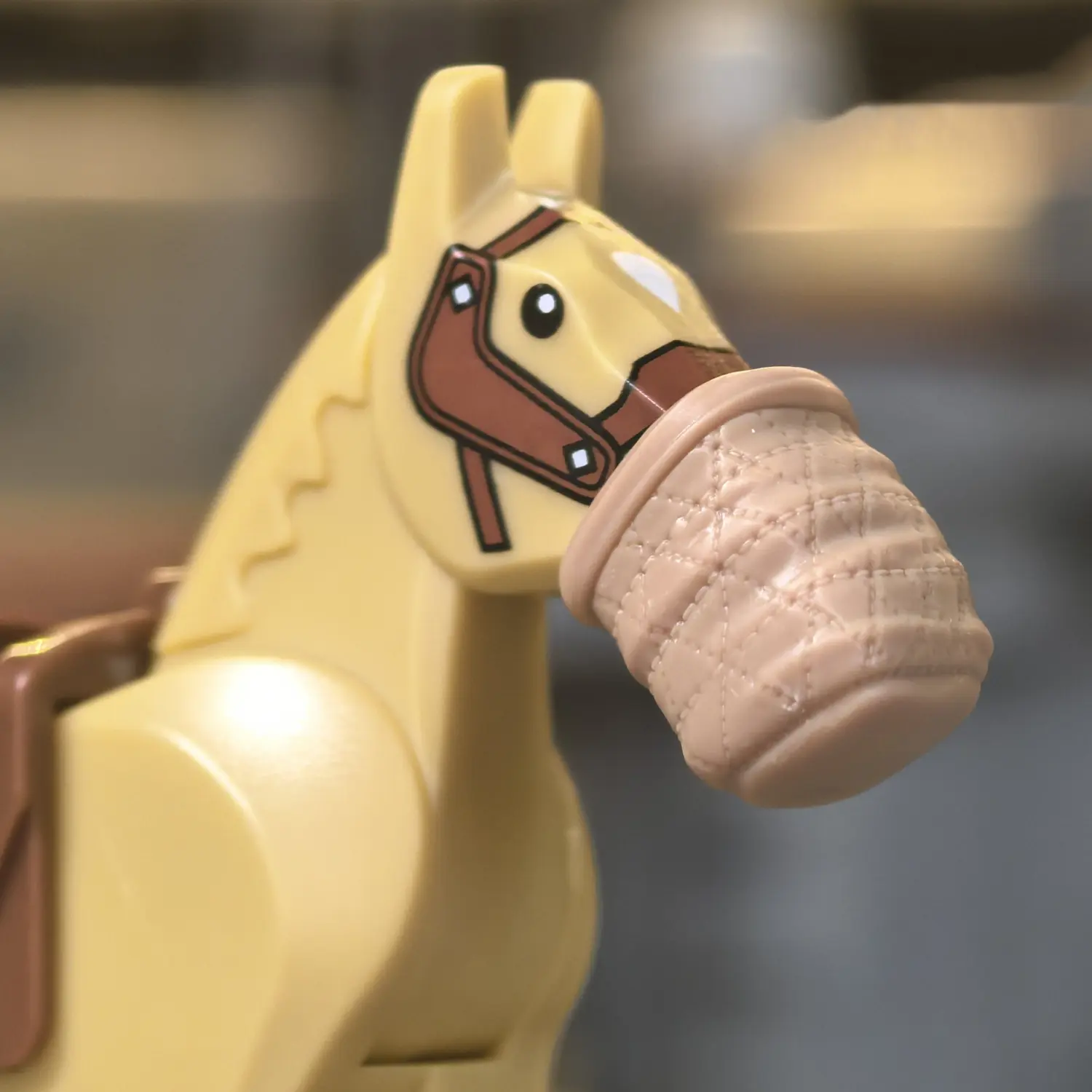
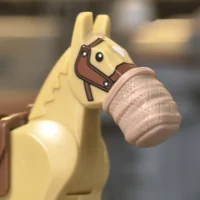
The figure is a light tan or beige Military Horse. It is equipped with a standard brown cavalry saddle mounted on its back. On its head, the horse wears a printed brown bridle and harness.
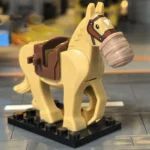
The most prominent and historically significant detail of this figure is the large, textured greyish-tan Equine Gas Mask covering its entire muzzle and nose area. The mask is sculpted with a cross-hatched pattern to simulate the heavy canvas or treated fabric used in real historical respirators. The figure is displayed standing on a black studded baseplate, ready for integration into a trench or battlefield diorama.
Historical Background: During World War I, millions of horses and mules were deployed on the front lines. They were absolutely vital for logistics, pulling heavy artillery through deep mud, transporting supplies, and serving in cavalry units. When chemical warfare (such as chlorine, phosgene, and mustard gas) was introduced in 1915, it caused devastating casualties among these animals.
To protect them, armies developed specialized equine gas masks. The M1917 mask (often used by American and British forces) essentially functioned like a large, chemically treated canvas feed bag that was strapped tightly over the horse’s upper jaw and nostrils. Interestingly, unlike human gas masks, most horse gas masks did not cover the eyes. This is because horses are obligate nasal breathers (they only breathe through their noses, not their mouths) and their eyes were slightly less susceptible to the immediate respiratory effects of early poison gases. This figure accurately captures the grim reality of animals serving in modern chemical warfare.
Reviews
There are no reviews yet