

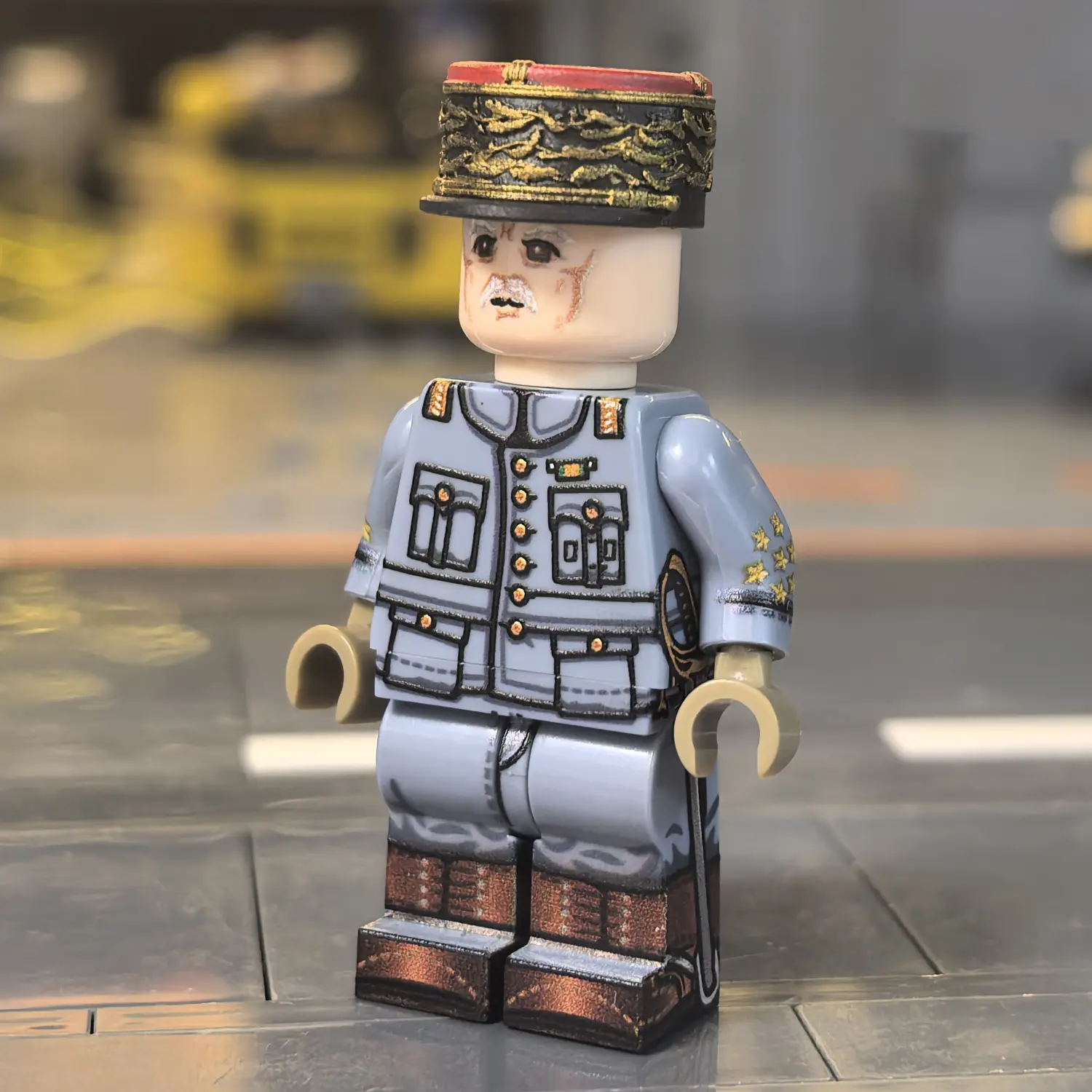
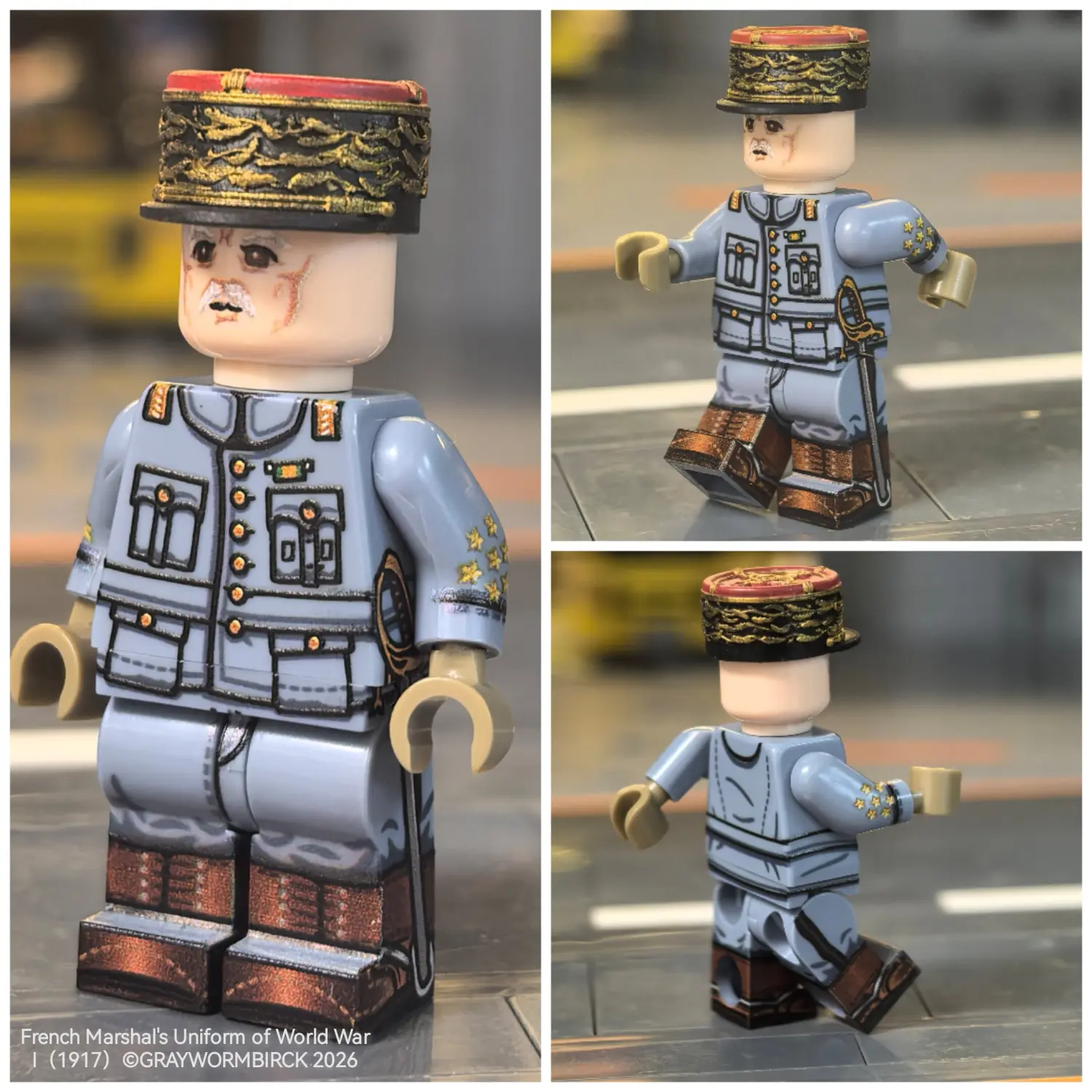
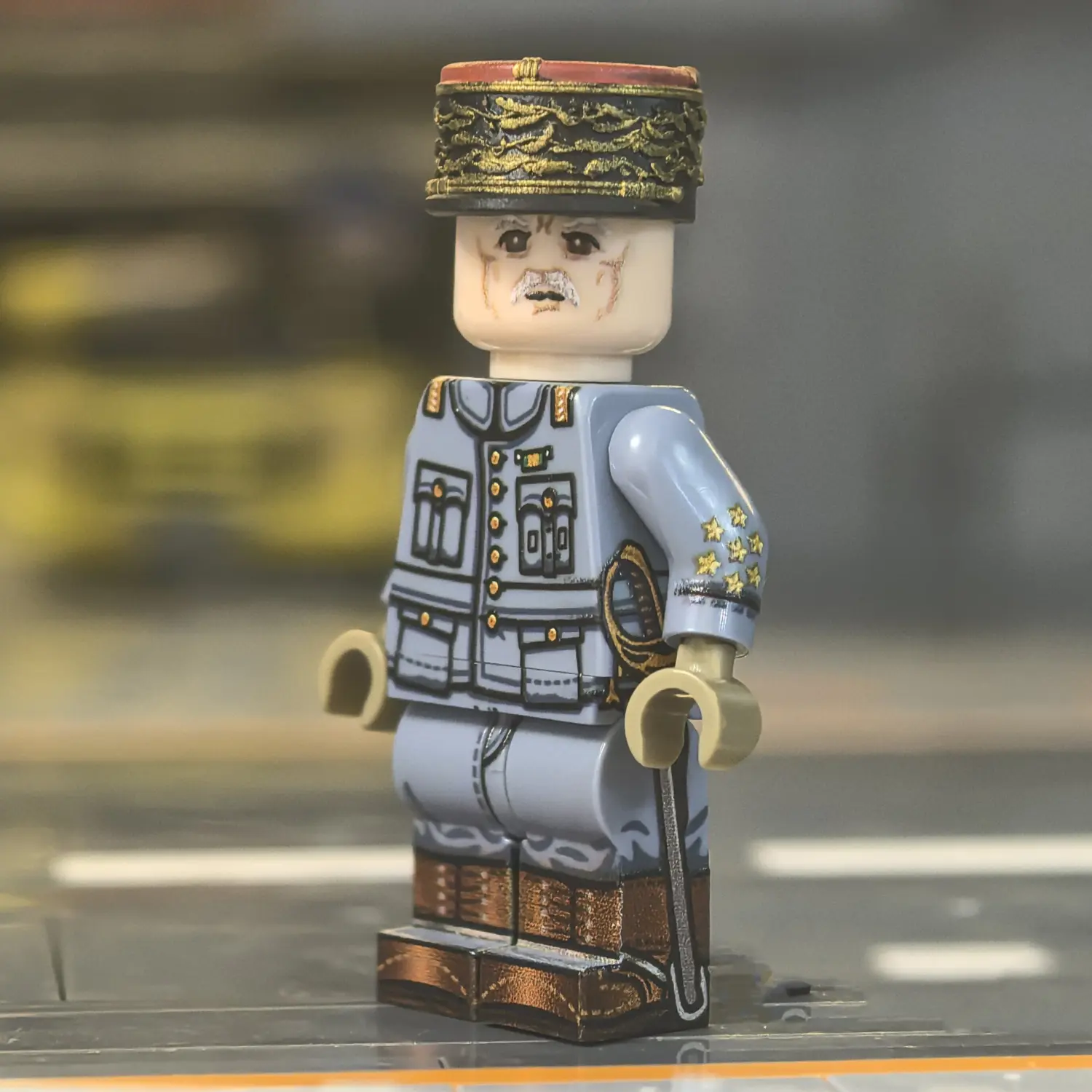
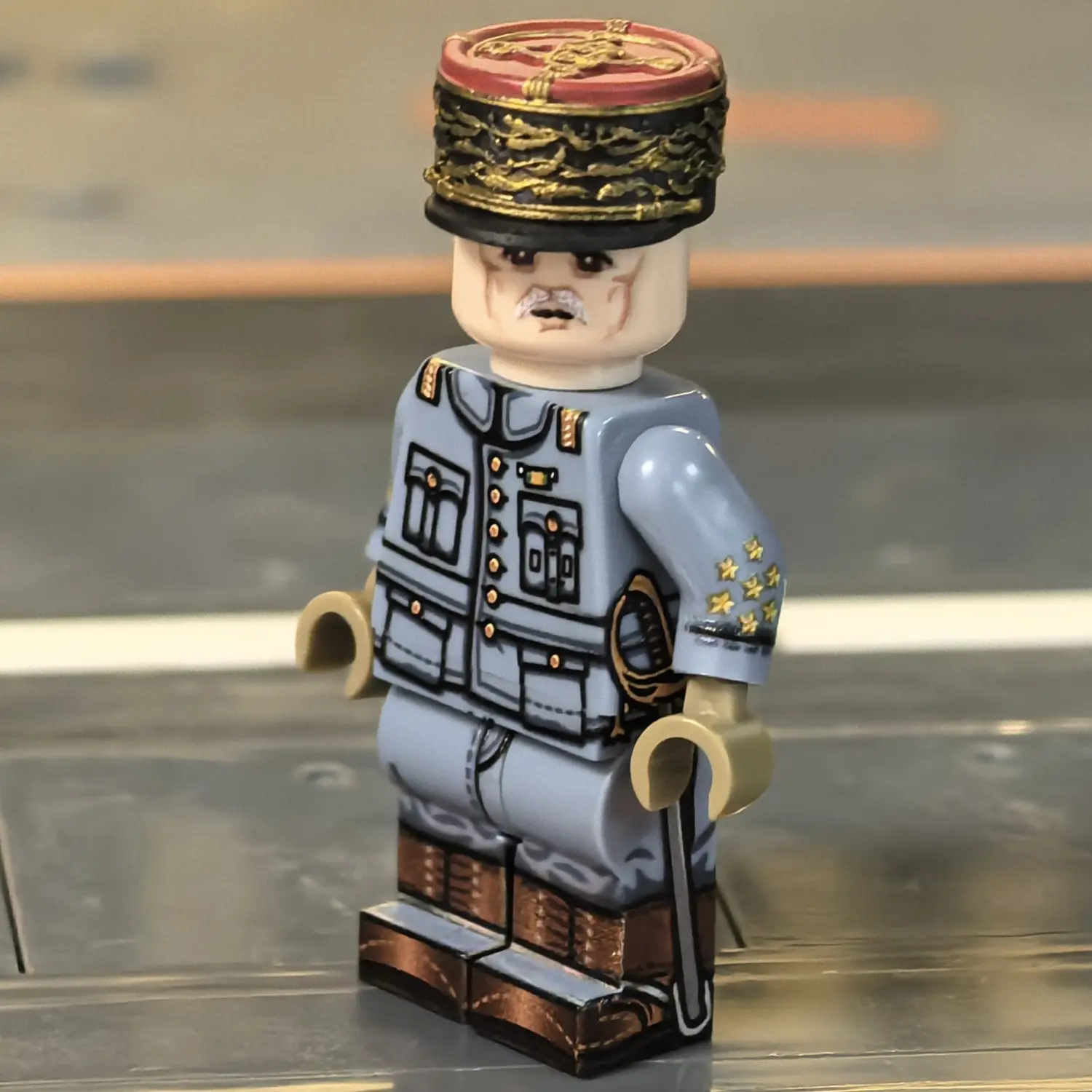
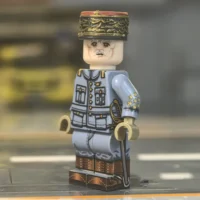
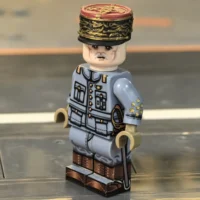
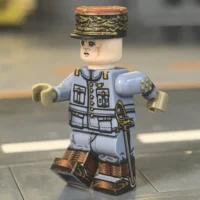
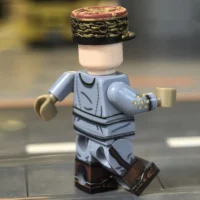
Specific Name: Marshal Philippe Pétain (French Army Commander-in-Chief – World War I, 1917)
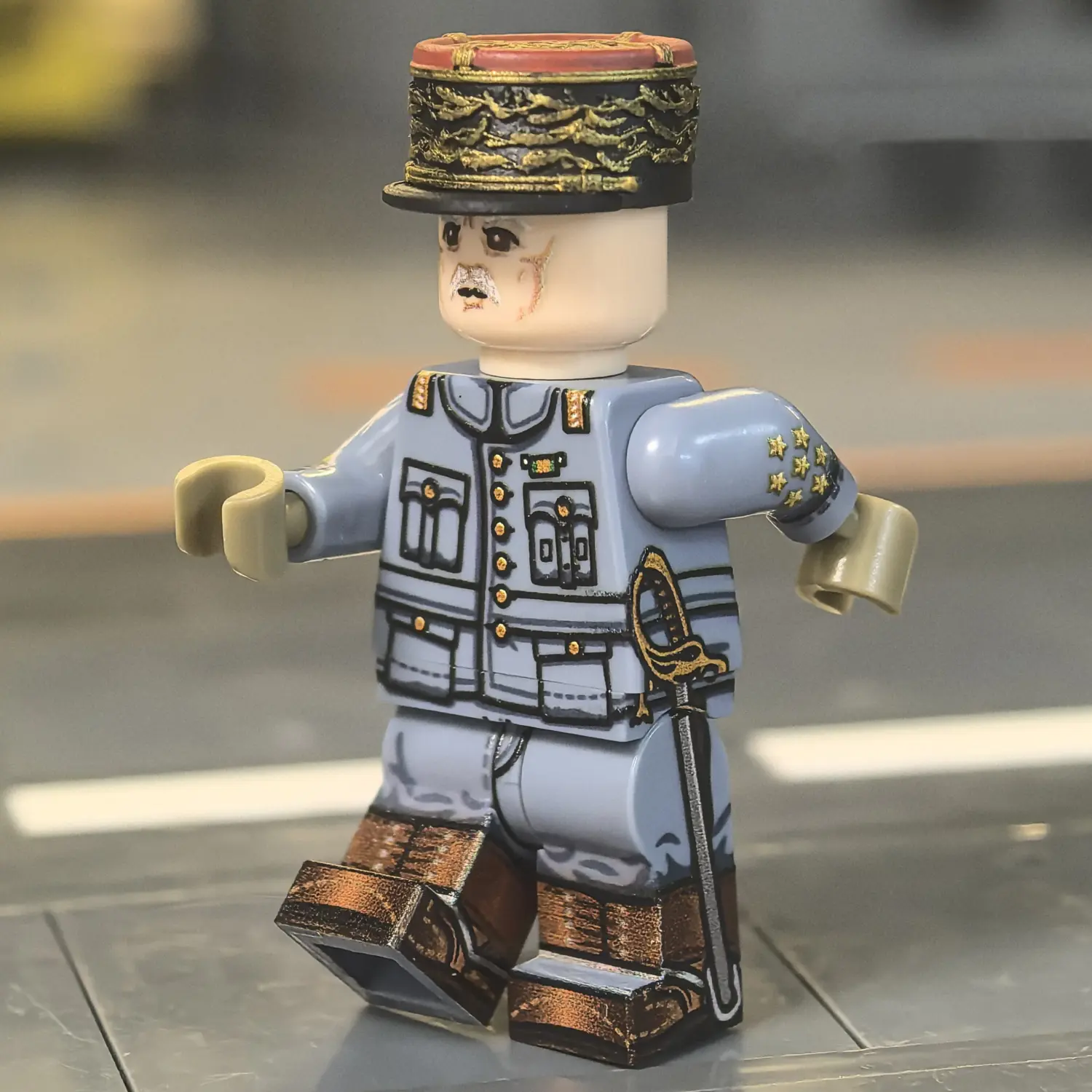
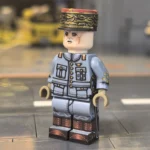
Visual Description: This custom-printed minifigure represents one of the most famous French military commanders of the First World War, capturing his specific appearance around 1917.
-
The Uniform: He is wearing the iconic Horizon Blue (Bleu Horizon) tunic and trousers. This light blue-grey color was adopted by the French military in 1915 to replace their highly visible 19th-century red and blue uniforms, providing better camouflage in the muddy trenches.
-
The Headgear (The Kepi): He wears a highly detailed French officer’s Kepi. The hat features a red flat top and a black band heavily decorated with gold oak leaf embroidery. This elaborate gold stitching is the traditional mark of a French General officer or Marshal.
-
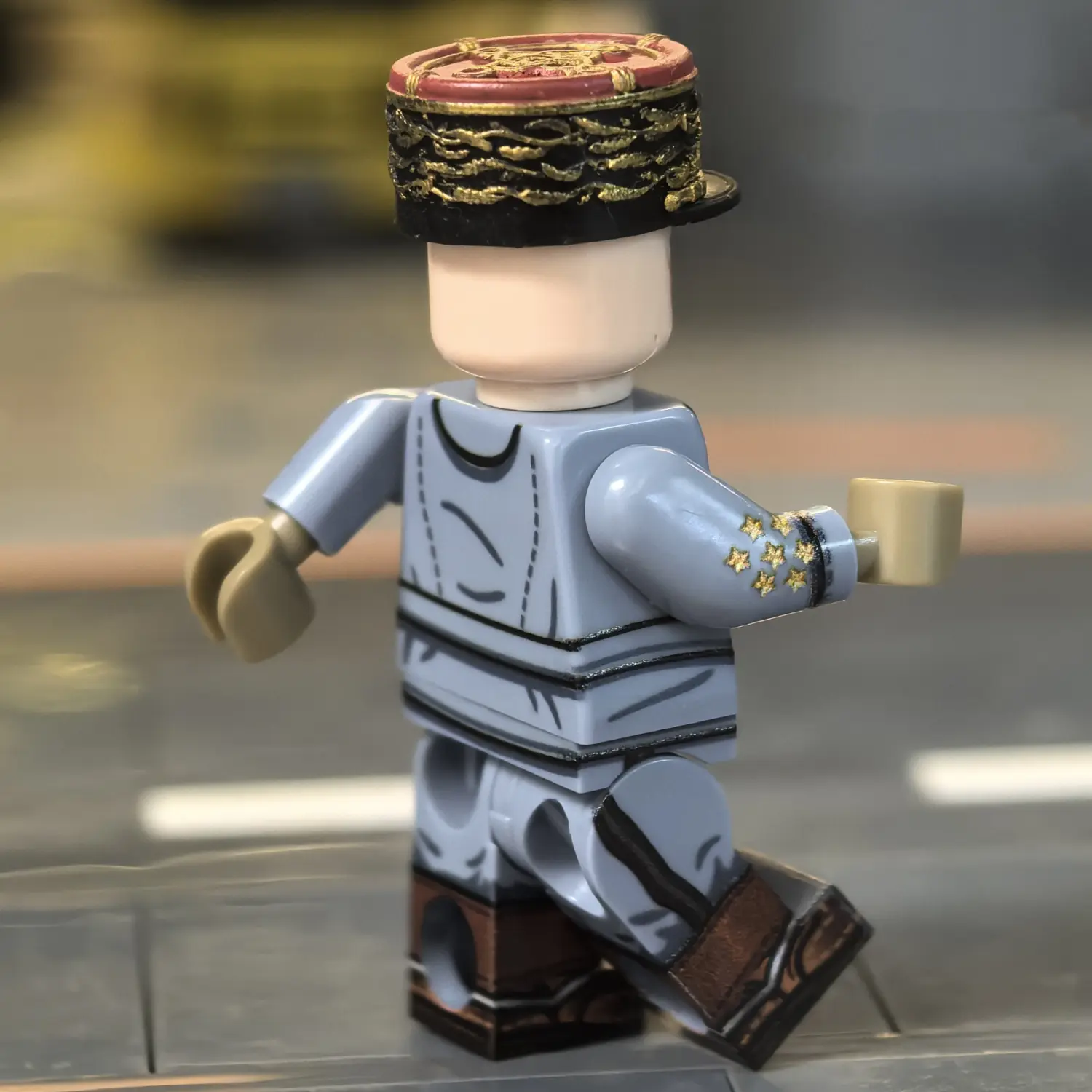
Rank Insignia: On the lower sleeves of his tunic, you can see a cluster of gold stars. In the French military hierarchy, stars on the sleeve denote general officer ranks (for example, a Marshal of France traditionally wears seven stars).
-
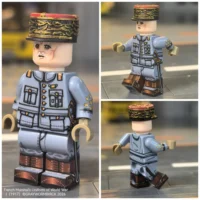
Accessories: The side and back views show a beautifully printed officer’s sword hanging at his left hip. His lower legs feature printed brown leather gaiters/leggings over brown boots, standard for officers in the field.
-
Face: The figure accurately depicts Pétain’s historical appearance as an older commander with a prominent white mustache and weathered facial lines.
Historical Background:
-
The Lion of Verdun: General Henri-Philippe Pétain became a massive national hero in France for his defensive victory at the brutal Battle of Verdun in 1916. His famous declaration, “They shall not pass” (Ils ne passeront pas), became a rallying cry for the nation.
-
The Crisis of 1917: The specific “1917” date in the image is highly significant. Following the disastrous Nivelle Offensive in the spring of 1917, the French Army was crippled by widespread mutinies. Pétain was brought in as Commander-in-Chief to fix the crisis. He successfully restored the army’s morale by improving living conditions, stopping wasteful offensives, and promising to wait for “the Americans and the tanks.”
-
Marshal of France: Because of his leadership in holding the French army together and leading them to ultimate victory, he was promoted to the highest military distinction, Marshal of France (Maréchal de France), at the end of the war in November 1918.
Reviews
There are no reviews yet