

Variations
-
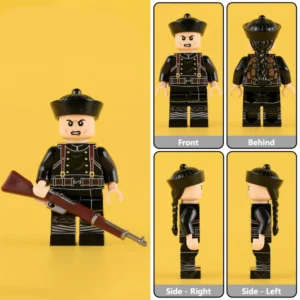
Minifigure – Qing Dynasty Imperial Army Soldier / “New Army” Infantryman (LEGO Compatible)
$9.99 -
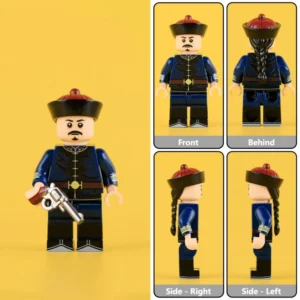
Minifigure – Qing Dynasty Imperial Army Officer / Commander (LEGO Compatible)
$9.99 -
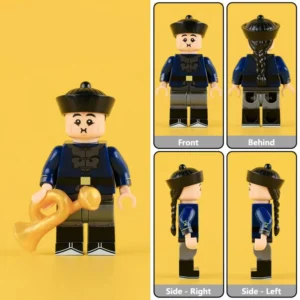
Minifigure – Qing Dynasty Imperial Army Bandsman / Trumpeter (LEGO Compatible)
$9.99 -
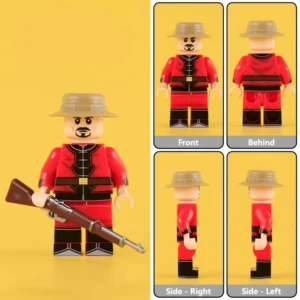
Minifigure – Qing Dynasty Beiyang Marine / Naval Infantryman (LEGO Compatible)
$9.99
Introduction
Character Identification: Late Qing Dynasty Imperial Army Squad
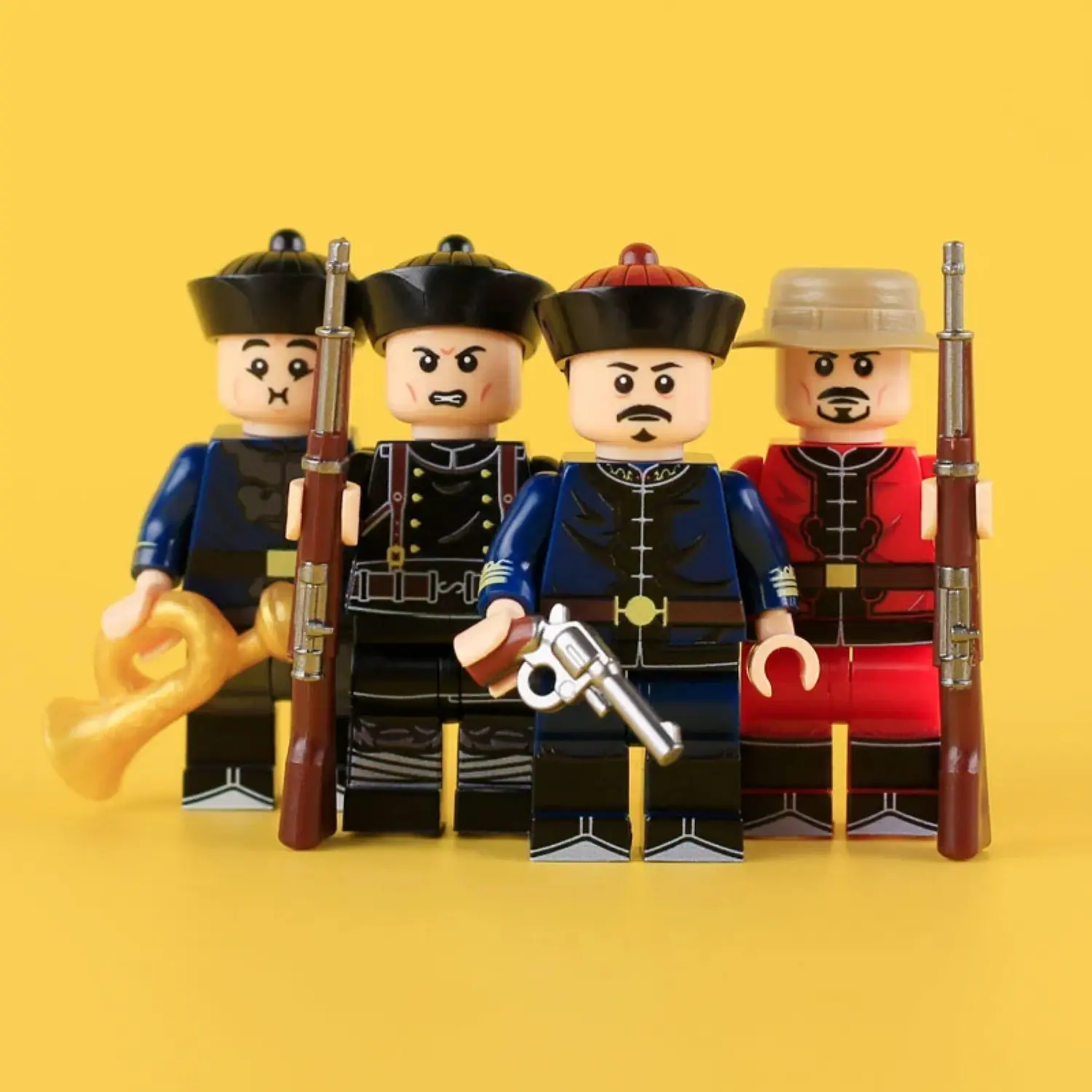
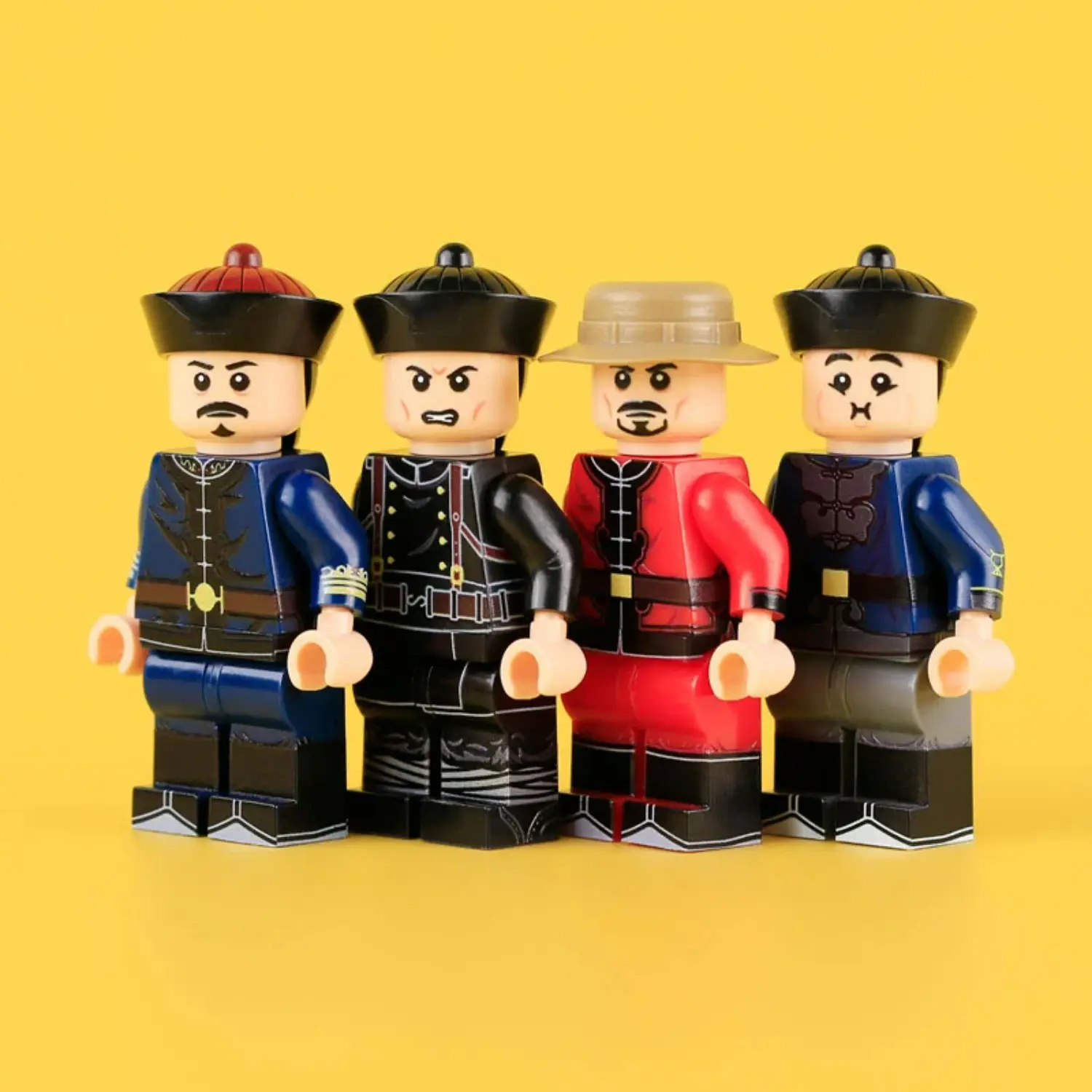
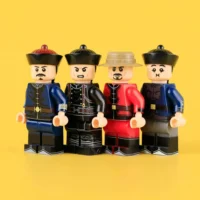
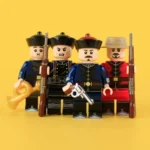
This image displays a group of four distinct military figures from the Late Qing Dynasty (late 19th to early 20th century). They represent the “Self-Strengthening Movement” era, where traditional Chinese attire was mixed with modern Western weaponry.
I will introduce them from Left to Right:
1. The Soldier on the Far Left: Imperial Army Bandsman / Trumpeter
-
Visual Description: This figure wears a dark blue traditional tunic (Magua) with black frog buttons. His most defining feature is his face print, which has puffed cheeks and a small mouth, simulating the action of blowing an instrument. He wears the standard black official’s hat (Guanmao) and holds a large Gold Trumpet (Bugle).
-
Historical Background: In the Qing military, before the adoption of radio, musicians with horns and drums were essential for relaying orders (charge, retreat, formation changes) across the noisy battlefield.
2. The Soldier Second from Left: “New Army” Infantryman
-
Visual Description: This soldier is dressed in an all-black uniform, which distinguishes him from the standard blue-clad troops. He is equipped with modern brown leather webbing (Y-straps) and carries a Bolt-Action Rifle. His expression is aggressive and angry, representing a soldier in the heat of combat.
-
Historical Background: This figure represents the “New Army” (Xinjun), elite units trained by Western or Japanese instructors after the Sino-Japanese War. They were the first Chinese troops to fully adopt Western organization and tactics while retaining the queue hairstyle.
3. The Officer Second from Right (Front Center): Imperial Army Commander
-
Visual Description: This is the leader of the squad. He wears a dark blue tunic similar to the bandsman but with significant upgrades: Gold Stripes on his sleeves indicating rank, and a Red Button/Knot on his hat, which denoted high status in the Qing hierarchy. He holds a Silver Revolver, an officer’s sidearm.
-
Historical Background: Officers in this era were often transitional figures, educated in the Confucian classics but forced to learn modern warfare. The revolver replaced the sword as the primary symbol of authority for commanders during conflicts like the Boxer Rebellion.
4. The Soldier on the Far Right: Beiyang Fleet Marine / Naval Infantry
-
Visual Description: This figure stands out with a bright Red Tunic with black trim and a Wide-Brimmed Straw Hat (Coolie Hat), which was practical for naval service in the sun. Like the infantryman, he is armed with a Bolt-Action Rifle.
-
Historical Background: The Beiyang Fleet was China’s modernized navy. These “Marines” served as naval infantry, guarding ships and coastal fortresses like Weihaiwei against foreign invaders.
Historical Context for the Group
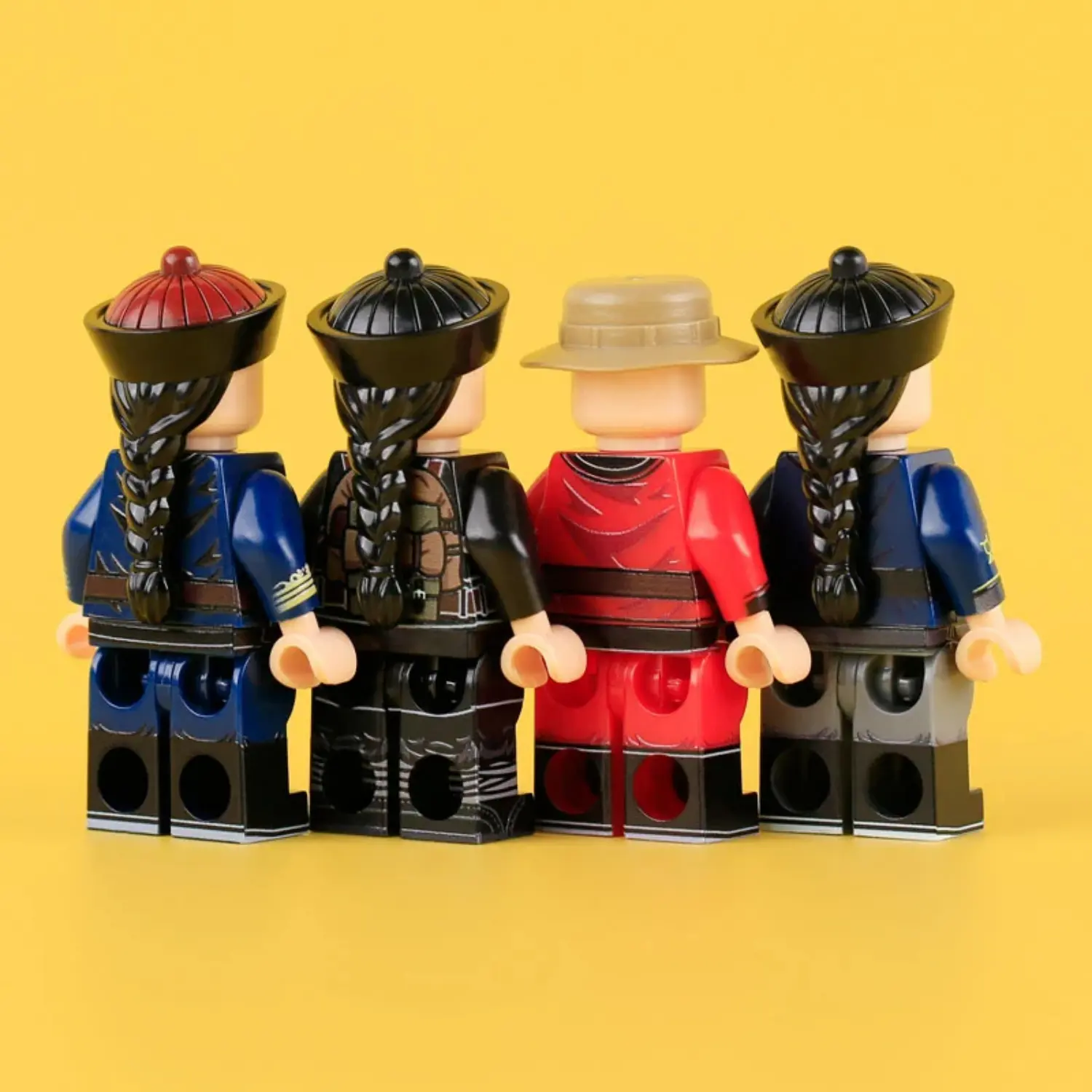
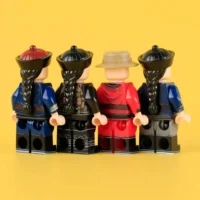
Collectively, these figures depict the Boxer Rebellion (1900) or the First Sino-Japanese War (1894) era. They showcase the unique visual clash of the time: soldiers wearing traditional Manchu queues (braids) and cloth shoes while wielding modern industrial rifles and revolvers, fighting to defend the last imperial dynasty of China.
Reviews
There are no reviews yet