

Character Identification
Specific Name: Late Qing Dynasty Army Surgeon / Medical Officer (Imperial New Army Medical Corps)
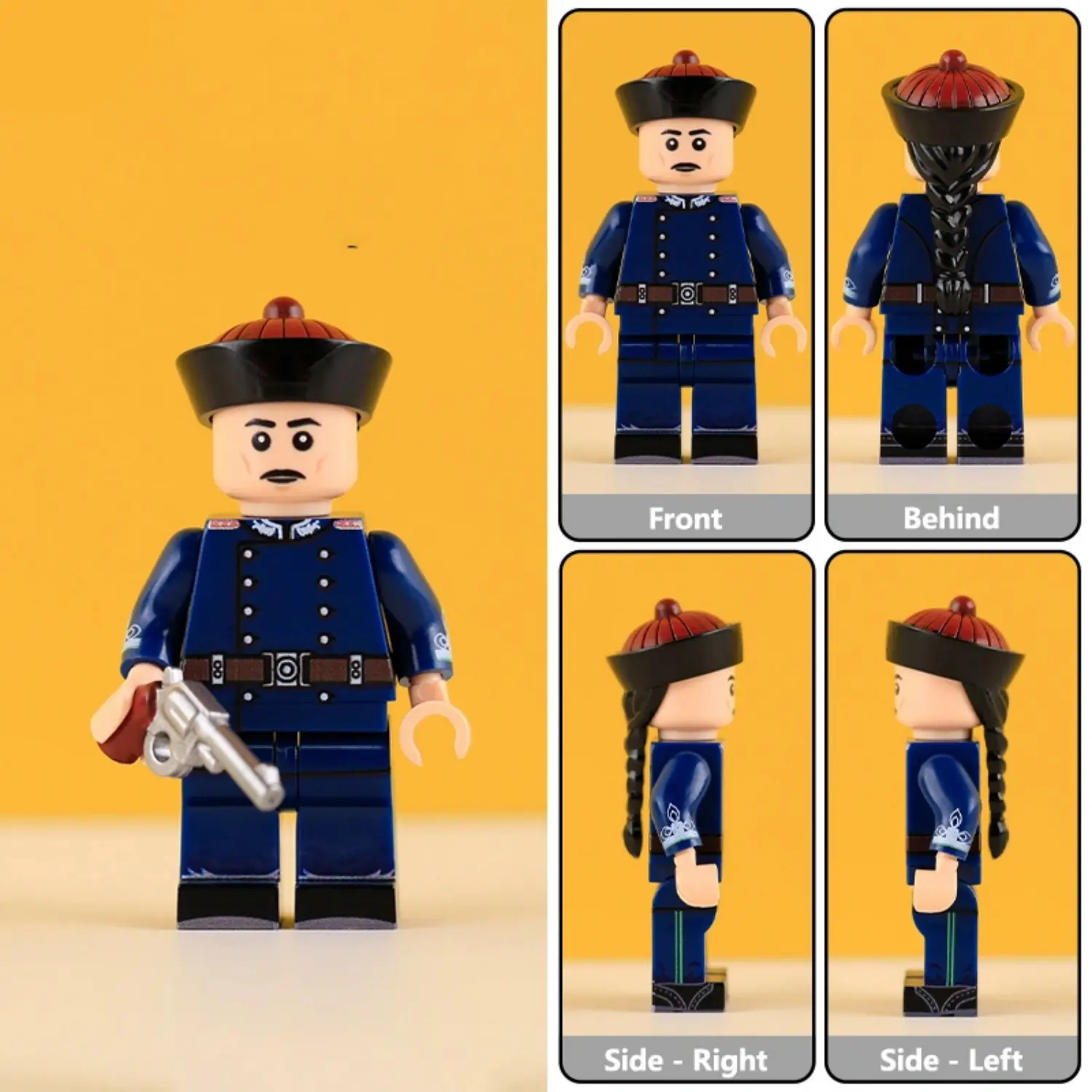
The text on the image explicitly labels this figure as “MTUV101 Qing Dynasty Army Surgeon”. This figure represents a specialized officer from the modernization era of the Chinese military, specifically a doctor or medical official within the “New Army” (Lujun).
Visual Description
This custom-printed minifigure features a unique blend of Western military fashion and traditional Manchu attire, characteristic of the 1900s reform era:
-
Uniform (Western Influence): Unlike the standard infantrymen in traditional cloth jackets, this surgeon wears a Dark Blue Double-Breasted Tunic. It features two rows of silver buttons and a high collar, mimicking the style of German or Japanese military uniforms of the time.
-
Insignia (Medical Branch):
-
Collar: The collar features intricate Silver Embroidery (possibly stylized serpents or wings), which typically denoted the medical branch or officer rank in the modernized Qing army.
-
Cuffs: The sleeves have detailed blue and white embroidery, indicating his status as a specialist officer rather than a combatant.
-
-
Headgear: He wears the traditional Official’s Hat with a red finial (knob) on top, preserving the required dress code of the Qing court despite the modern uniform.
-
The Queue: The rear view shows the mandatory Manchu Queue (Braid) hanging down his back, a symbol of loyalty to the Emperor.
-
Weapon: He is armed with a silver Revolver Pistol (resembling a Webley or Nagant). As a non-combatant officer, he carries a sidearm for self-defense rather than a rifle.
-
Belt: He wears a brown leather belt with a silver buckle featuring a circular emblem.
Historical Background
-
Military Modernization: After the humiliating defeat in the Sino-Japanese War (1895), the Qing Dynasty began the “New Policies,” which included creating a modern medical corps modeled after Western armies.
-
The Role: A “Surgeon” (Junyi) in the New Army would have been trained in Western medicine (or at least modern field trauma care) but still operated within the strict hierarchy of the Manchu banner system.
-
Transitional Era: This figure perfectly captures the visual clash of the late empire: wearing a Western-style officer’s coat and holding a revolver, yet still wearing the feudal queue and official’s cap.
Reviews
There are no reviews yet