

The Figure: Kaiser Wilhelm II (The Last German Emperor)
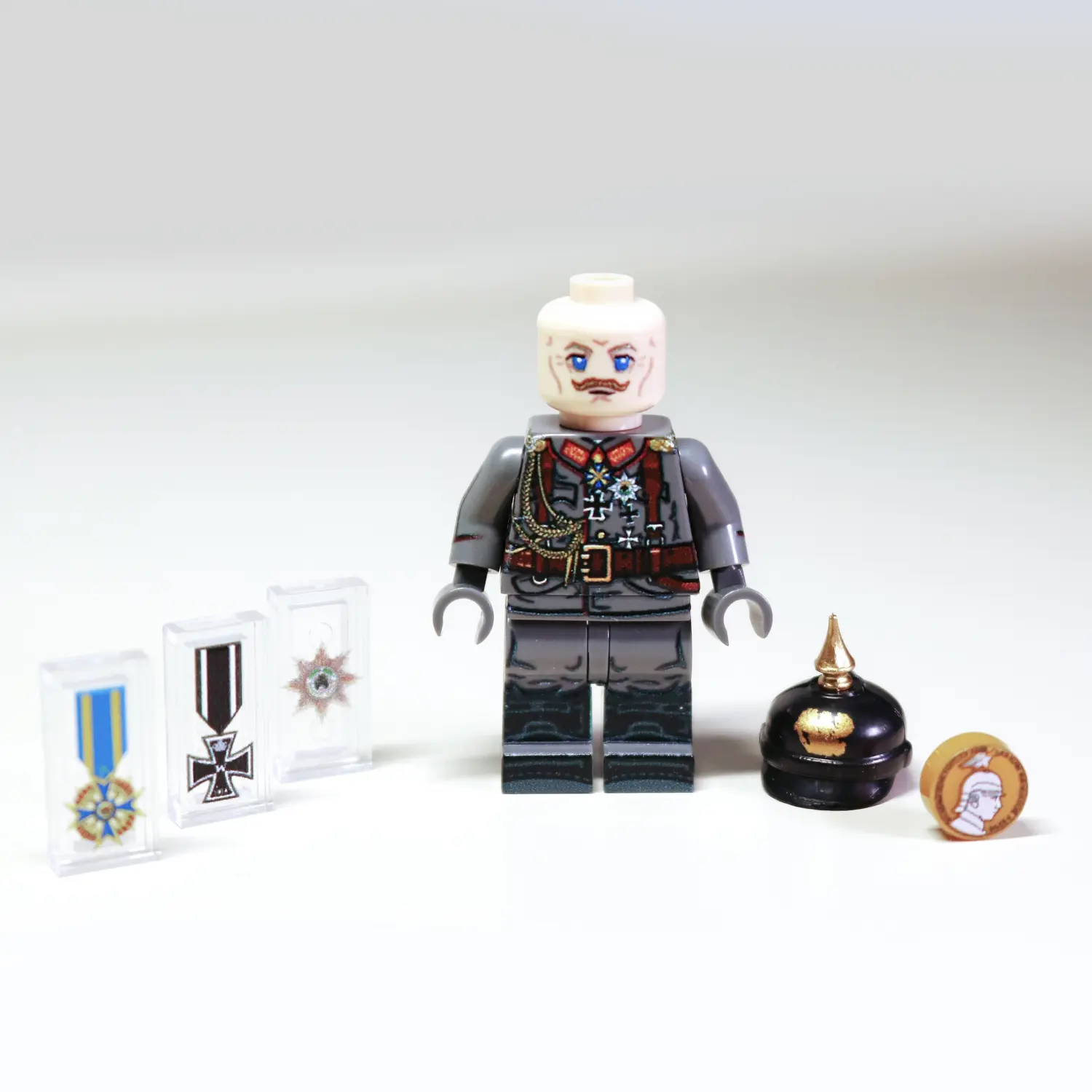
This premium toy minifigure represents Kaiser Wilhelm II, the last German Emperor (Deutscher Kaiser) and King of Prussia, who reigned from 1888 until his abdication in 1918. He is the central historical figure of Germany during World War I.
-
Head & Face: The figure features the Kaiser’s most iconic physical trait: the grand, upturned Handlebar Mustache. His expression is stern, with blue eyes, befitting a monarch during wartime.
-
Uniform: He is dressed in the Field Grey (Feldgrau) General’s Uniform introduced during WWI.
-
Collar & Epaulettes: The tunic features a Red Collar with gold embroidery (signifying general rank) and gold shoulder epaulettes.
-
Decorations: The chest print is incredibly detailed, showing the sash of the Order of the Black Eagle (orange sash), multiple breast stars, and the Iron Cross tucked into his tunic buttonhole. He also wears a gold Aiguillette (braided cord) on his right shoulder.
-
-
Headgear: Next to him sits the legendary Pickelhaube (Spiked Helmet). It is black with gold trim and a prominent gold spike on top. This helmet was the symbol of Prussian militarism until it was replaced by the Stahlhelm later in the war.
-
Accessories (The Medals): The set includes three transparent tiles printed with specific historical awards:
-
The Blue Max (Pour le Mérite): The blue cross (leftmost tile). This was the Kingdom of Prussia’s highest military order.
-
The Iron Cross (Eisernes Kreuz): The black cross with white outline (center tile).
-
Order of the Black Eagle Star: The silver star medal (rightmost tile).
-
Commemorative Coin: There is also a small round gold tile featuring a profile portrait of the Kaiser himself, mimicking a period coin or medal.
-
Historical Background: Kaiser Wilhelm II was the eldest grandchild of Britain’s Queen Victoria. He is historically remembered for his aggressive foreign policy and love of military pomp, which contributed to the outbreak of World War I in 1914. During the war, he technically held the position of Supreme War Lord, though actual command eventually fell to his generals (Hindenburg and Ludendorff). He was forced to abdicate on November 9, 1918, marking the end of the German Empire and the Hohenzollern monarchy.
Reviews
There are no reviews yet