

Character Identification
Specific Name: WWII Japanese Imperial Army (IJA) Infantryman / Rifleman
this represents a standard enlisted soldier (Private or Heicho) of the Imperial Japanese Army during World War II.
Visual Description
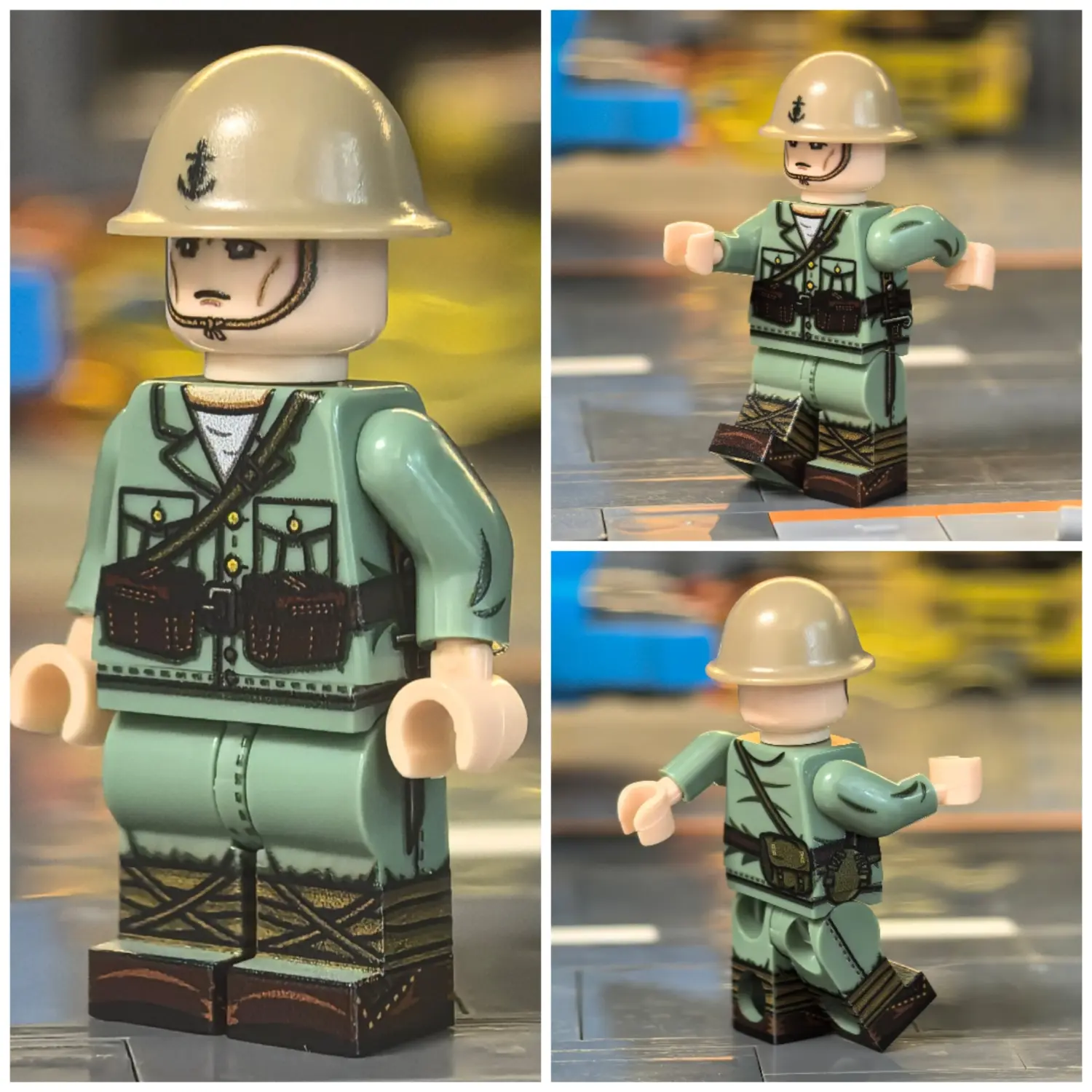
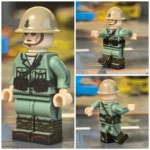
This custom-printed minifigure depicts the standard “grunt” or foot soldier of the Pacific War.
-
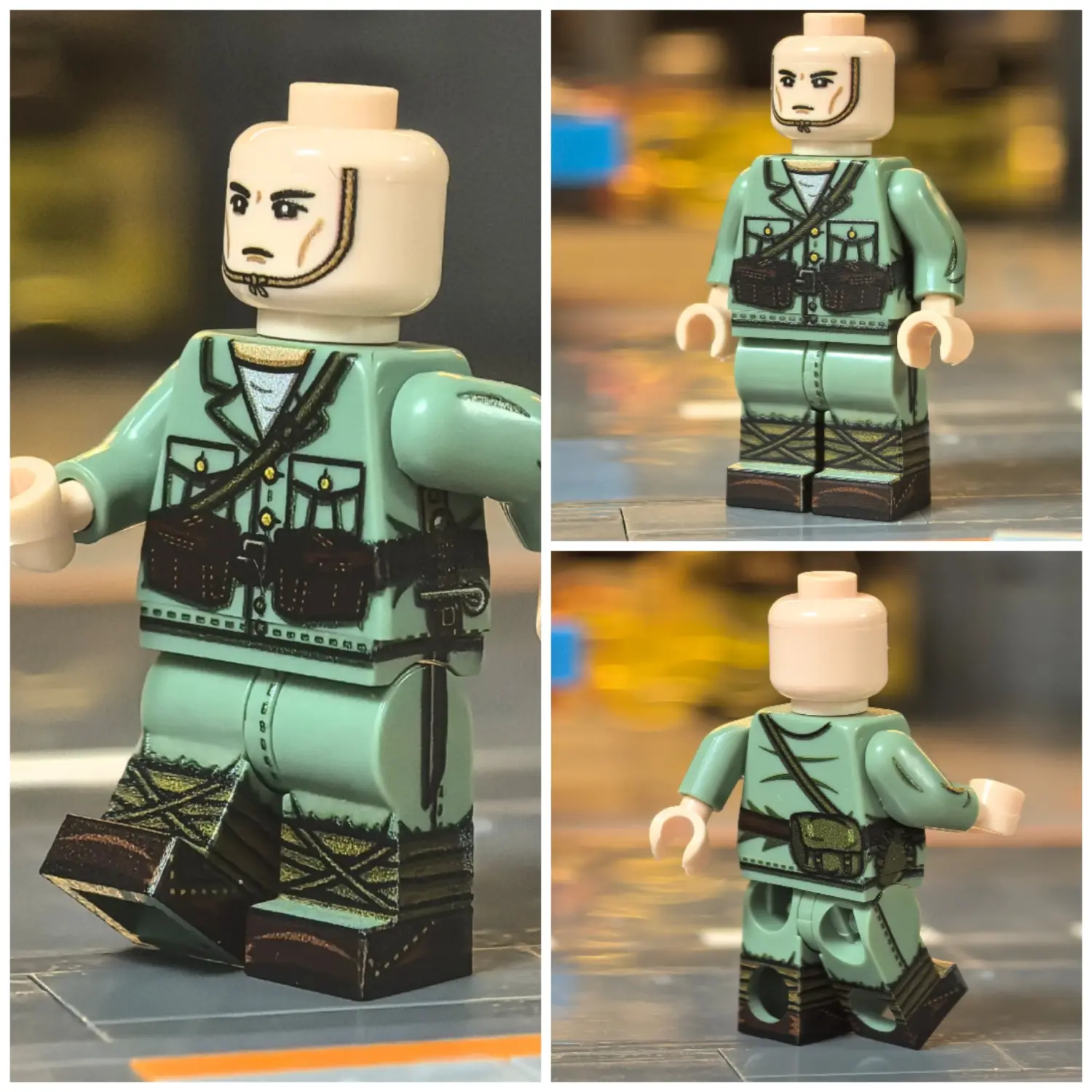
Head: The face print features the distinct cotton chin strap tied under the nose/chin. This was a signature look for Japanese soldiers, used to secure their field caps (Sen-bou) or helmets during combat. He has a serious, clean-shaven expression. wearing Type 90 Steel Helmets with the Imperial Navy Anchor insignia. He is wearing Type 90 Steel Helmets with the Imperial Navy Anchor insignia.
-
Uniform: He is wearing the Type 98 Summer Uniform in a sage green color, which was widely issued for tropical environments in Southeast Asia and the Pacific islands.
-
Torso & Gear: Unlike the “Squad Leader” (who had a chest rig), this soldier wears the standard infantry leather waist belt. Printed on the front are two large ammunition pouches. Historically, these pouches held stripper clips for the Arisaka Type 38 or Type 99 Bolt-Action Rifle.
-
Side Detail: On the figure’s left hip (printed on the side of the torso/legs), there is a visible Bayonet Frog and Scabbard. This represents the Type 30 Bayonet, a long sword-bayonet that was standard issue for all Japanese infantrymen.
-
Legs: The legs feature detailed printing of Puttees (Kyahan). These are cloth wrappings used to secure the pant legs and support the ankles during long marches through rough jungle terrain.
Historical Background
This figure represents the backbone of the Imperial Japanese Army.
-
The Rifleman: This soldier would have been armed with a bolt-action Arisaka rifle. The two pouches on his belt (along with a third one usually worn on the back, though not visible here) allowed him to carry 120 rounds of ammunition.
-
Jungle Warfare: The light green uniform and puttees were essential for survival in the dense jungles of Guadalcanal, the Philippines, and Burma. The puttees prevented insects and leeches from crawling up the pant legs.
-
The Bayonet Doctrine: The prominence of the bayonet on his belt highlights the IJA’s tactical philosophy. Even in the age of machine guns, Japanese infantry were heavily trained in Banzai charges and close-quarters shock attacks using their bayonets, relying on aggressive spirit (Seishin) to overwhelm the enemy.
Reviews
There are no reviews yet