




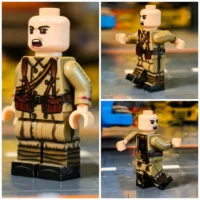
Character Identification
Specific Name: Imperial Japanese Army (IJA) Infantryman – Type 45 Uniform (Meiji 45 / Taisho Era Soldier)
This figure represents a soldier of the Empire of Japan wearing the Type 45 (Meiji 45) uniform. Adopted in 1912 (the 45th year of the Meiji era), this khaki uniform was the standard issue during World War I (e.g., the Siege of Tsingtao in 1914), the Siberian Intervention, and the early conflicts in Manchuria and China before the introduction of the Type 98 uniform in the late 1930s.
Visual Description
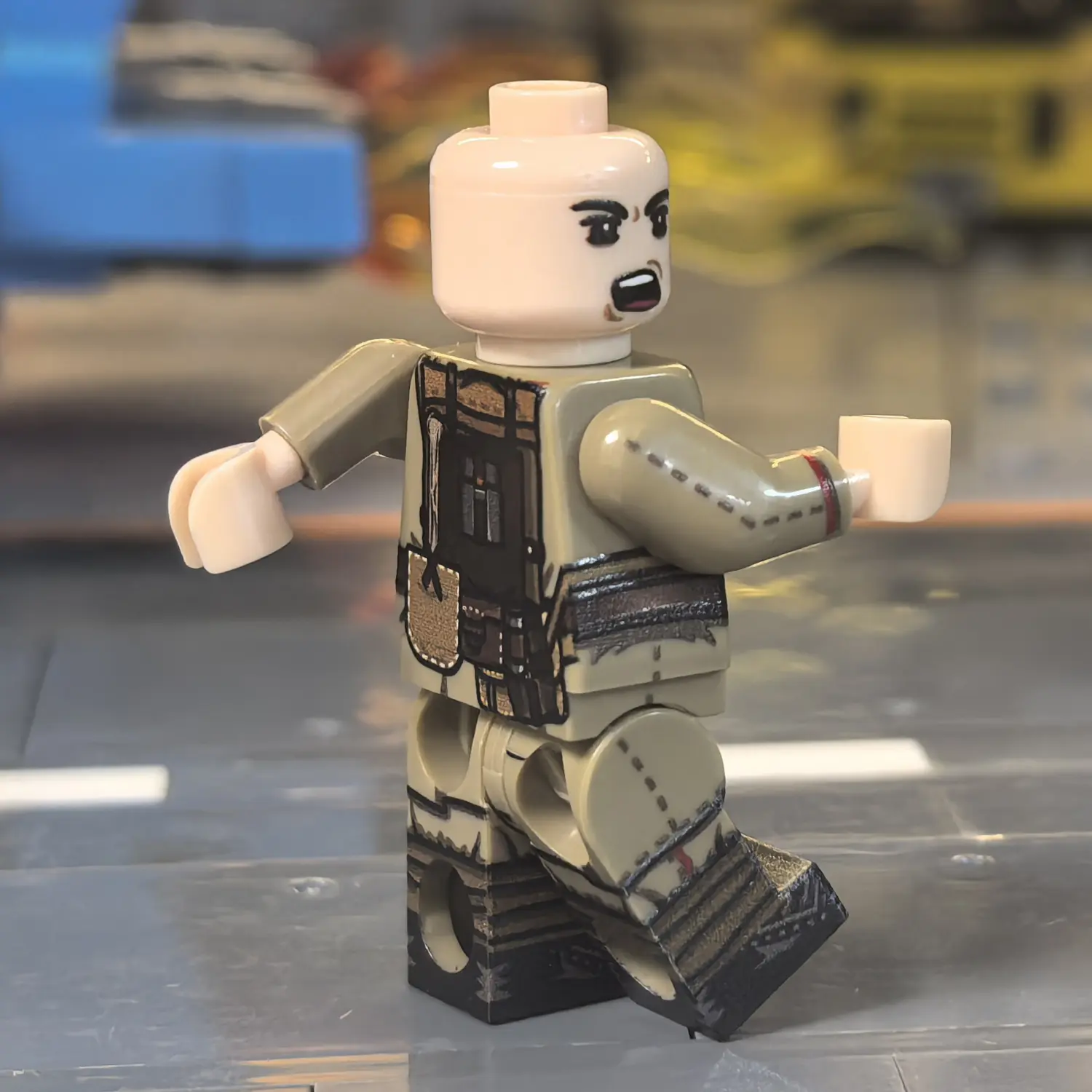
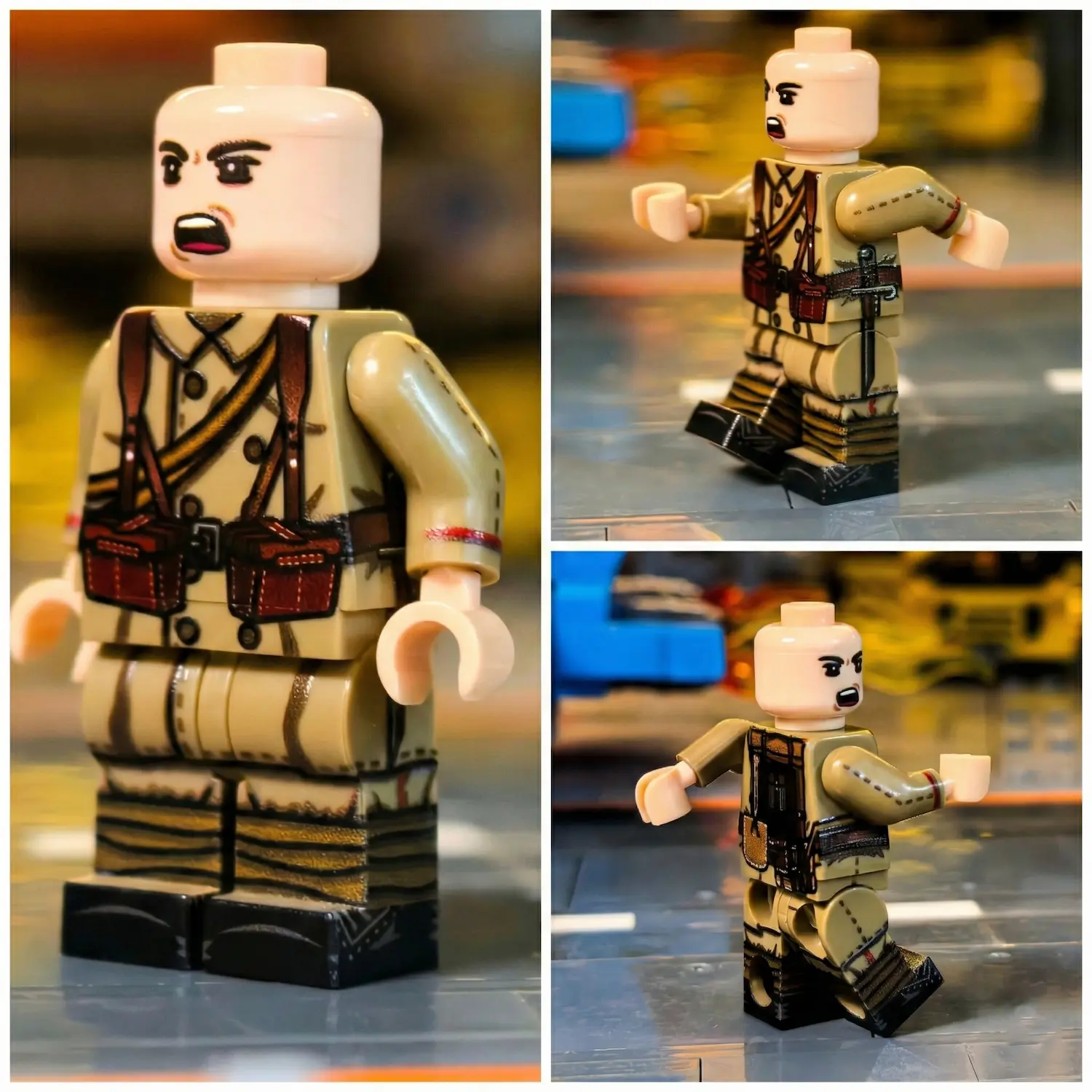
This custom-printed minifigure captures the specific look of the early-to-mid 20th-century Japanese infantryman, distinct from the later WWII variations:
-
Head: The figure features a Shaved/Bald Head. This was the standard grooming regulation for IJA soldiers to maintain hygiene and discipline. The face print shows an Aggressive/Shouting Expression, typical of a soldier in the midst of a charge (Banzai charge) or combat.
-
Uniform (The “Type 45”):
-
Color: He wears the distinctive Mustard Khaki wool uniform.
-
Red Sleeve Piping: A key detail on the sleeves is the Red Stripe/Piping on the cuffs. In the IJA, the color red denoted the Infantry branch. On the Type 45 uniform, branch colors were often displayed prominently (usually on collar patches or shoulder boards), and this figure stylizes that infantry red on the sleeves.
-
-
Combat Gear (Front):
-
Webbing: He wears brown leather Y-Straps (Suspenders) which support the belt gear.
-
Ammo Pouches: Two prominent brown leather Ammunition Pouches are printed on the front belt. These would historically hold stripper clips for the Type 38 Arisaka rifle.
-
Cross Strap: A diagonal leather strap indicates a haversack or canteen is slung over his shoulder.
-
-
Combat Gear (Back & Side):
-
Backpack: The back printing features a detailed Field Knapsack (Tornister) with a Shovel/Entrenching Tool strapped to it. This heavy marching loadout was typical for infantry moving on foot across China.
-
Bayonet: On his left hip (visible in the side view), there is a printed Bayonet Scabbard, a critical weapon for the IJA which placed heavy emphasis on close-quarters shock attacks.
-
-
Legs: The legs feature printed Puttees (Leg Wraps) in a crisscross pattern. These cloth strips were wrapped around the calves to support the legs during long marches and prevent debris from entering the boots.
Historical Background
-
The Type 45 Uniform: Introduced in 1912, this uniform replaced the earlier dark blue uniforms of the Russo-Japanese War. It was the face of the Japanese Army during the Taisho Era (1912–1926) and the early Showa Era.
-
The Era (1914): As your hint suggests, this gear corresponds to the 1914 period. This means this soldier represents the forces that fought in the Siege of Tsingtao (1914) against Germany or the subsequent Siberian Intervention (1918).
-
Visual Legacy: This uniform represents the IJA before the “modernization” of 1938. The shaved head, putty-wrapped legs, and leather webbing became the iconic, feared silhouette of the Japanese soldier throughout Asia.

Reviews
There are no reviews yet