

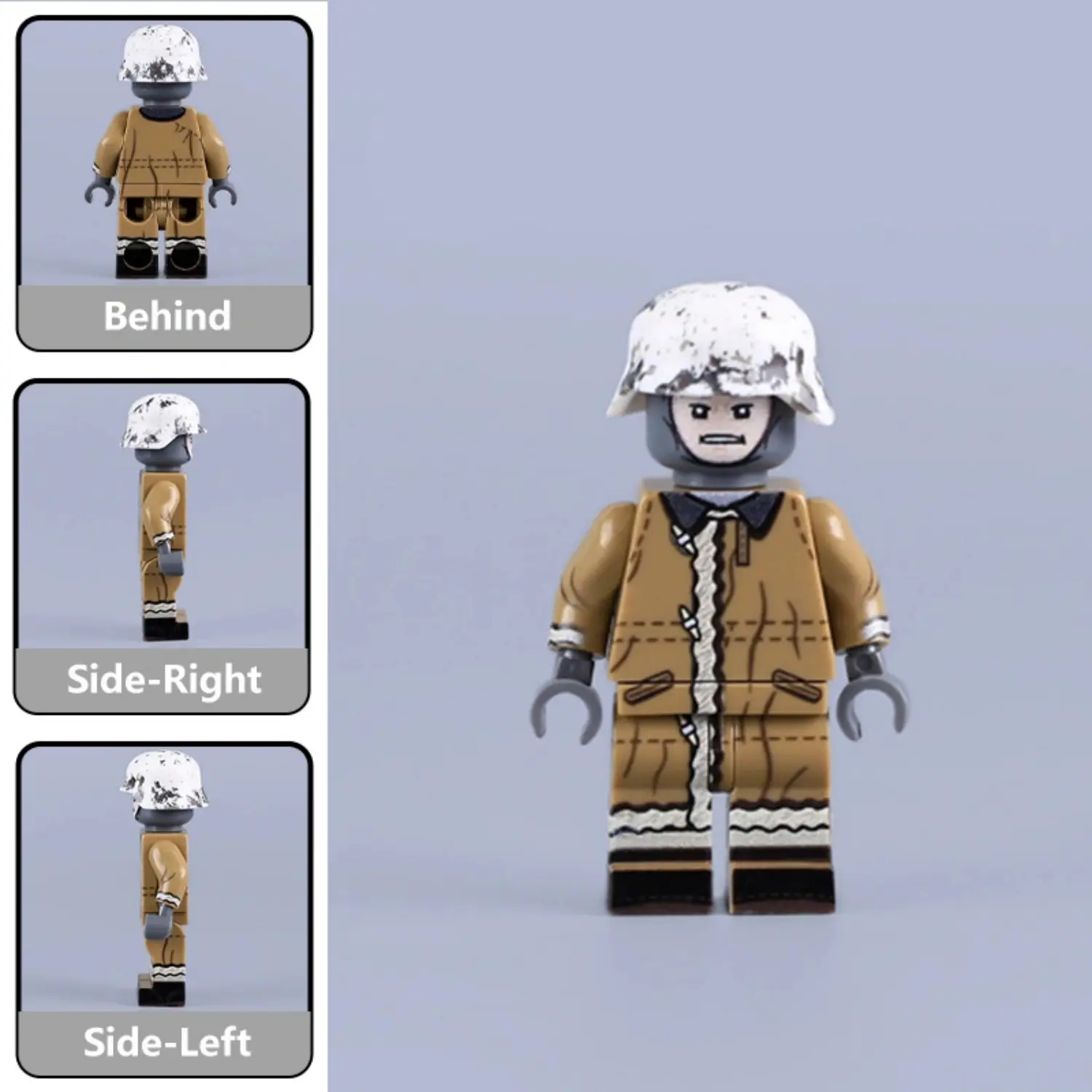
This image displays a toy minifigure representing a German Soldier in Winter Gear from World War II.
The Figure: German Soldier in Sheepskin Greatcoat This figure depicts a Wehrmacht or Waffen-SS soldier equipped for the extreme cold of the Eastern Front.
-
Uniform: The most defining feature is the Tan Sheepskin Coat (often called a Wachmantel or guard coat). These heavy coats were lined with fur or sheepskin and were essential for sentries and troops operating in freezing temperatures. The print details show the toggle buttons and the fur lining peeking out at the collar and hem.
-
Headgear: He wears a Whitewashed Stahlhelm (steel helmet). The white paint was applied over the standard field grey helmet to provide camouflage in the snow. The chipped paint effect adds a realistic, battle-worn look.
-
Underlayer: Underneath the coat, he wears a Grey Hood/Balaclava (or Oma-Schal / “Grandma shawl”) to protect his neck and ears from frostbite. He wears dark boots with white/grey gaiters or socks pulled over them.
-
Role: This figure represents a soldier on guard duty or static defense during the harsh Russian winters (like the Battle of Moscow or Stalingrad), where staying warm was as critical as fighting the enemy.
Historical Background: In the first winter of the invasion of Russia (1941), the German army was woefully unprepared for temperatures dropping below -40°C. Soldiers suffered mass frostbite. By the later winters, specialized winter gear like these heavy sheepskin coats became prized possessions. They were often issued to sentries who had to stand still for long periods. The “whitewash” on the helmet was a common field improvisation using lime or chalk to blend into the snowy landscape.
Reviews
There are no reviews yet