

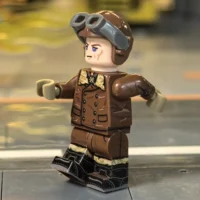
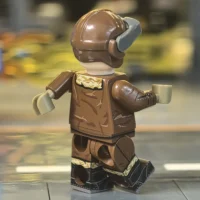
Character Identification: WWI German “Red Baron” Fighter Pilot (Leather Jacket Version)
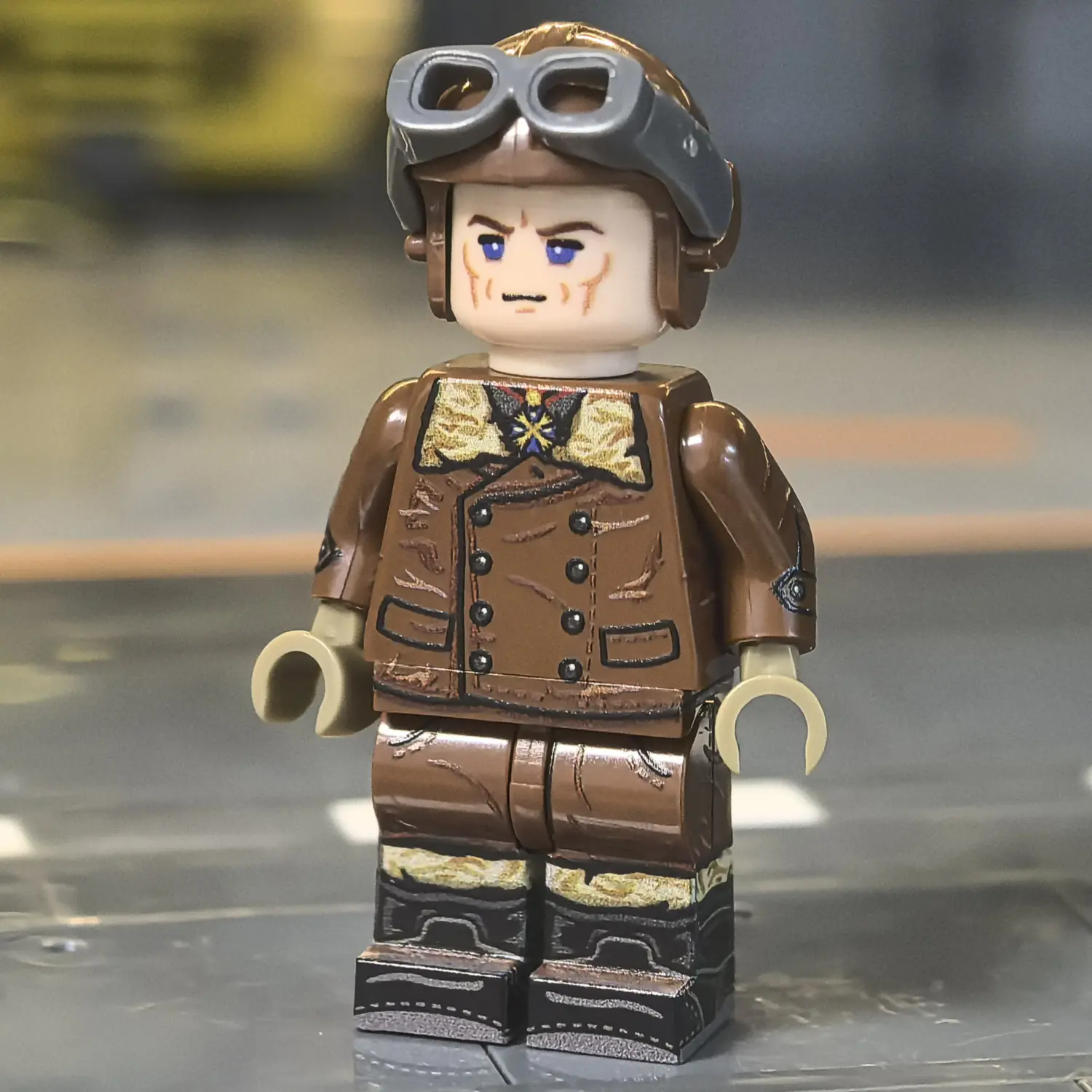
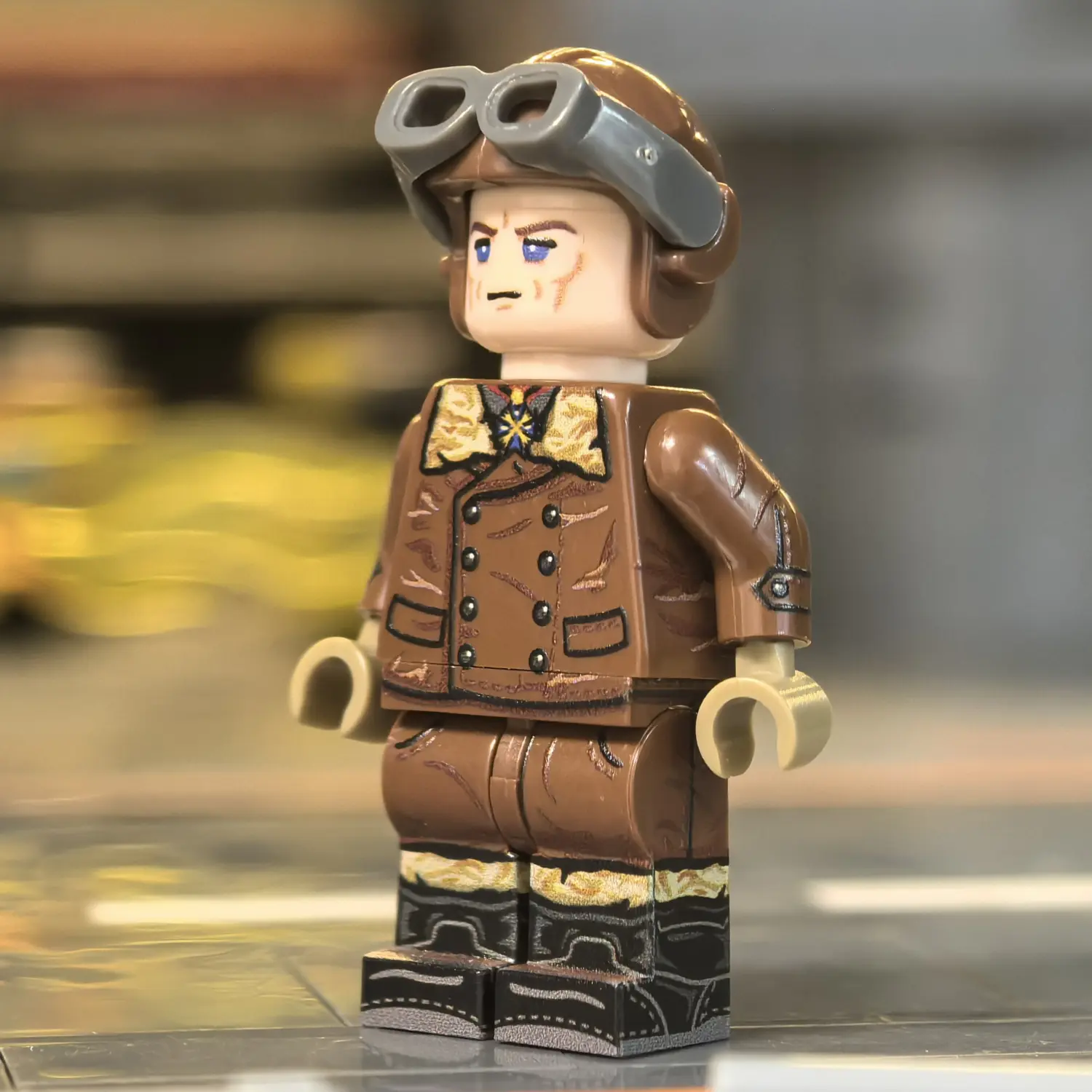
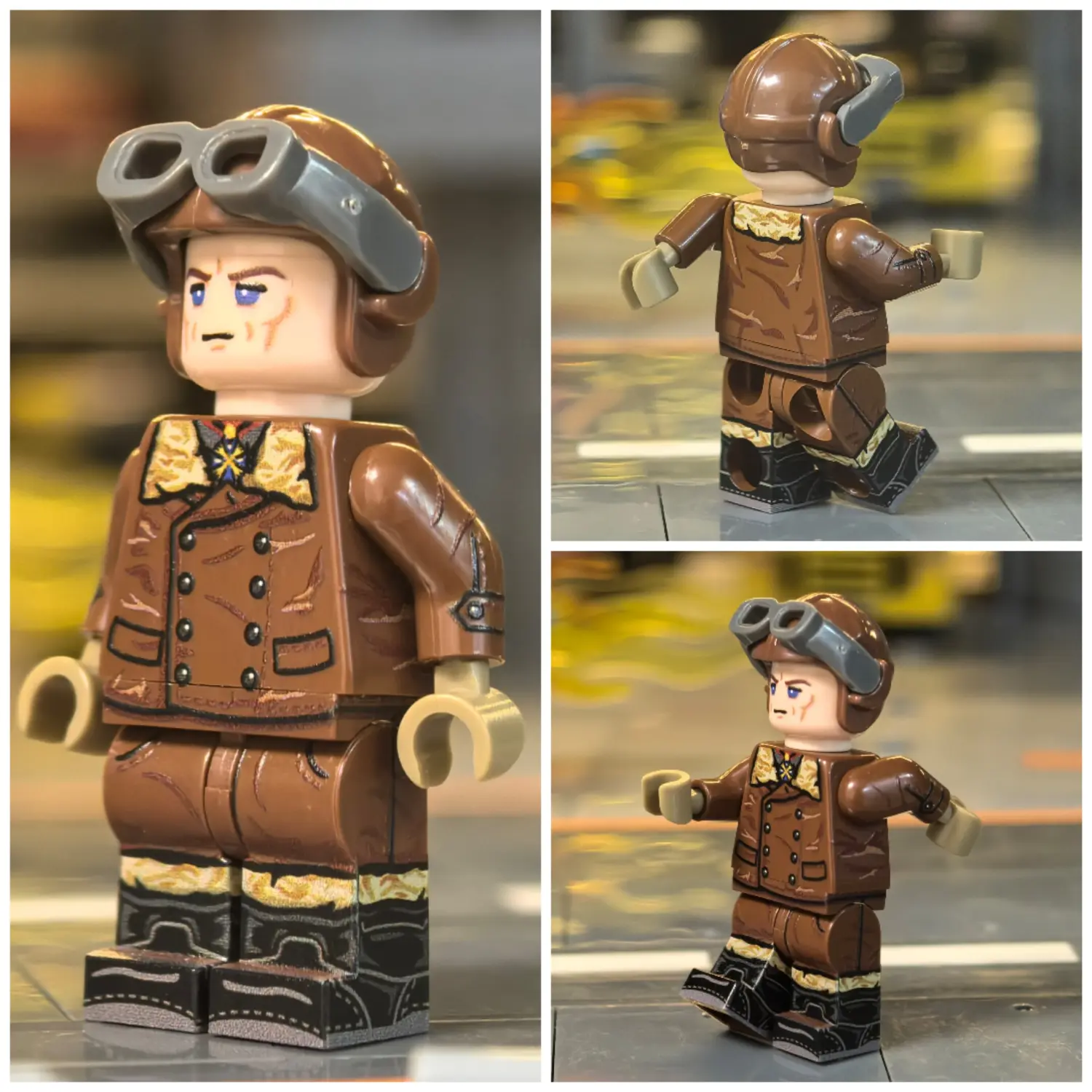
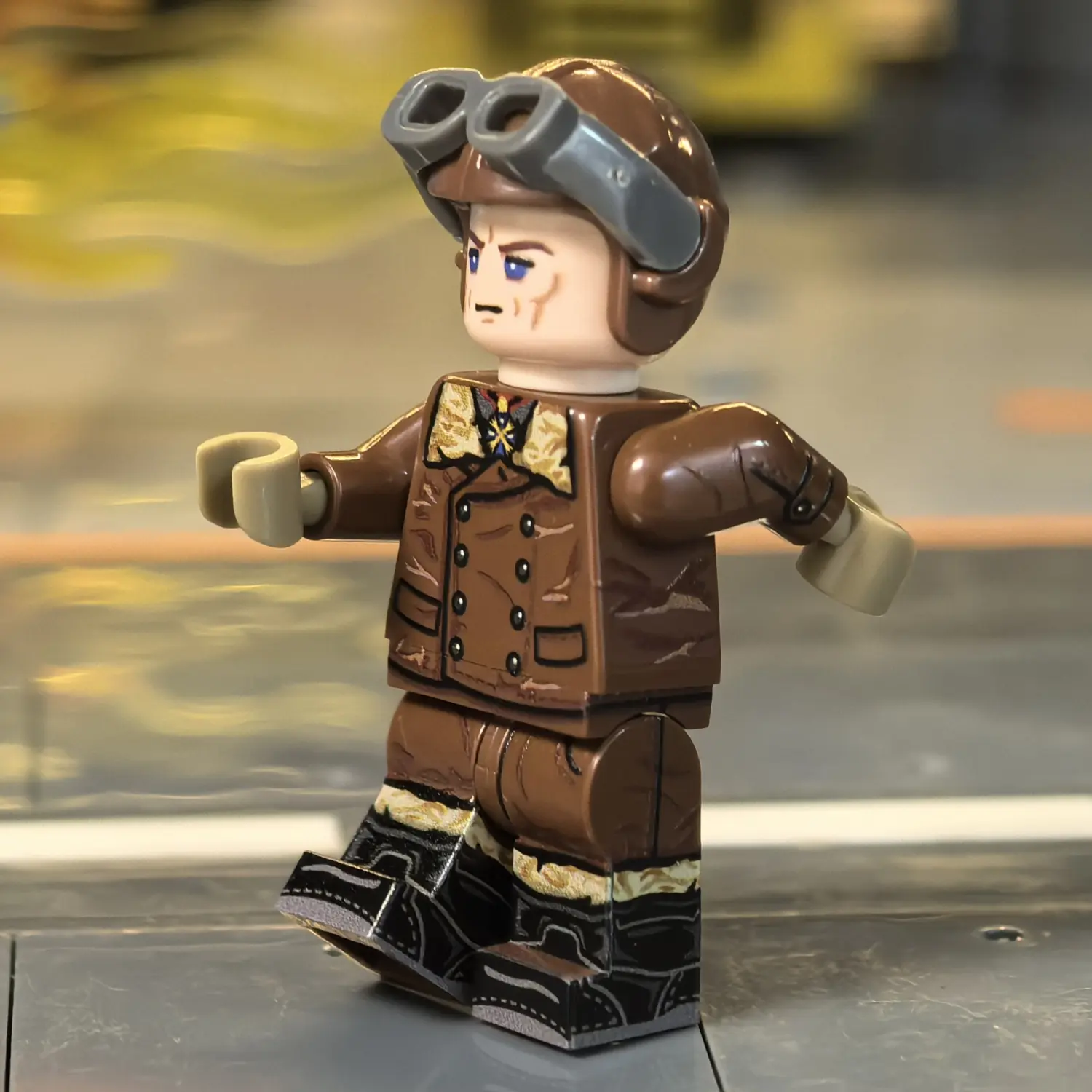
This custom building block minifigure represents Manfred von Richthofen, universally recognized by his legendary historical moniker, the Red Baron (Der Rote Baron). Specifically, this figure depicts him in his heavy winter flying gear, serving as a fighter pilot for the Imperial German Army Air Service (Luftstreitkräfte) during World War I.
Uniform and Equipment Details
-
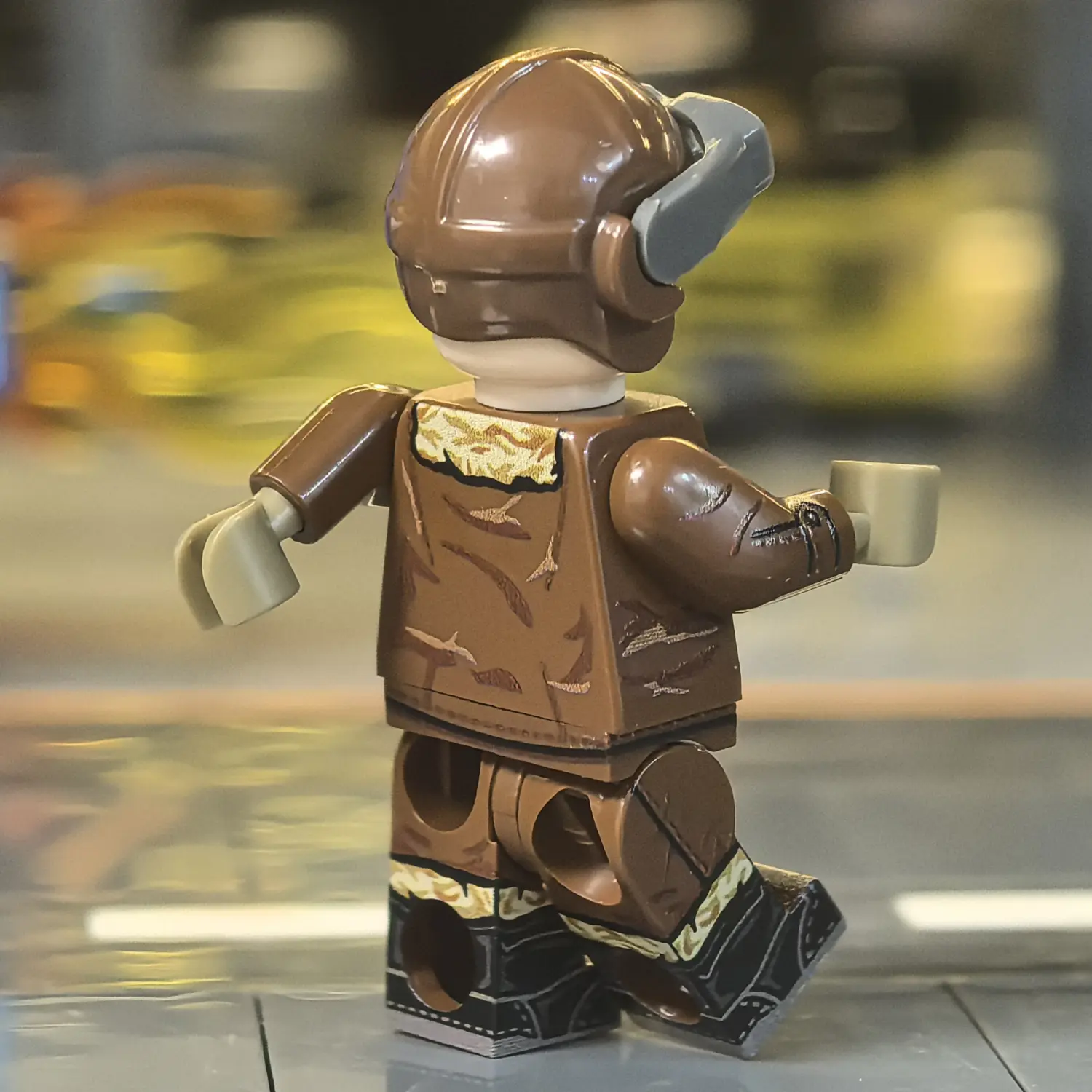
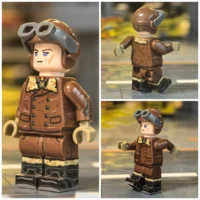
The Flight Gear: Unlike ceremonial military tunics, this minifigure is dressed for the freezing, harsh realities of early open-cockpit aviation. He is wearing a highly detailed, double-breasted brown leather flying jacket (Fliegerjacke) with a warm fur-lined collar and matching fur-lined cuffs on his trousers.
-
Headgear: He wears a classic brown leather aviator’s helmet, designed to keep the wind and cold out, topped with a pair of pushed-up grey flying goggles, an absolute necessity for pilots to protect their eyes from engine oil and freezing wind.
-
The Pour le Mérite: The most prestigious and crucial identifying feature on this figure is the blue and gold cross printed exactly at his collar. This is the Pour le Mérite (informally known as the “Blue Max”), the highest military order of merit in the Kingdom of Prussia and the German Empire.
-
Footwear: His outfit is completed with tall, black insulated flying boots designed to keep his feet warm at high altitudes.
Historical Background
Manfred von Richthofen (The Red Baron) is arguably the most famous fighter pilot in the entire history of aerial warfare. During World War I, he became the ultimate “ace of aces,” officially credited with 80 air combat victories before his death in April 1918. He was a brilliant tactician and the charismatic leader of Jagdgeschwader 1, a highly successful fighter wing that became famously known as the “Flying Circus” because of their brightly painted aircraft and highly mobile tent encampments.
Richthofen earned his iconic nickname because he painted his fighter planes—most famously his Fokker Dr.I Triplane—brilliant red so his enemies would know exactly who was in the sky with them.
The clothing depicted on this minifigure is historically vital. During WWI, airplanes had completely open cockpits. At combat altitudes, the temperatures were brutally freezing. Pilots could not wear standard wool uniforms; they relied entirely on heavy leather coats, thick animal fur, and greased faces to survive the extreme cold and wind chill. Earning the Pour le Mérite (the blue medal on his neck) was the ultimate goal of every German fighter pilot, usually awarded after reaching a specific, high number of confirmed aerial shoot-downs.
Reviews
There are no reviews yet