

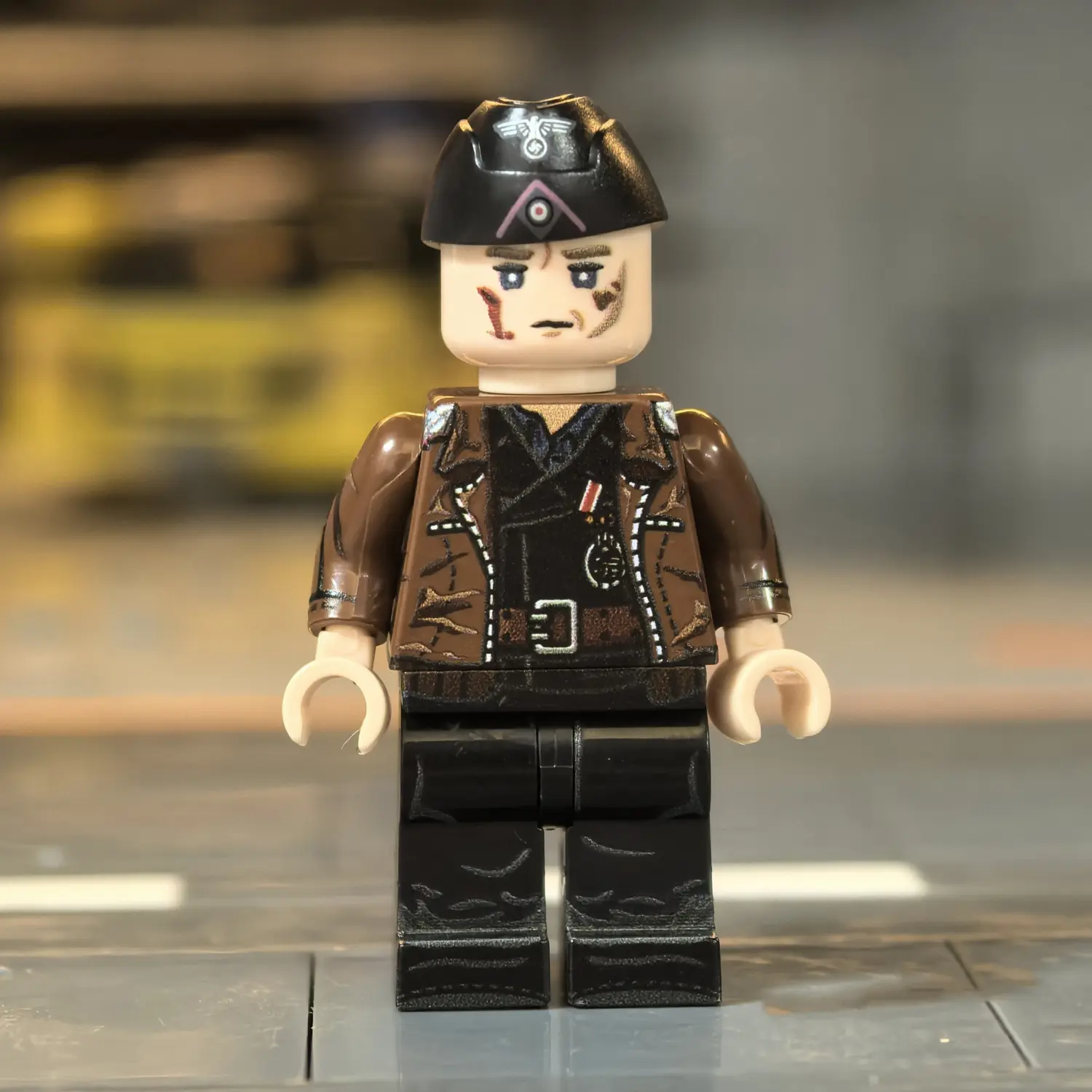
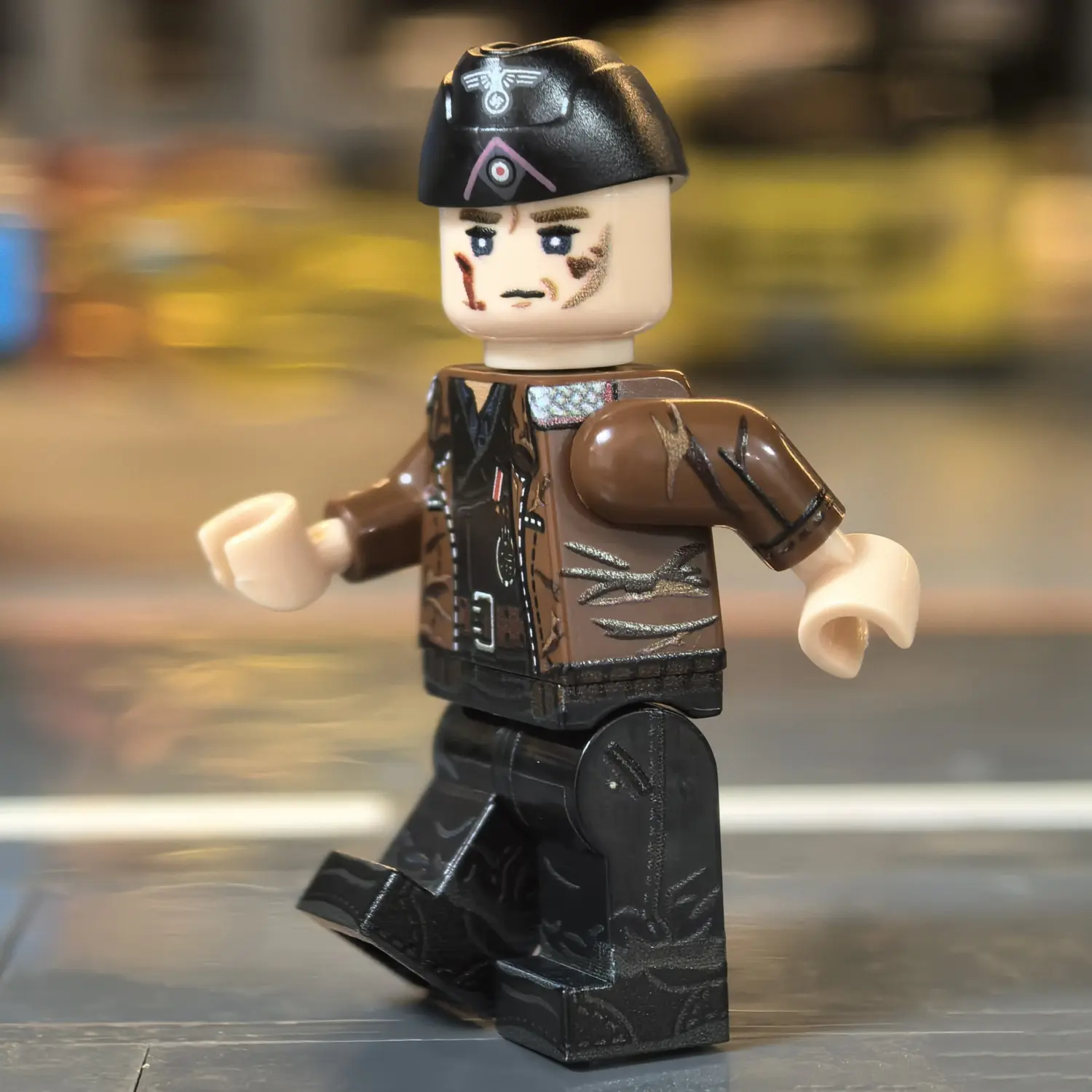
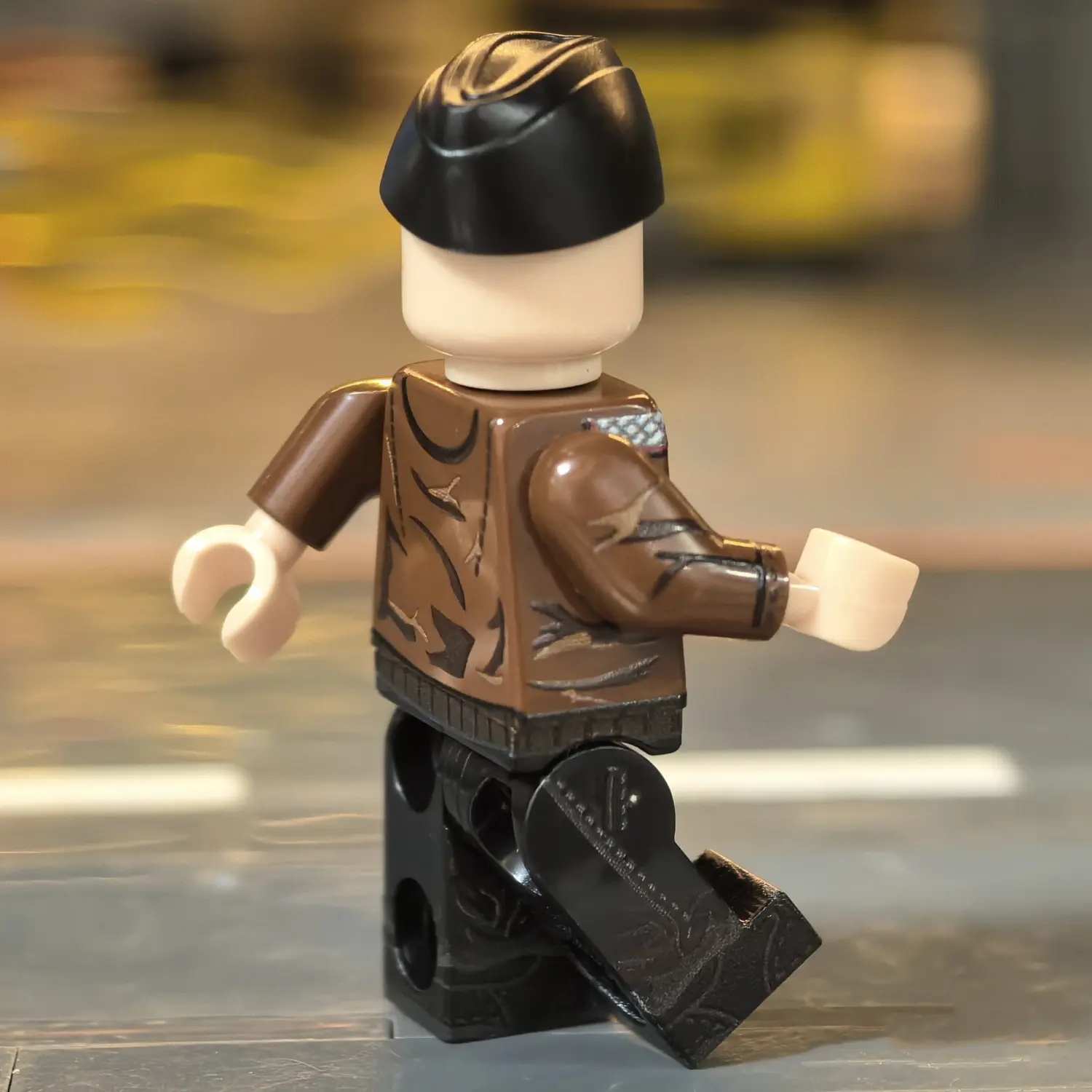
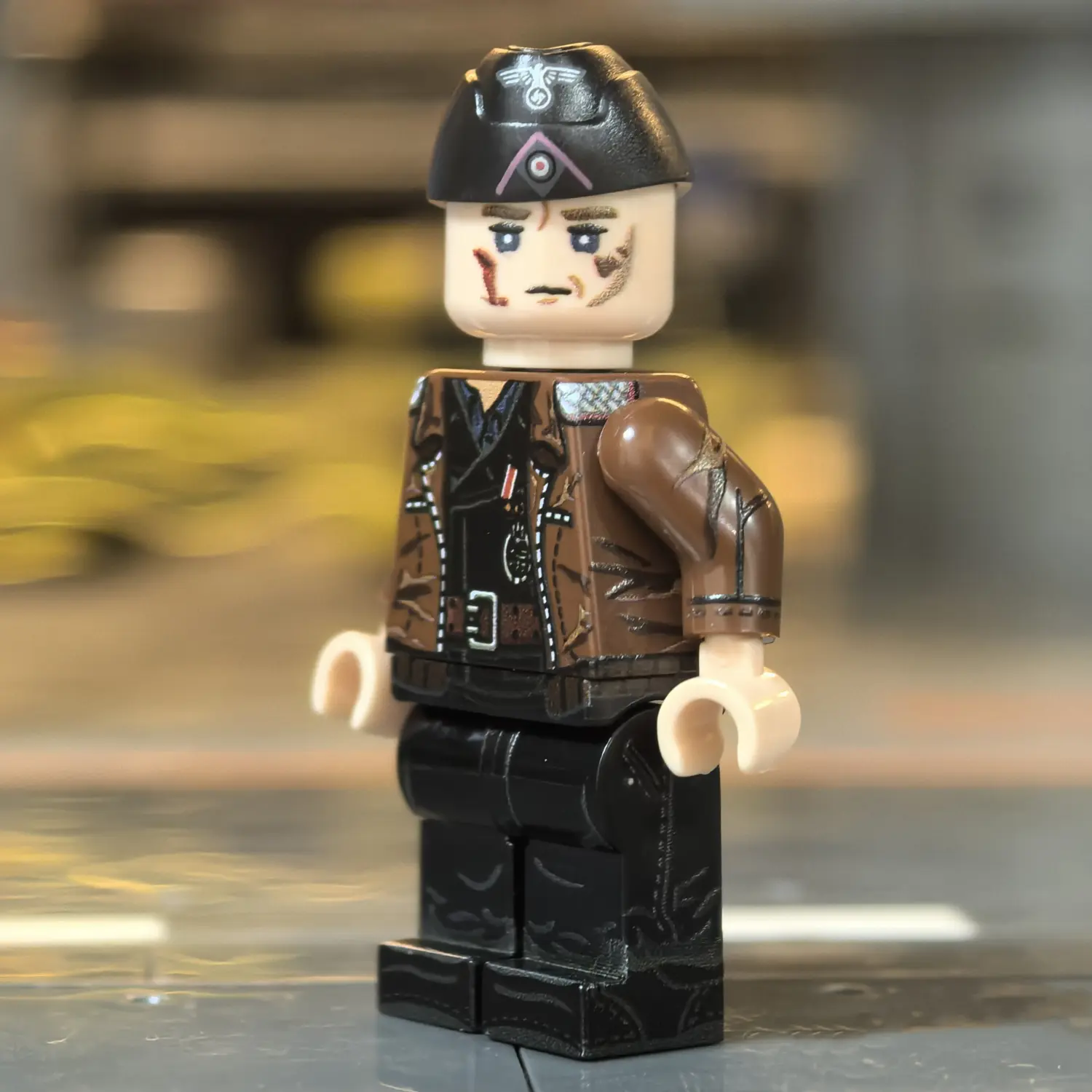


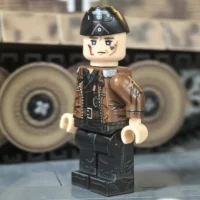

WWII German Panzer Commander (Normandy 1944 / “Hitlerjugend” Division Style)
This custom minifigure represents a battle-hardened German Tank Commander (Panzerkommandant) from the late World War II period, specifically around the Normandy Campaign (1944).
Visual Description
-
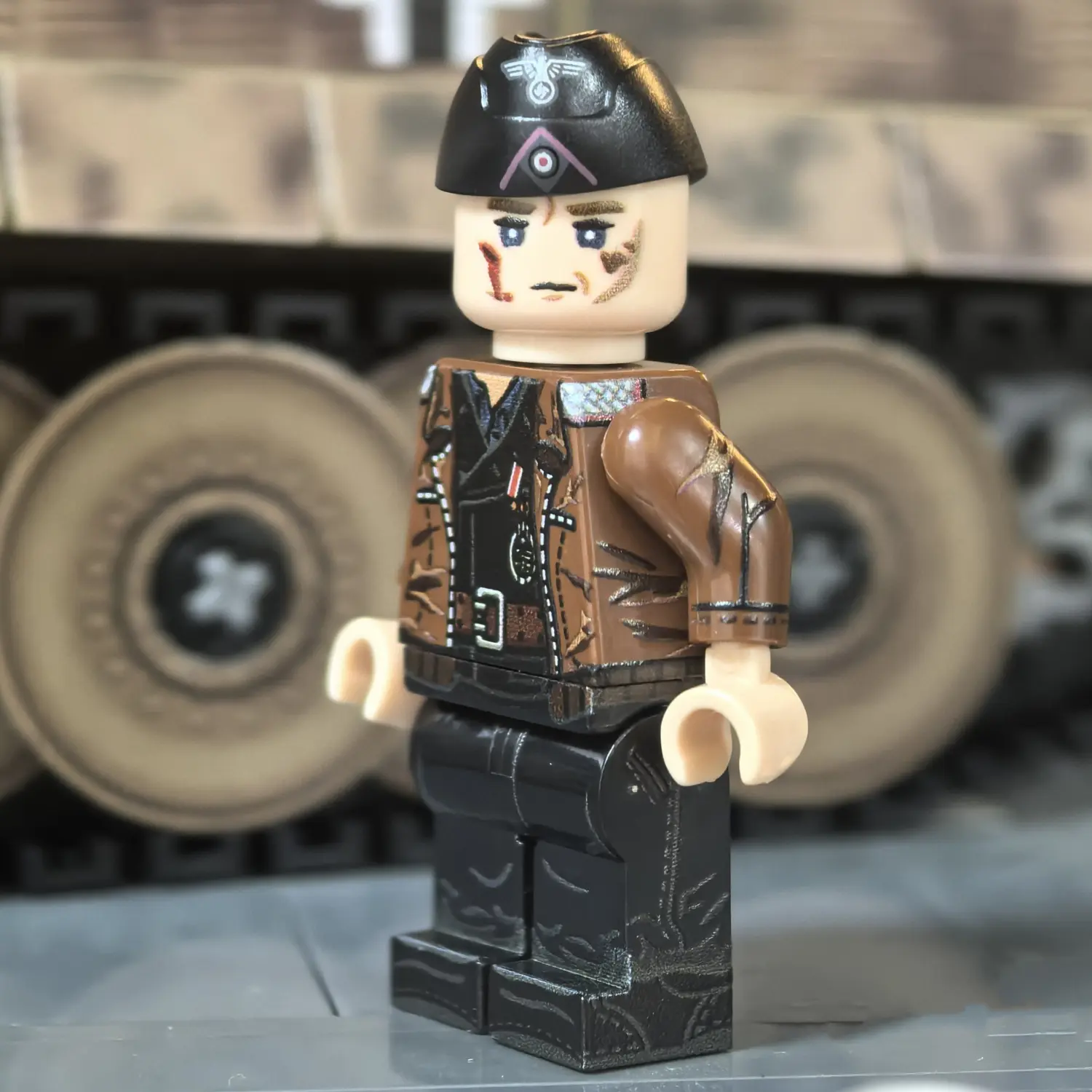
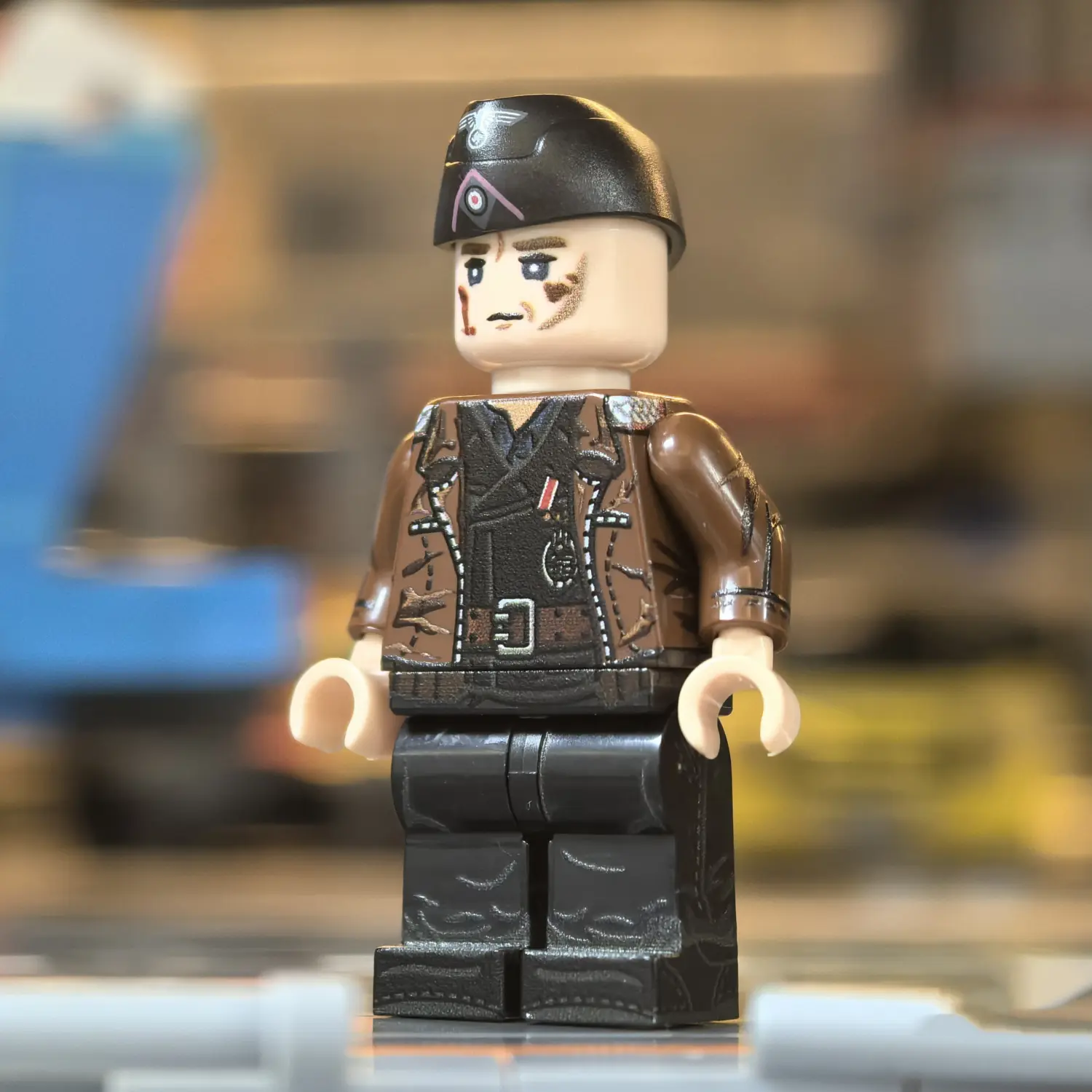
Headgear: He is wearing a black Panzer Side Cap (Schiffchen / M34 or M38 Overseas Cap). The cap features the German National Eagle (Reichsadler) insignia on the top and a cockade below it. Crucially, the cockade is surrounded by an inverted “V” (soutache) in Pink (Rosa), which was the specific Waffenfarbe (Branch Color) for the Panzertruppe (Armored Troops).
-
Face: The head features a specialized “Battle Damaged” print. He has a weary expression, cuts, and blood smears on his face, indicating he has recently survived combat or bailed out of a damaged vehicle.
-
Uniform (Torso): This is the most historically significant part of the figure. He is wearing a Brown Leather Jacket over his standard black Panzer uniform. Underneath the leather, you can see the collar of the black Panzer Wrapper (Panzerjacke) with collar tabs.
-
Insignia: Printed on the leather jacket’s lapel area (or the tunic underneath) is the ribbon for the Iron Cross 2nd Class (red, white, and black). On the lower left pocket, there is a Wound Badge (Verwundetenabzeichen) in black or silver, awarded for sustaining injuries in combat.
-
Legs: He wears standard black Panzer trousers, which were designed to hide grease and oil stains from working on the tanks.
Historical Background
The specific combination of a Black Panzer Cap and a Brown Leather Jacket is a famous historical “look” associated with the 12th SS Panzer Division “Hitlerjugend” during the fighting in Normandy, France, in 1944.
-
The Leather Jacket: Standard German tank crews wore black wool uniforms. However, wool was hot and not fire-resistant. In 1943-1944, the 12th SS Division acquired a large stock of Kriegsmarine (Navy) U-Boat leather jackets (or sometimes Italian leather gear) from supply depots.
-
Why they wore it: Tank crews loved these jackets because leather was fire-resistant (offering better protection against flash burns if the tank was hit) and durable in the rough interior of a tank. It became a status symbol of veteran crews in that specific theater of war.
-
The Role: As a commander, this figure would have stood in the cupola of a Panther or Tiger tank, directing the driver and gunner while exposing himself to enemy fire, hence the wound badge and battle scars.
Reviews
There are no reviews yet