

Character Identification: WWII German Luftwaffe Fighter Pilot
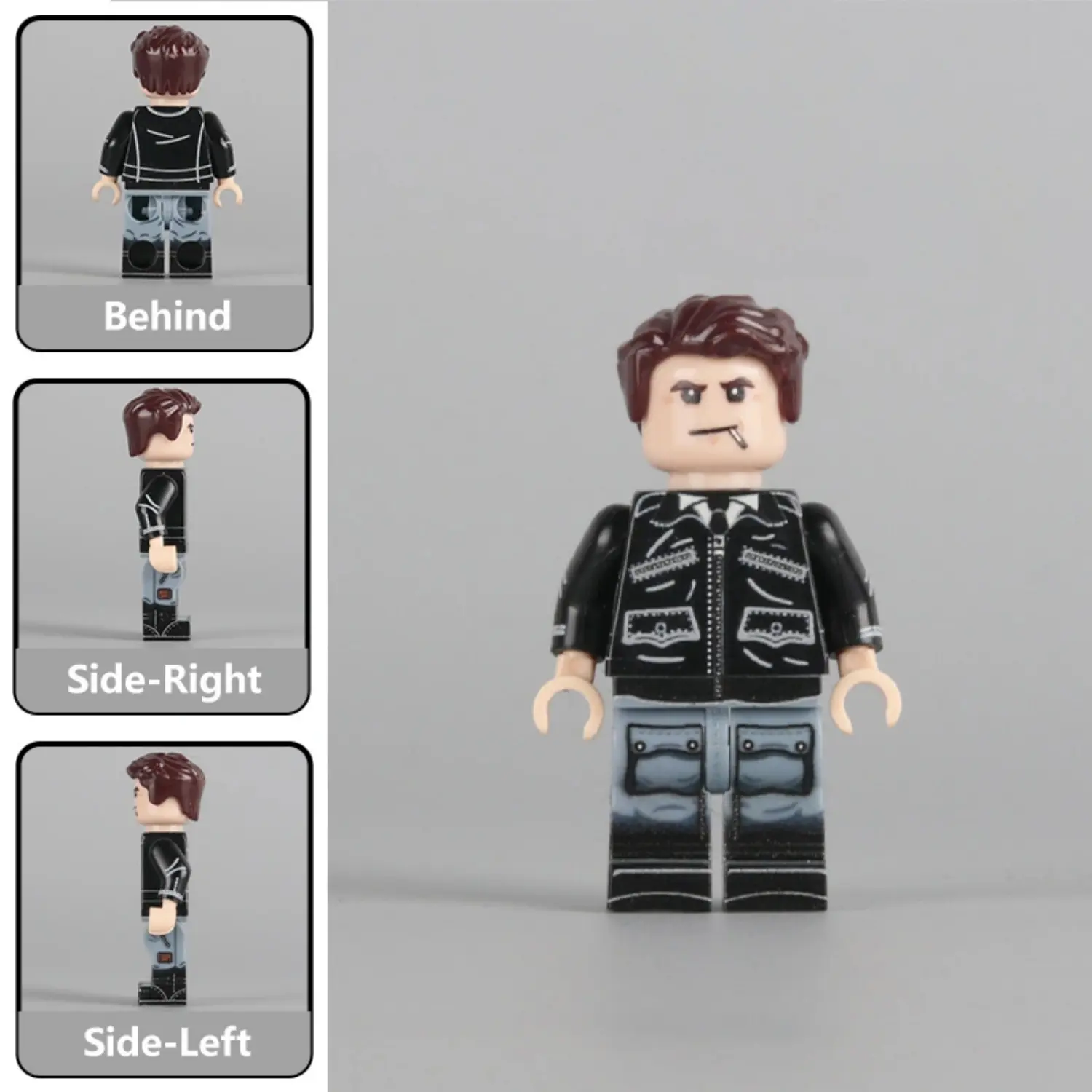
This custom building block minifigure represents a classic World War II German Air Force (Luftwaffe) Fighter Pilot. Based on the specific uniform details—most notably the heavy black leather flight jacket paired with blue-grey cargo trousers—this figure depicts a rugged, battle-hardened fighter ace returning from or preparing for a high-altitude combat sortie.
Specific Name and Uniform Details
-
Specific Name: WWII German Luftwaffe Fighter Pilot / Ace (with Leather Jacket and Cigarette)
-
Head and Facial Features: The figure features a molded dark reddish-brown wavy hairpiece. His face is printed with a stern, focused expression and features a cigarette hanging from the corner of his mouth, giving him a gritty, relaxed, yet tough aviator aesthetic.
-
The Leather Flight Jacket: The torso features highly detailed UV printing of a black leather flight jacket. The detailing includes a heavy silver central zipper, angled zippered chest pockets, and snap-button flap pockets at the waist. Leather jackets were highly prized by pilots for their durability and warmth.
-
Officer’s Collar: Peeking out from the top of the heavy leather jacket is a formal white shirt collar and a black tie. This was a standard practice during WWII, as pilots were generally commissioned officers and often wore their formal service shirts underneath their heavy flight gear.
-
Flight Trousers and Boots: The lower half consists of “Luftwaffe blue-grey” flight trousers featuring large, buttoned cargo pockets on the thighs. The legs finish with printed black military flight boots.
Historical Background
During World War II, fighter pilots operating aircraft like the Messerschmitt Bf 109 or Focke-Wulf Fw 190 faced extreme physical environments.
-
The Need for Leather: High-altitude aerial combat took place in unpressurized cockpits where temperatures could easily drop well below freezing. Heavy leather jackets (often privately purchased by officers or captured/scavenged) were incredibly popular because leather was excellent at blocking the biting, freezing wind at high altitudes.
-
Map Pockets (Cargo Pants): The large pockets on the thighs were a practical necessity. Fighter cockpits were incredibly cramped and lacked storage space. Pilots used these cargo pockets (often called map pockets or channel pants) to store vital navigation maps, emergency flare rounds, and small survival tools directly on their legs where they could be easily reached while strapped into the pilot’s seat.
-
The “Fighter Ace” Persona: The aesthetic of this specific figure—a rugged pilot smoking a cigarette while wearing an officer’s tie beneath a heavy leather jacket—perfectly captures the romanticized, high-stress reality of the WWII aviator. Pilots lived in a constant state of tension, going from long periods of waiting on the airfield to moments of sheer terror in the sky, leading to a culture that often embraced a rugged, “live fast” attitude.
Reviews
There are no reviews yet