


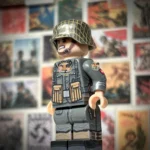
The Figure: WWII German Infantryman (Late War “Grenadier”)
This toy minifigure represents a battle-hardened German Soldier (Grenadier) from the late World War II period (circa 1943–1945). The specific equipment he is wearing, particularly the helmet and footwear, places him historically in the final defensive campaigns of the war, such as the Battle of Normandy or the defense of the Reich.
-
Headgear (Key Feature): He wears a “Chicken Wire” Camouflage Helmet (Drahtnetz). This is a standard German steel helmet (Stahlhelm) covered with a hexagonal wire mesh. Historically, soldiers improvised this by cutting fencing wire from farms to attach foliage, leaves, or cloth to their helmets, breaking up their silhouette to hide from Allied snipers and aircraft.
-
Uniform: He wears the standard Field Grey (Feldgrau) Tunic. The printing details show the late-war style, often made of lower quality wool as supplies dwindled. The collar features the standard Wehrmacht Litzen (collar tabs).
-
Insignia:
-
Chest Eagle: A faint Breast Eagle (Hoheitsadler) is visible above his right pocket.
-
Armband: On his left arm, he wears a Red Armband with a White Circle and Black Cross. As with the other figures in this series, this is a censored version of the historical Swastika armband, modified by the toy manufacturer to comply with modern laws while retaining the color scheme of the era.
-
-
Tactical Gear:
-
Ammo Pouches: He wears a set of Tan/Canvas Ammunition Pouches on his belt. The color suggests these are late-war tropical or canvas gear (often associated with the Afrika Korps but widely used in Europe later on). They resemble pouches for the MP40 submachine gun or possibly the StG44.
-
Belt: He wears the standard black leather belt with a buckle.
-
-
Legs: The leg printing depicts Ankle Boots with Canvas Gaiters (Gamaschen). By 1943, the famous German leather jackboots were largely replaced by these shorter boots and leggings to save leather, marking this clearly as a mid-to-late war figure.
-
Face: The face print shows an Angry/Gritted Teeth Expression, conveying the desperation and intensity of late-war combat.
Historical Background: By 1944, the German Army was on the defensive on all fronts. Soldiers like this “Grenadier” faced overwhelming Allied air superiority. The “Chicken Wire” helmet became an iconic look for German troops in Normandy (D-Day), as camouflage became critical for survival. The shift from tall leather boots to short ankle boots with gaiters also reflects the resource shortages Germany faced as the war turned against them.
Reviews
There are no reviews yet