



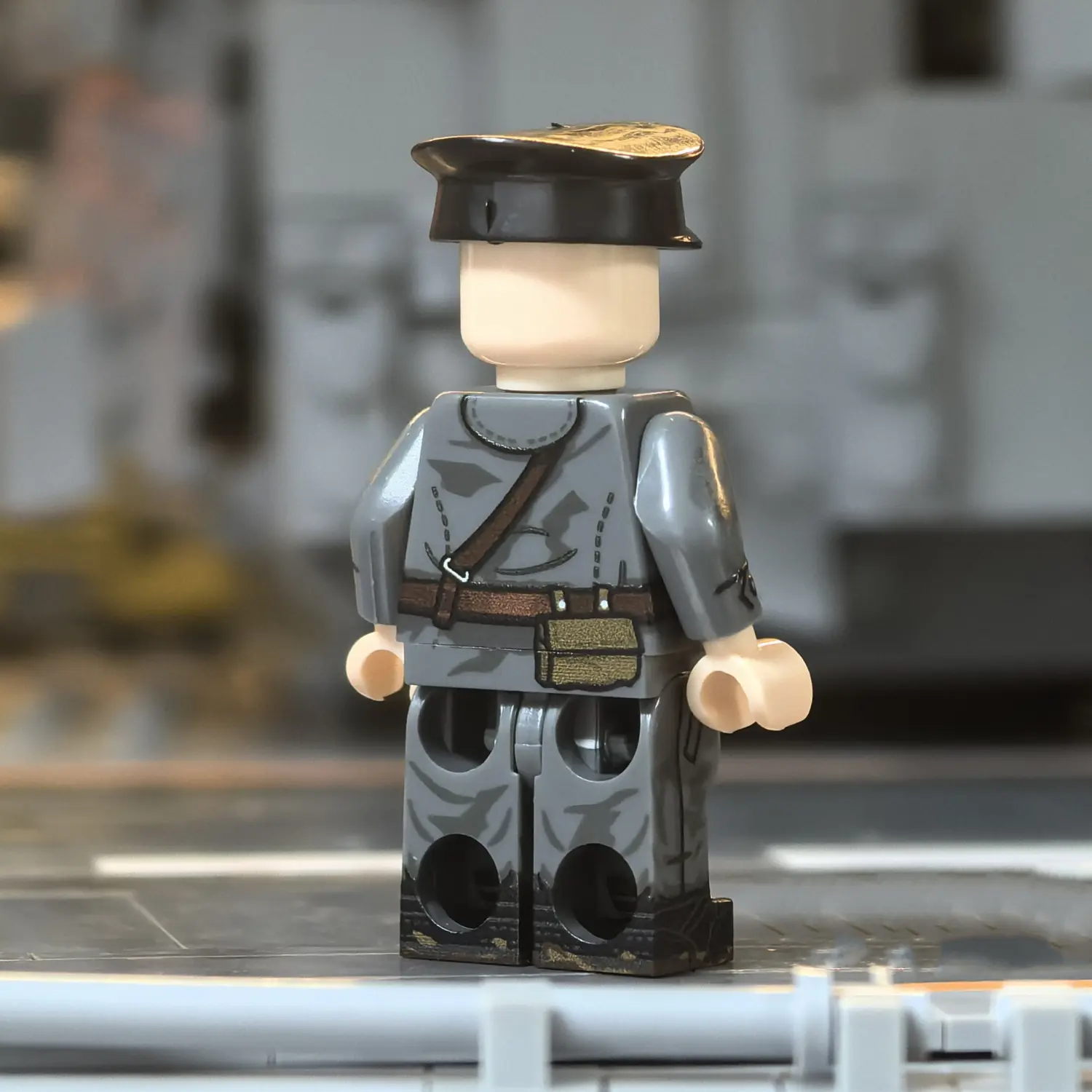
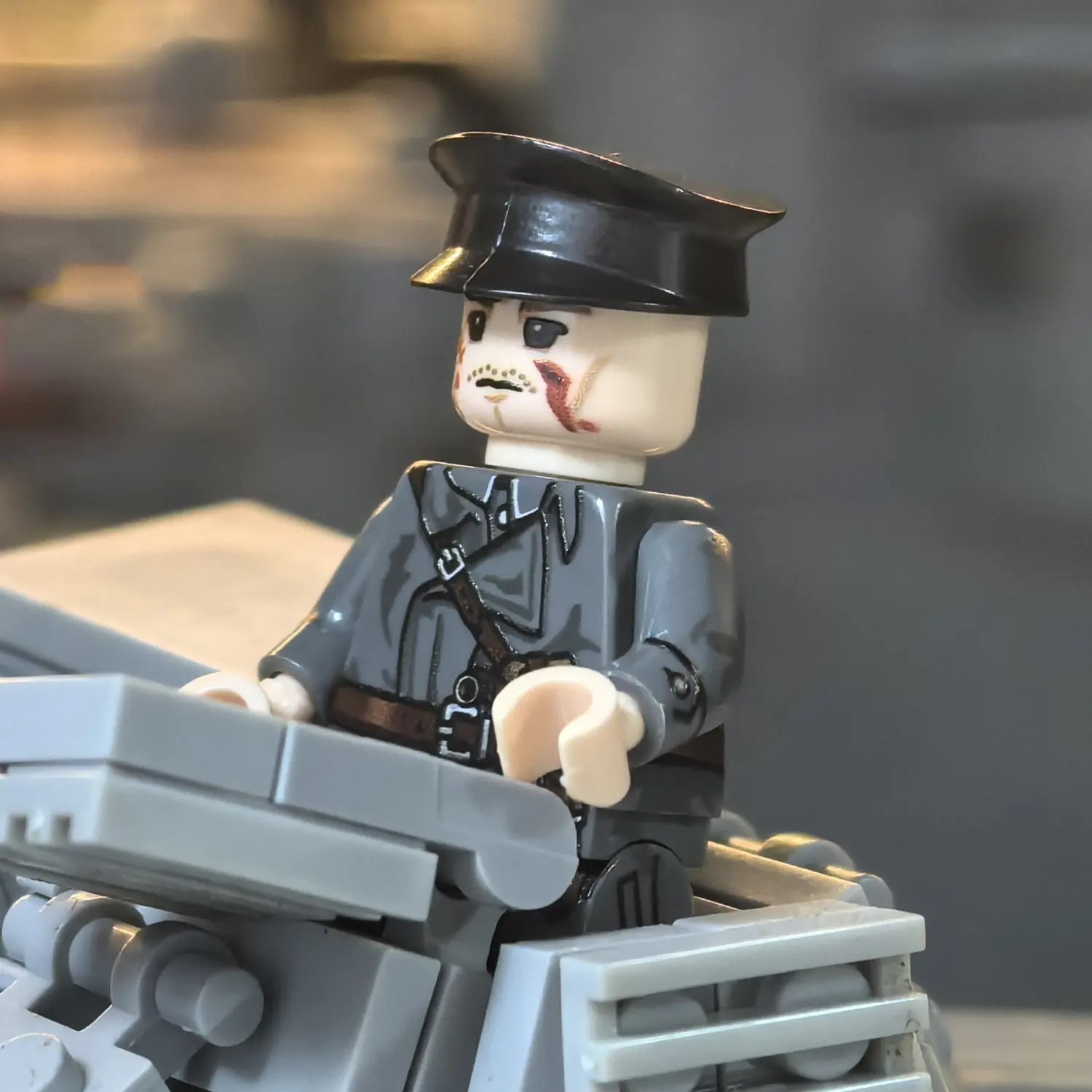
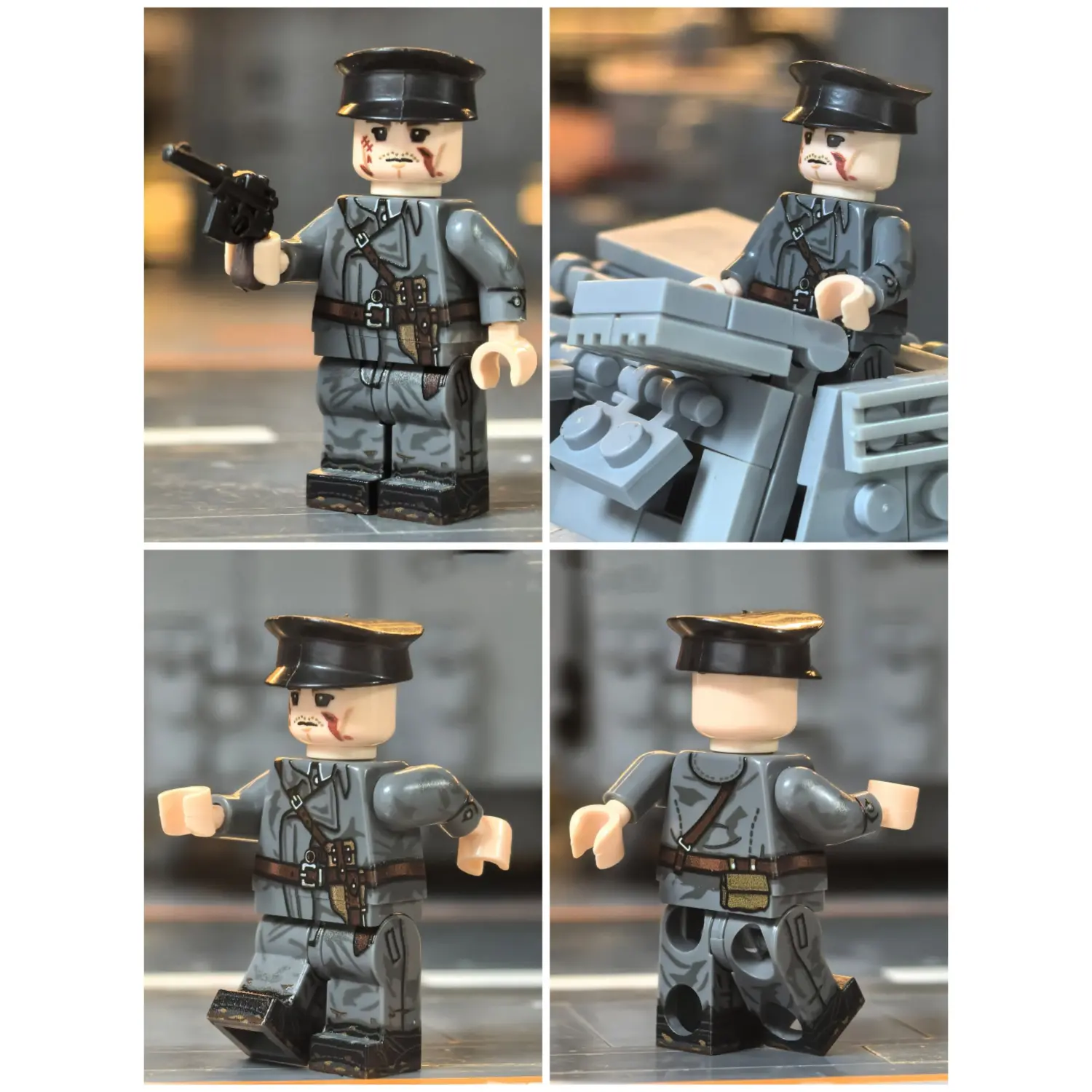
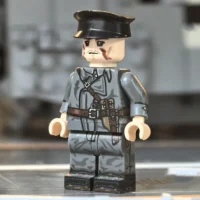
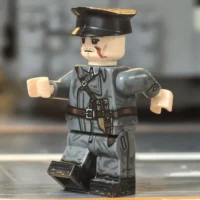


this represents a Non-Commissioned Officer serving in a German Tank Detachment (Abteilung).
Visual Description
This is a custom-printed, high-detail minifigure representing a battle-hardened German soldier from the Great War (World War I).
-
Headgear: He wears a Schirmmütze (peaked cap). While often associated with officers, NCOs in the German Imperial Army also wore these caps with specific cockades (state and national colors). The black band suggests a specialized branch, such as transport or armored units.
-
Uniform: The figure is dressed in the iconic Feldgrau (Field Grey) tunic used by the German Army. The printing details include a Sam Browne belt (shoulder cross-strap), a leather waist belt with a detailed buckle (likely representing the Gott Mit Uns buckle), and ammunition pouches.
-
Face: The head features a specialized “battle-damaged” print, showing scars, blood spatters, and a weary expression with facial hair, indicating he has been in the thick of trench warfare or inside a cramped tank.
-
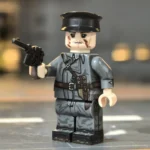
Accessories: In the top-left frame, he is holding a Mauser C96 “Broomhandle” pistol, a standard and iconic sidearm for German personnel during WWI. He is also wearing tall black marching boots with mud/weathering details.
Historical Background
During World War I, the German Empire was late to develop tanks compared to the British and French. The German tank units were known as Sturmpanzerwagen-Abteilung (Assault Armoured Wagon Detachments).
-
The Machine: These soldiers would have crewed the massive A7V tank, a steel beast that looked like a moving fortress. An A7V crew was huge, typically consisting of at least 18 men.
-
The Role: As an Unteroffizier (NCO), this character would likely have been a tank commander, a driver, or a lead gunner. Because tank warfare was brand new, crew members were often drawn from different branches—artillery experts to man the cannons, and mechanics/drivers from the transport corps.
-
The Danger: Life inside a WWI tank was brutal. The engines filled the cabin with fumes, the heat was unbearable (often reaching over 120°F/50°C), and the noise was deafening. The “battle damage” on the figure’s face is historically accurate; inside the tank, bullet impacts on the outside would cause “spalling” (metal flakes flying off the inside walls), which frequently injured the crew members’ faces.
Reviews
There are no reviews yet