




Variations

Introduction
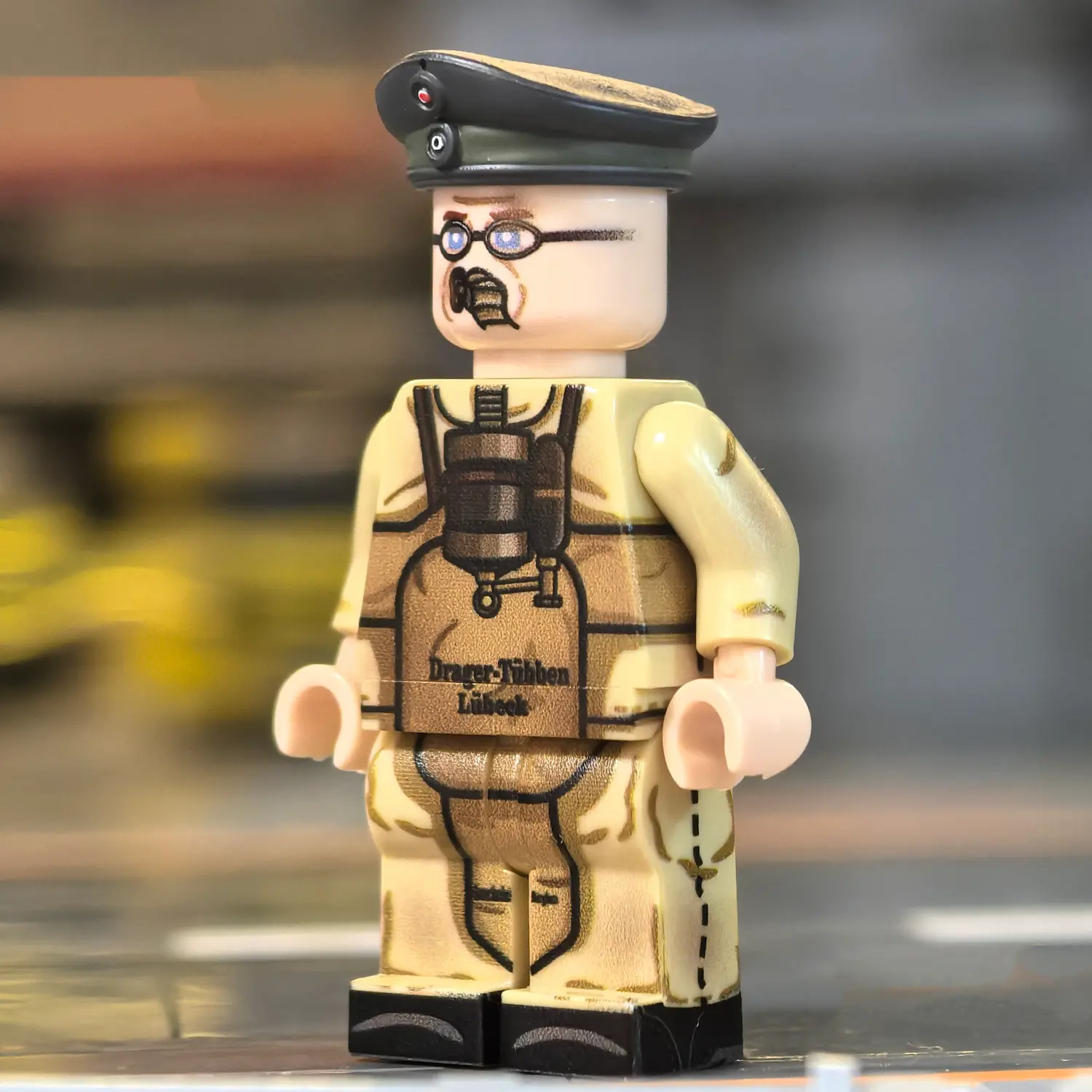
The Figure: WWI German Gas Pioneer (Gaspionier) with Dräger Apparatus
This historical toy minifigure represents a specialized German Combat Engineer (Pionier) from Pionier-Regiment 35 or 36 during the Second Battle of Ypres on April 22, 1915. This soldier is equipped for the specific and dangerous task of executing the first mass chlorine gas attack in history.
-
Headgear: He wears a Field Grey Peaked Cap (Schirmmütze) with a black leather visor.
-
Insignia: The cap features two small cockades (roundels) on the front. The top one represents the Imperial colors (black, white, red), and the bottom one represents the state (likely Prussia). This type of cap was typically worn by NCOs (Unteroffiziere) and officers, suggesting this figure is supervising the gas release operation.
-
-
The Breathing Apparatus (Key Feature): The most distinct feature is the large, detailed chest print of a breathing device.
-
Inscription: The text printed on the brown chest unit reads “Dräger-Tübben Lübeck”.
-
Function: This depicts a Model 1914 Oxygen Rebreathing Apparatus (specifically the Tübben pattern, originally designed for mine rescue and naval use). Unlike the later gas masks that filtered outside air, this was a self-contained system. The pioneers needed this heavy-duty isolation because they had to stand directly next to the gas cylinders to open the valves, exposing them to high concentrations of the lethal cloud.
-
-
Uniform: He is dressed in a Beige/Tan Fatigue Uniform (Drillich).
-
Historical Accuracy: While regular infantry wore Field Grey, these specialist pioneers often wore heavy linen or canvas fatigue suits over their uniforms to protect their clothing from the corrosive chlorine gas and dirt while digging trenches for the cylinders.
-
-
Face: The figure has a printed face with Round Glasses and a mustache. The glasses likely represent the protective goggles or the “scientific” nature of this new form of warfare, which was led by scientists and engineers.
Historical Background: On April 22, 1915, the German Army launched the first successful large-scale gas attack near Ypres, Belgium. To do this, they did not fire shells; instead, specialized pioneer troops like this figure buried thousands of heavy gas cylinders along the front line. When the wind turned favorable, they opened the valves by hand, releasing a drifting cloud of chlorine gas toward the Allied trenches. These “Gas Pioneers” were highly trained technicians who risked their lives handling the volatile weapon, relying on industrial rescue gear like the Dräger apparatus to survive.

Reviews
There are no reviews yet