

Variations
Introduction
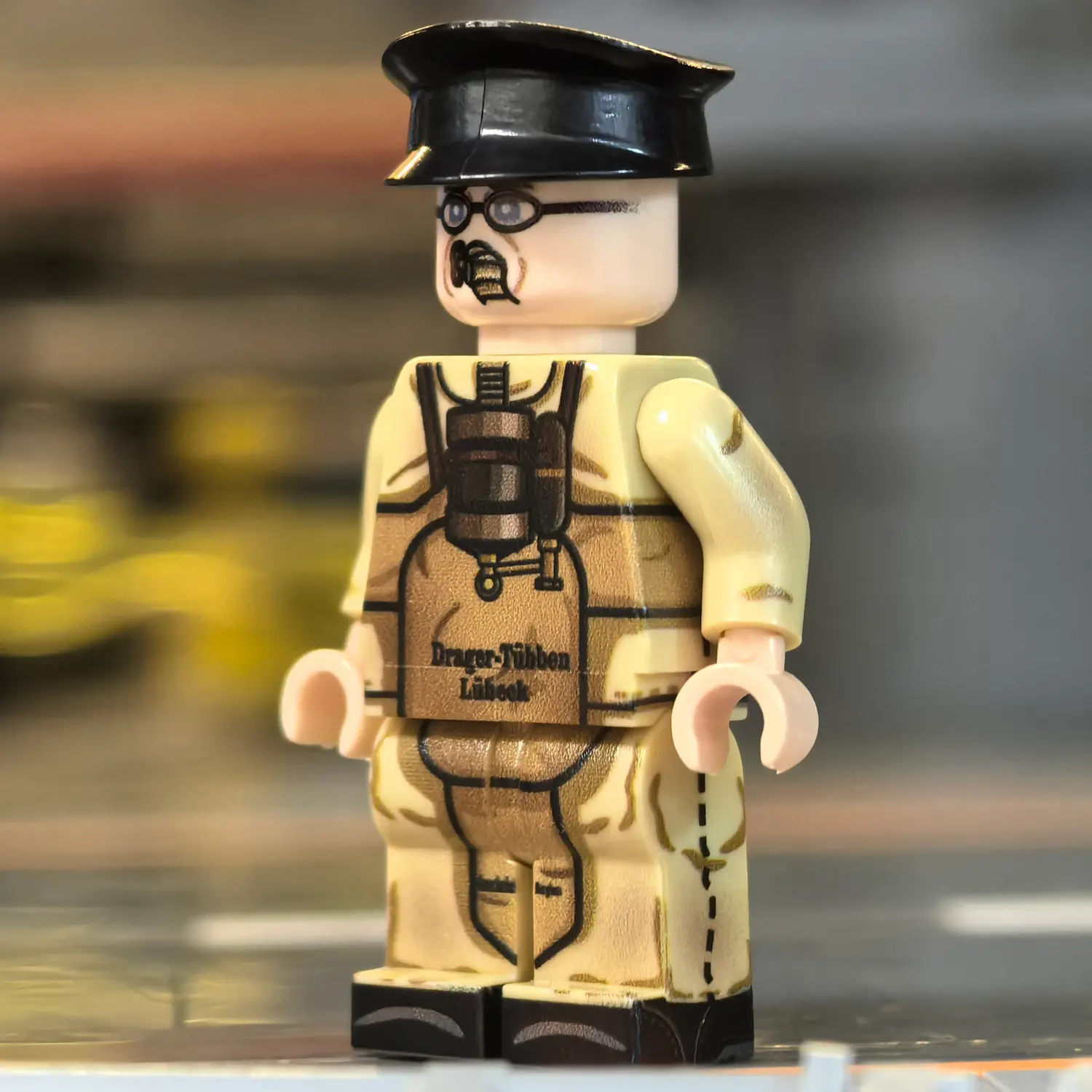
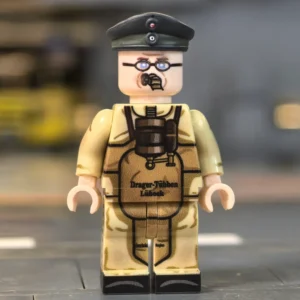
The Figure: WWI German Gas Pioneer (Gaspionier) with Dräger Apparatus
This historical toy minifigure represents a specialized German Combat Engineer (member of Pionier-Regiment 35 or 36) during the Second Battle of Ypres on April 22, 1915. This specific soldier is equipped for the dangerous task of deploying the first mass chlorine gas attack in military history.
-
Chest Apparatus (The Key Feature): The defining detail of this figure is the large breathing device printed on his chest.
-
The Inscription: The text clearly reads “Dräger-Tübben Lübeck”. This refers to the Dräger company (based in Lübeck, Germany), a famous manufacturer of breathing equipment.
-
The Device: This is a Model 1914 Oxygen Rebreathing Apparatus (specifically the Tübben mine rescue pattern). Unlike later gas masks that filtered air, this was a self-contained system used by the pioneer crews who had to stand directly next to the gas cylinders to open the valves. They needed complete isolation from the lethal chlorine cloud they were releasing.
-
-
Uniform: He wears a Pale Yellow/Beige Fatigue Uniform.
-
Historically, the gas pioneers often wore improvised protective suits or heavy linen/canvas overalls (sometimes soaked in chemical solutions) rather than the standard Field Grey wool, to protect their skin from the corrosive gas and to allow for easier movement while hauling heavy cylinders.
-
-
Headgear: He wears a black Peaked Cap (Schirmmütze). This suggests he is likely a Non-Commissioned Officer (NCO) or an officer supervising the gas release.
-
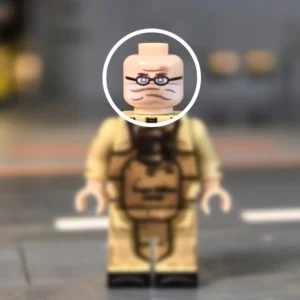
Face: The figure features a printed face with Glasses and a Mustache. The glasses could represent the protective goggles worn by these crews, or perhaps a nod to the intellectual/scientific nature of this new warfare (led by scientists like Fritz Haber).
Historical Background: On April 22, 1915, near Ypres, Belgium, German pioneer troops opened thousands of cylinders containing chlorine gas, allowing the wind to carry a deadly green-yellow cloud toward the Allied trenches. This event marked the beginning of modern chemical warfare. The soldiers handling these cylinders (like this figure) were essentially technicians operating in a toxic environment, relying on industrial rescue gear like the Dräger apparatus to survive their own weapon.
Reviews
There are no reviews yet