


The Figure: WWII German Army Officer (Wehrmacht Offizier)
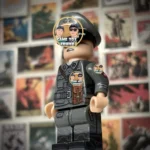
This toy minifigure represents a high-ranking Officer of the German Army (Heer) during World War II. Despite the armband looking similar to a Swiss flag (which is a common censorship modification in toys), the uniform and insignia clearly identify him as a German military commander.
-
Headgear: He wears the iconic Grey Peaked Cap (Schirmmütze). The defining historical detail is the insignia printed on the front: the Reichsadler (Imperial Eagle) at the top and the Wreath with Cockade below it. This specific combination was the standard headwear for German officers.
-
Uniform: The figure is dressed in a Field Grey (Feldgrau) Tunic, the standard service color of the German armed forces. The collar features silver Officer’s Collar Tabs (Litzen), distinguishing his rank from enlisted men.
-
Insignia (The Armband): On his left arm, there is a Red Armband with a White Circle and Black Cross.
-
Historical Note: In historical reality, this represents the National Armband (which featured a Swastika). To comply with modern toy censorship laws and bans on hate symbols, the manufacturer has replaced the Swastika with a simple Iron Cross or black cross. It signifies his allegiance to the Axis powers but is stylized for a general audience.
-
-
Tactical Gear:
-
Sam Browne Belt: He wears a black leather belt with a Cross-Chest Strap, used by officers to support the weight of their sidearm and map case.
-
Pistol Holster: A brown leather Pistol Holster is attached to his right hip. This would typically hold a Luger P08 or Walther P38, the standard sidearms for German officers.
-
Leather Pouch: He also carries a small brown leather pouch, possibly for ammunition or field optics.
-
-
Face: The face print features a Shouting Expression with an open mouth, depicting a commander issuing orders in the heat of battle.
Historical Background: German officers were the tactical leaders of the Wehrmacht, trained in the doctrine of Auftragstaktik (mission-type tactics), which gave them high autonomy on the battlefield. This figure represents a commander from the early-to-mid war period (1939-1942), indicated by the smart appearance of the uniform before material shortages later in the war. The “field grey” uniform was designed to blend into the European countryside, while the peaked cap remained a symbol of authority even on the front lines.
Reviews
There are no reviews yet