


Character Identification
Specific Name: General George S. Patton Jr. (Commander of the U.S. Third Army)
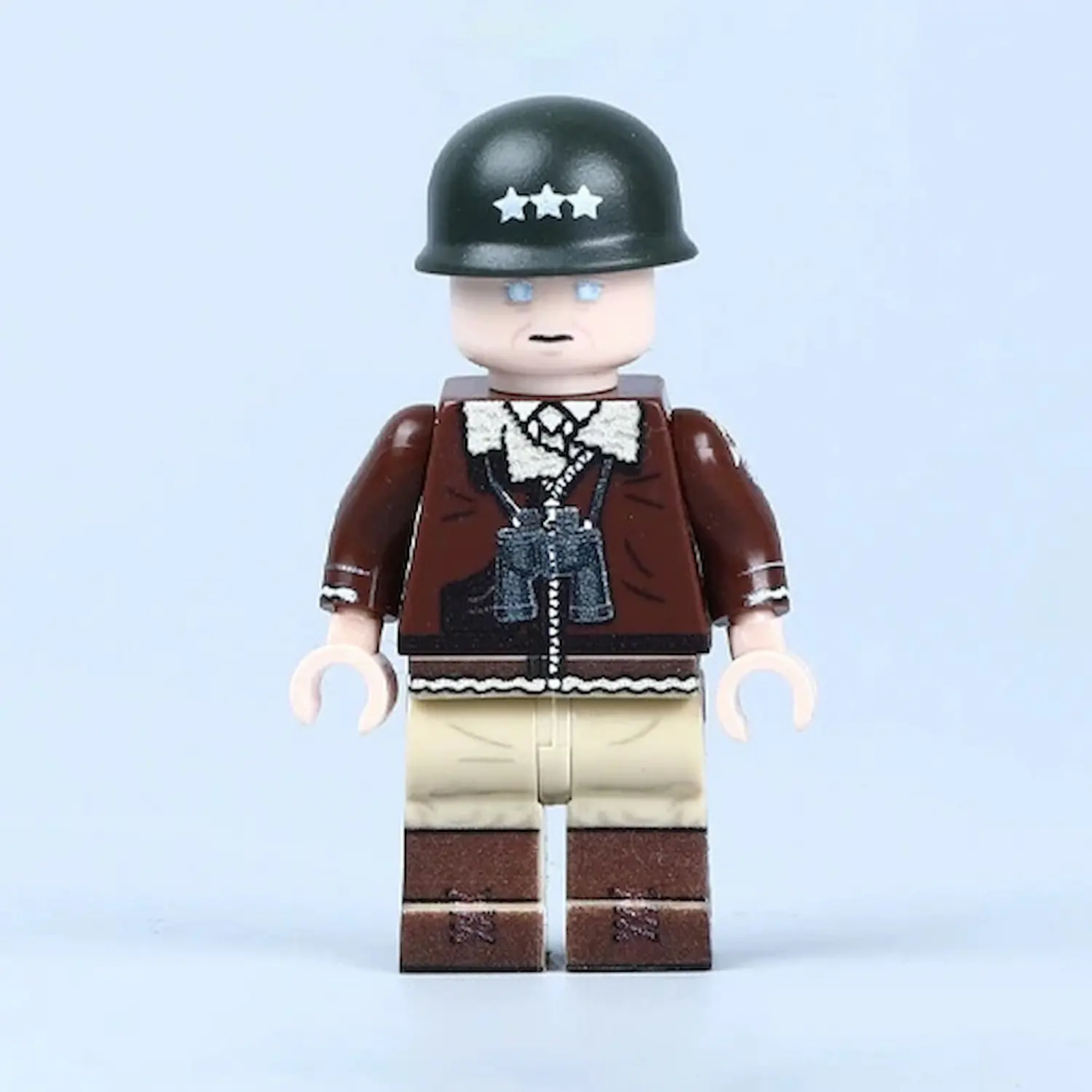
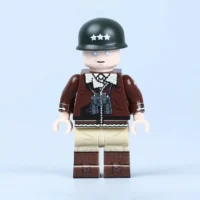
The text printed directly on the image explicitly labels this figure as “HTL061 George Smith Patton Jr.”. He is one of the most famous and colorful generals of World War II, known for his aggressive tank tactics and distinct personality.
Visual Description
This custom-printed minifigure captures the iconic and often flamboyant style that Patton was famous for on the battlefield:
-
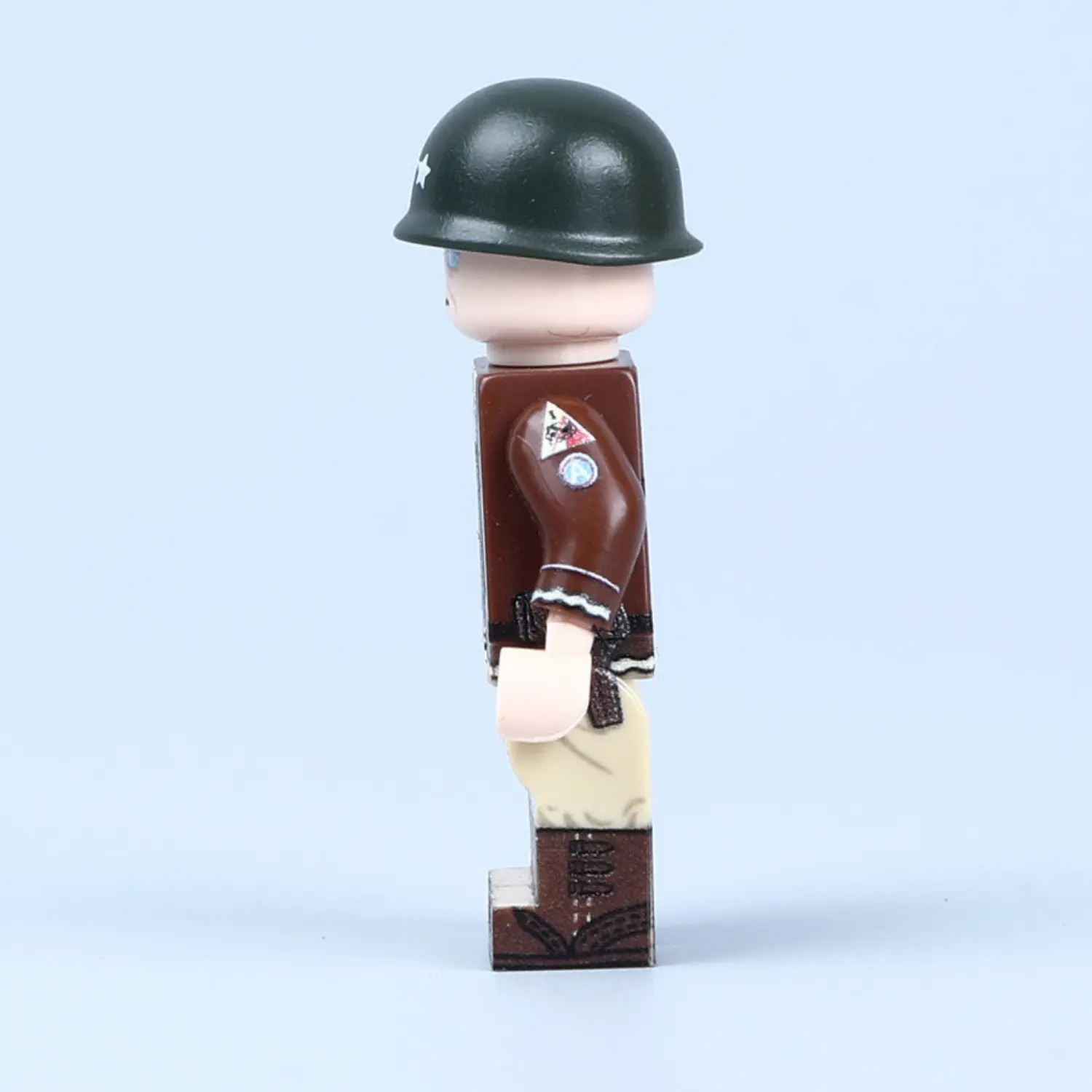
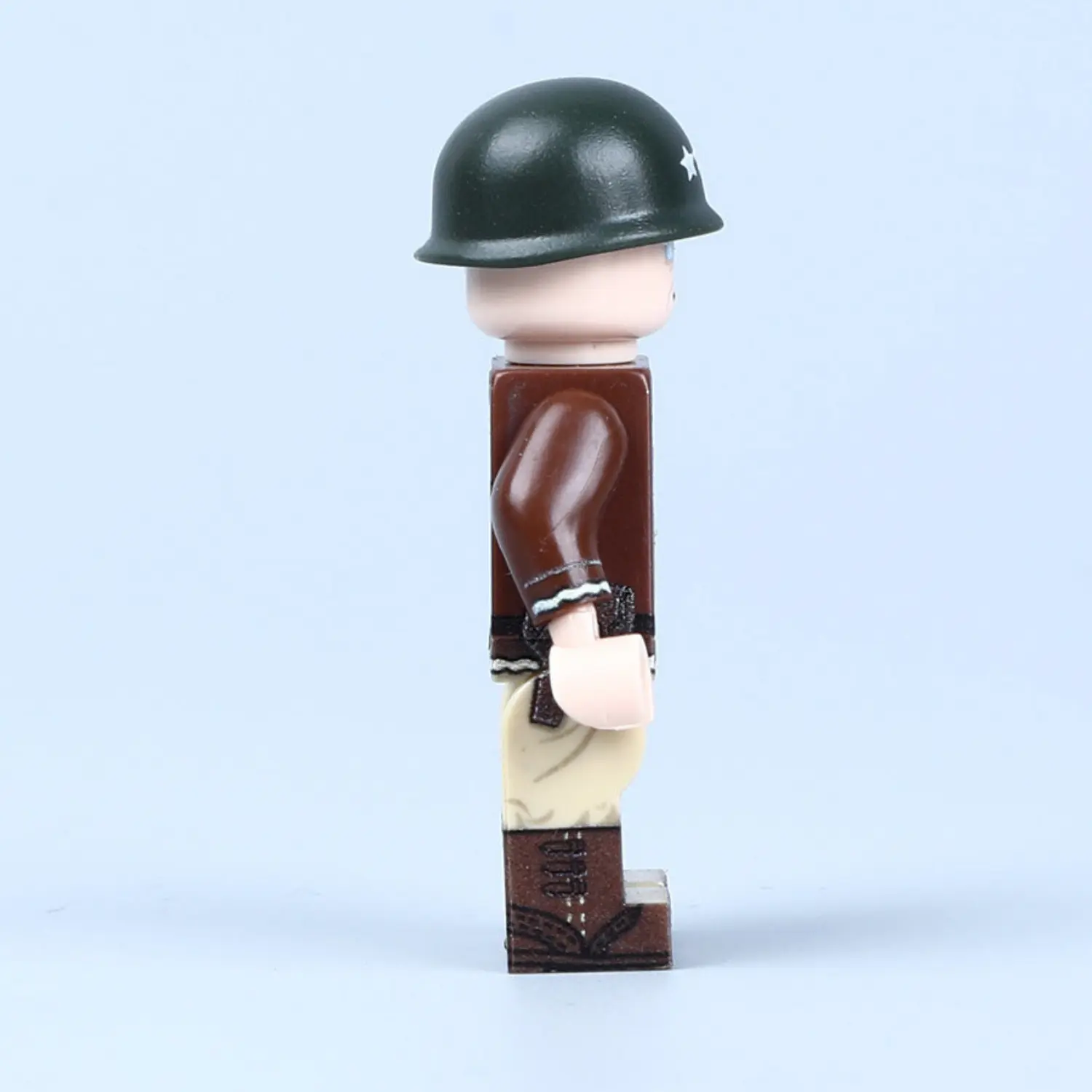
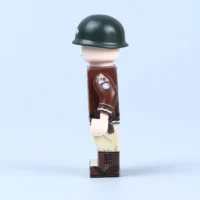
Headgear: He wears his signature Lacquered M1 Helmet. Historically, Patton kept his helmet highly polished and varnished. The front of the helmet is printed with Three White Stars, indicating the rank of Lieutenant General.
-
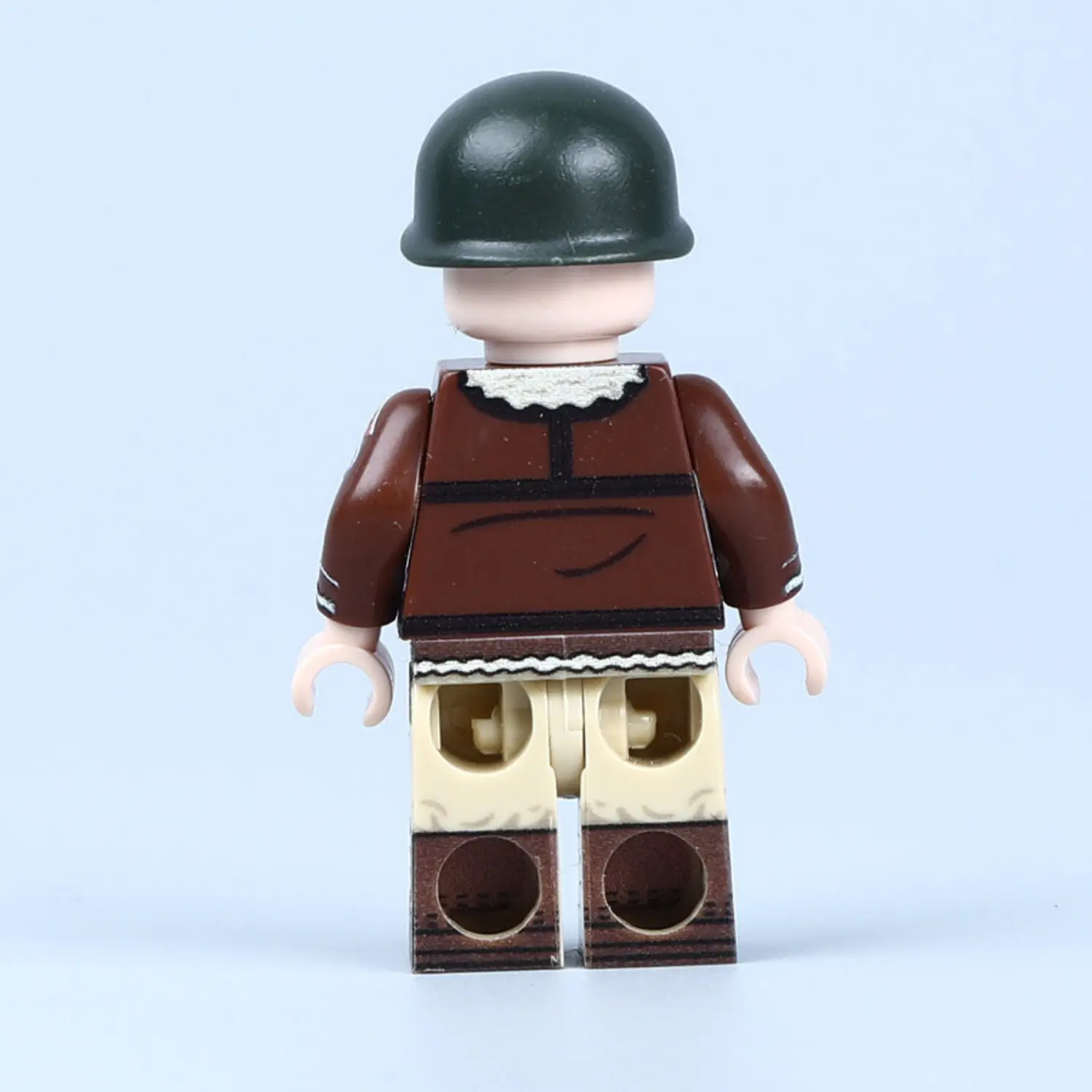
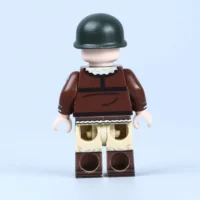
Torso & Uniform: He is wearing a brown B-3 Sheepskin Bomber Jacket with a thick fur collar. While he was an Army general, Patton frequently wore this heavy Air Corps flight jacket during the cold campaigns in Europe (like the Battle of the Bulge) for warmth and style.
-
Accessories:
-
Binoculars: A pair of binoculars is printed hanging around his neck, symbolizing his role as a frontline commander who preferred to observe the battle personally rather than from a rear command post.
-
Underneath: You can see a tie and shirt collar under the jacket, maintaining his strict standards of military dress.
-
-
Legs: He wears tan riding breeches (pants) tucked into brown cavalry boots. Patton was a former cavalryman and Olympian who loved horses, and he often wore riding gear even while commanding tank divisions.
Historical Background
-
“Old Blood and Guts”: George Patton was a brilliant but controversial leader. He commanded the U.S. Seventh Army during the invasion of Sicily and later the U.S. Third Army in France and Germany.
-
Tank Warfare: He is considered one of the greatest practitioners of mobile tank warfare in history. His Third Army raced across France in 1944 at record speeds, liberating vast territories.
-
Battle of the Bulge: His most famous feat was during the Battle of the Bulge (Winter 1944), where he turned his entire army 90 degrees in the middle of a snowstorm to relieve the besieged American troops at Bastogne—a maneuver many considered impossible.

Reviews
There are no reviews yet