

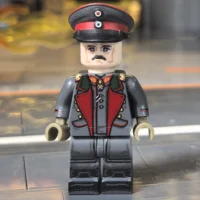
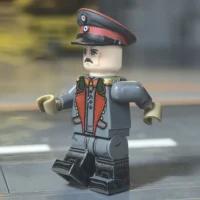
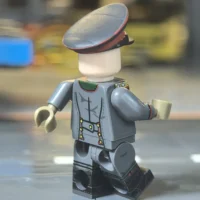
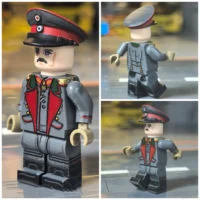
Character Identification
Specific Name: General Erich Ludendorff (First Quartermaster General of the Imperial German Army – 1918)
This figure represents Erich Ludendorff, one of the top two military commanders (alongside Paul von Hindenburg) who held near-dictatorial control over the German war effort during the later years of World War I.
Visual Description
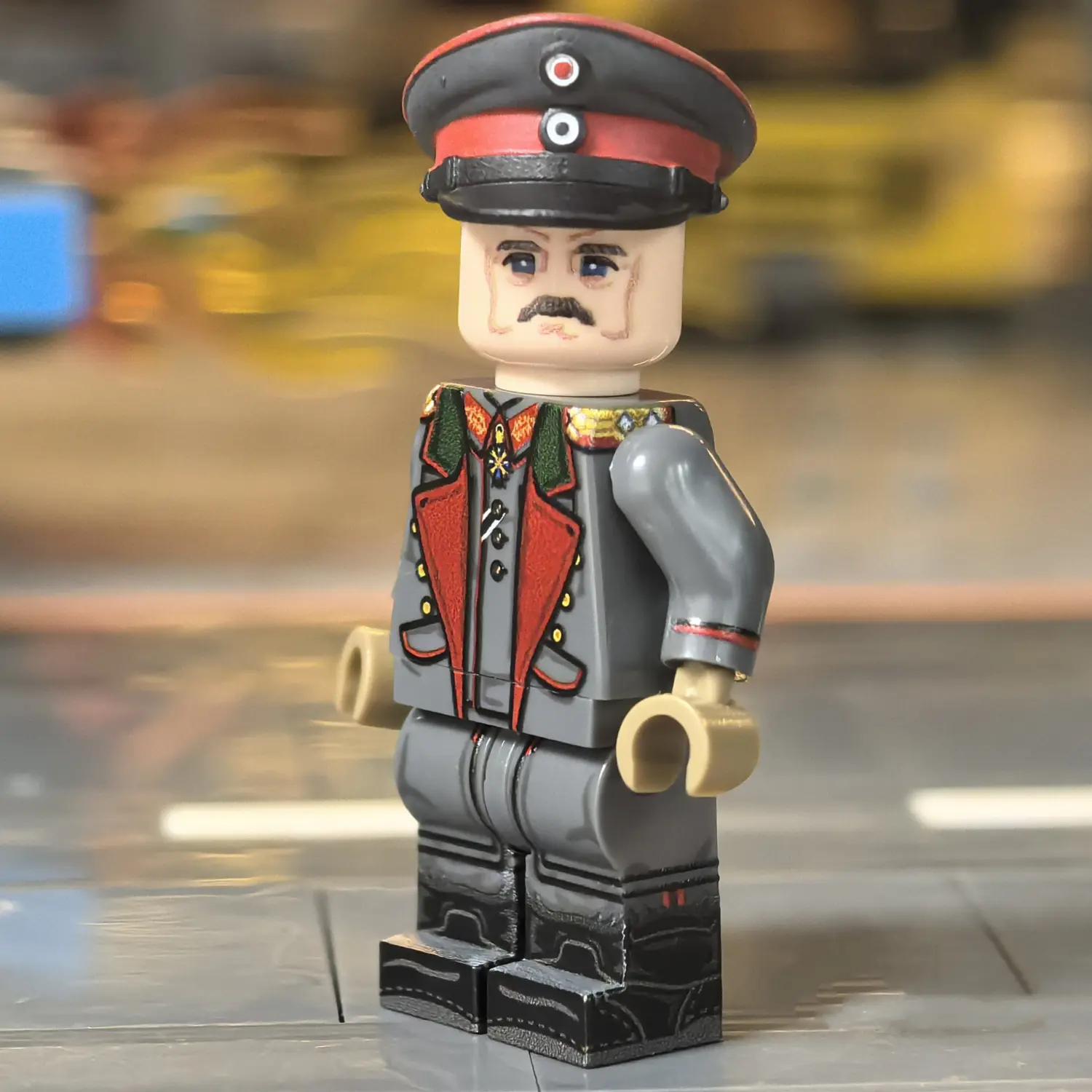
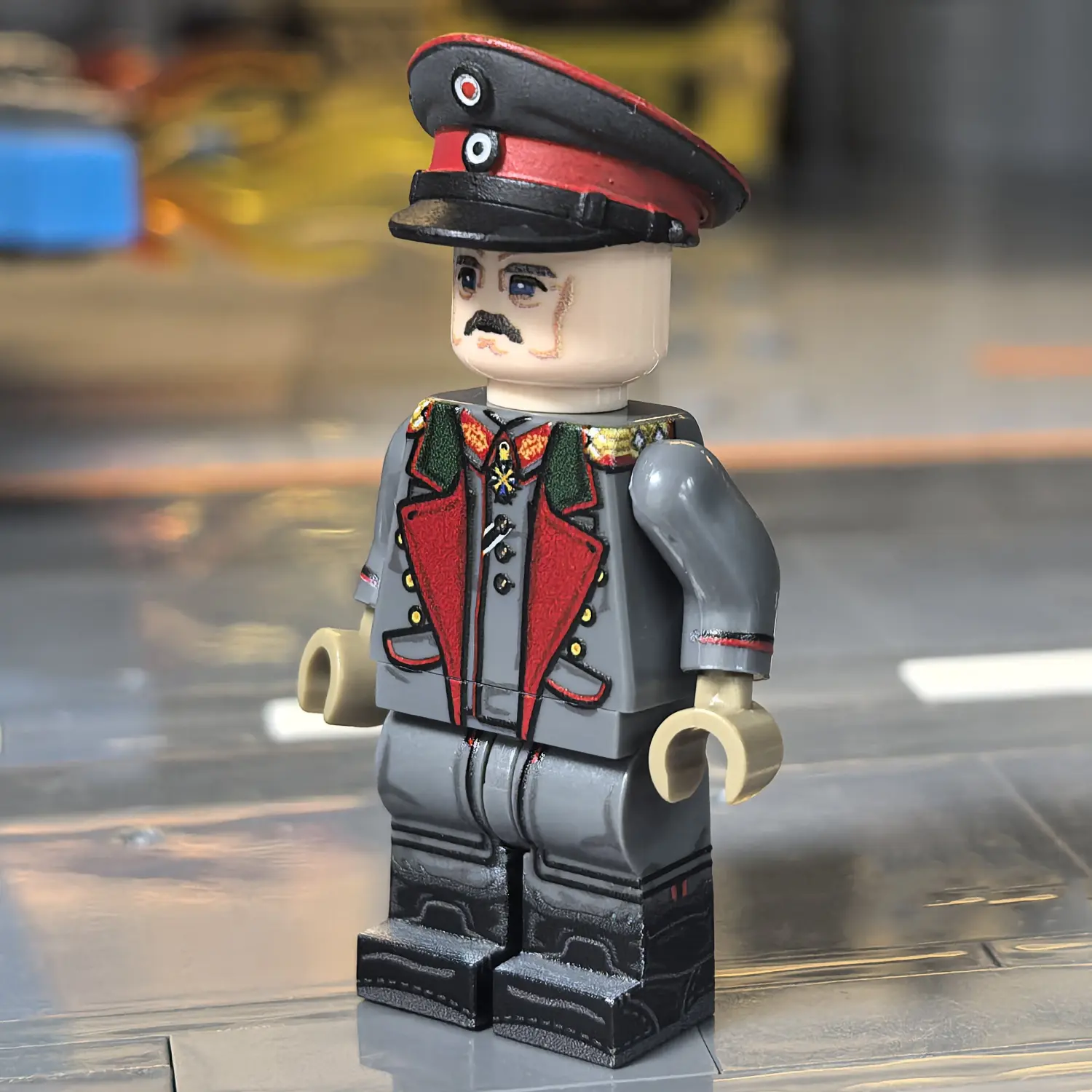
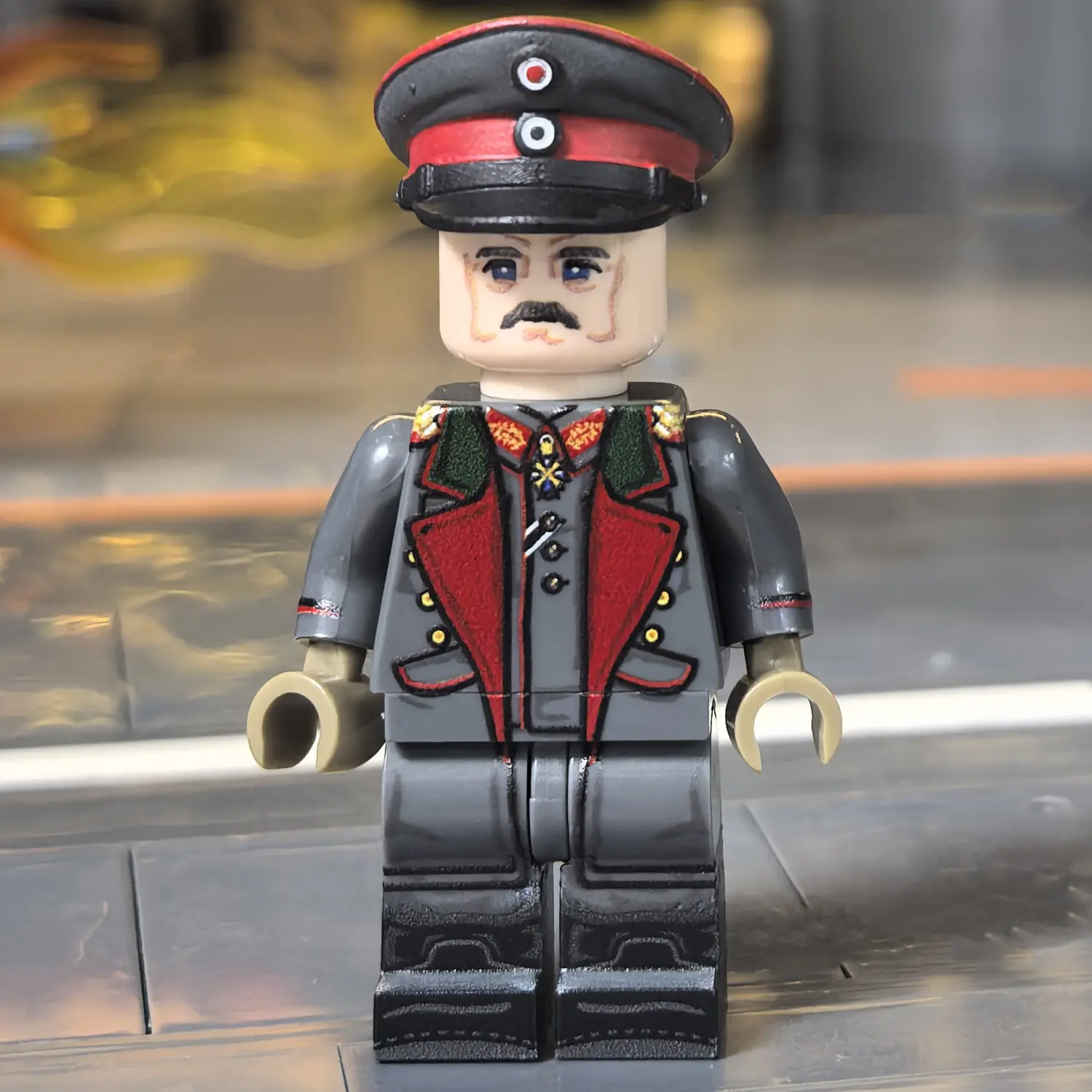
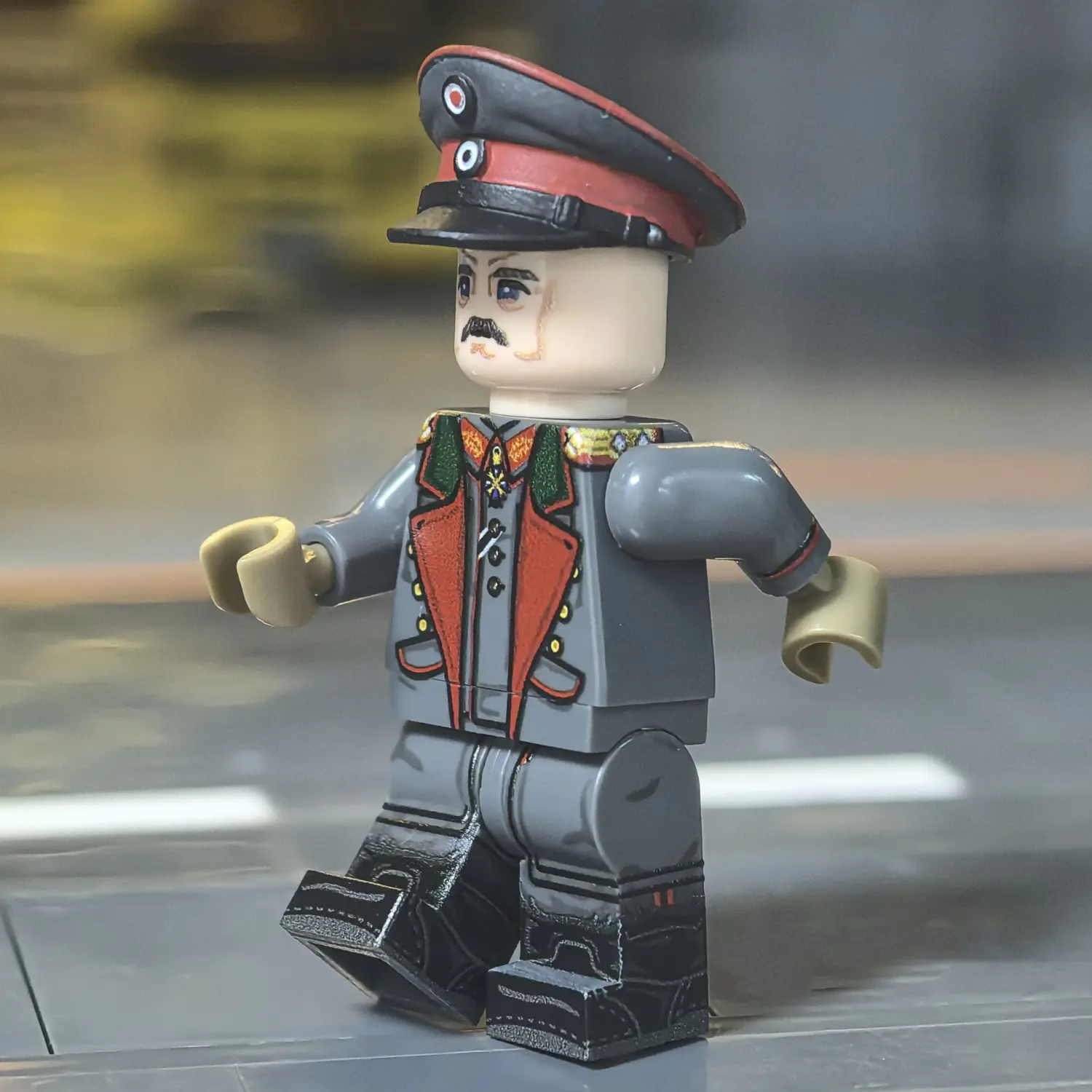
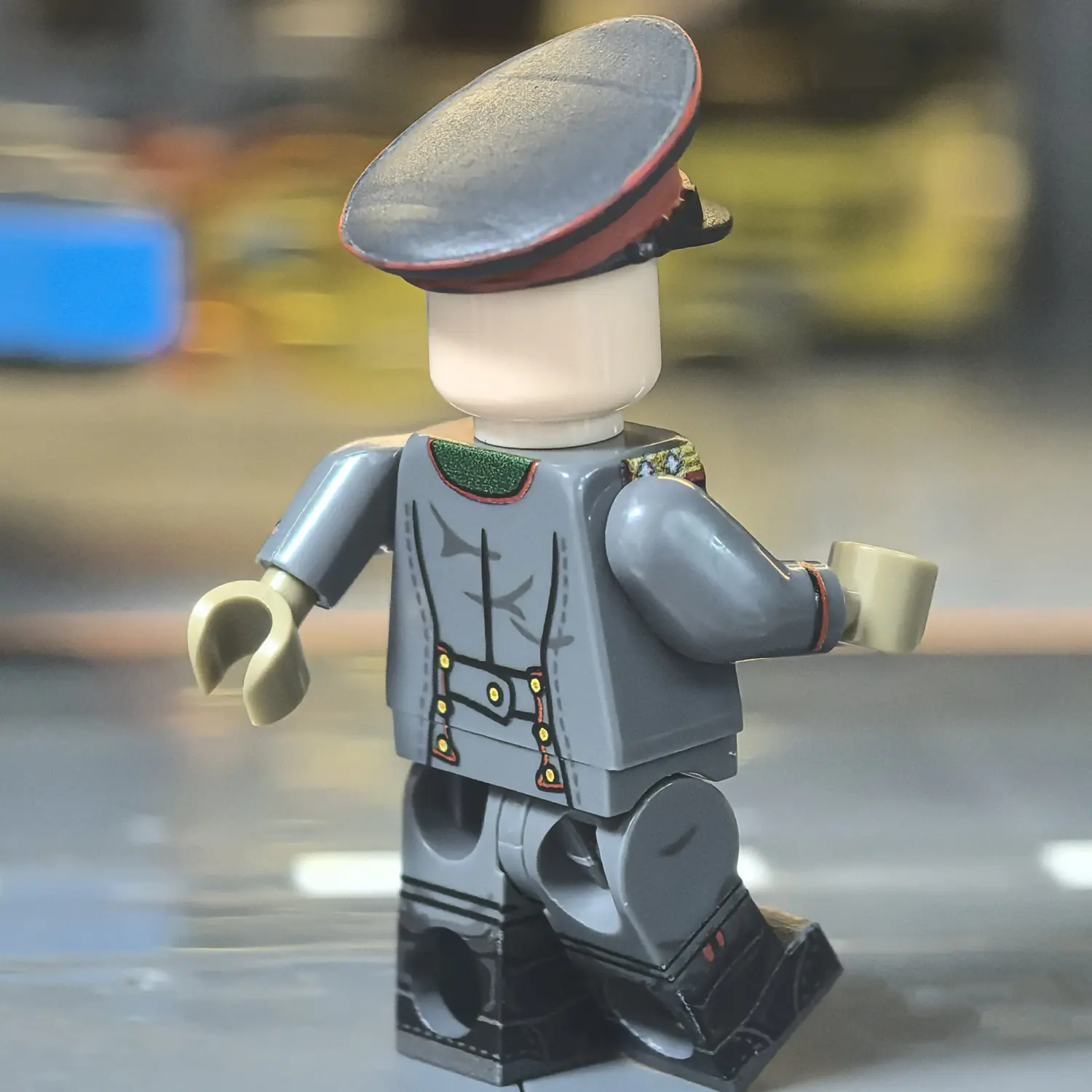
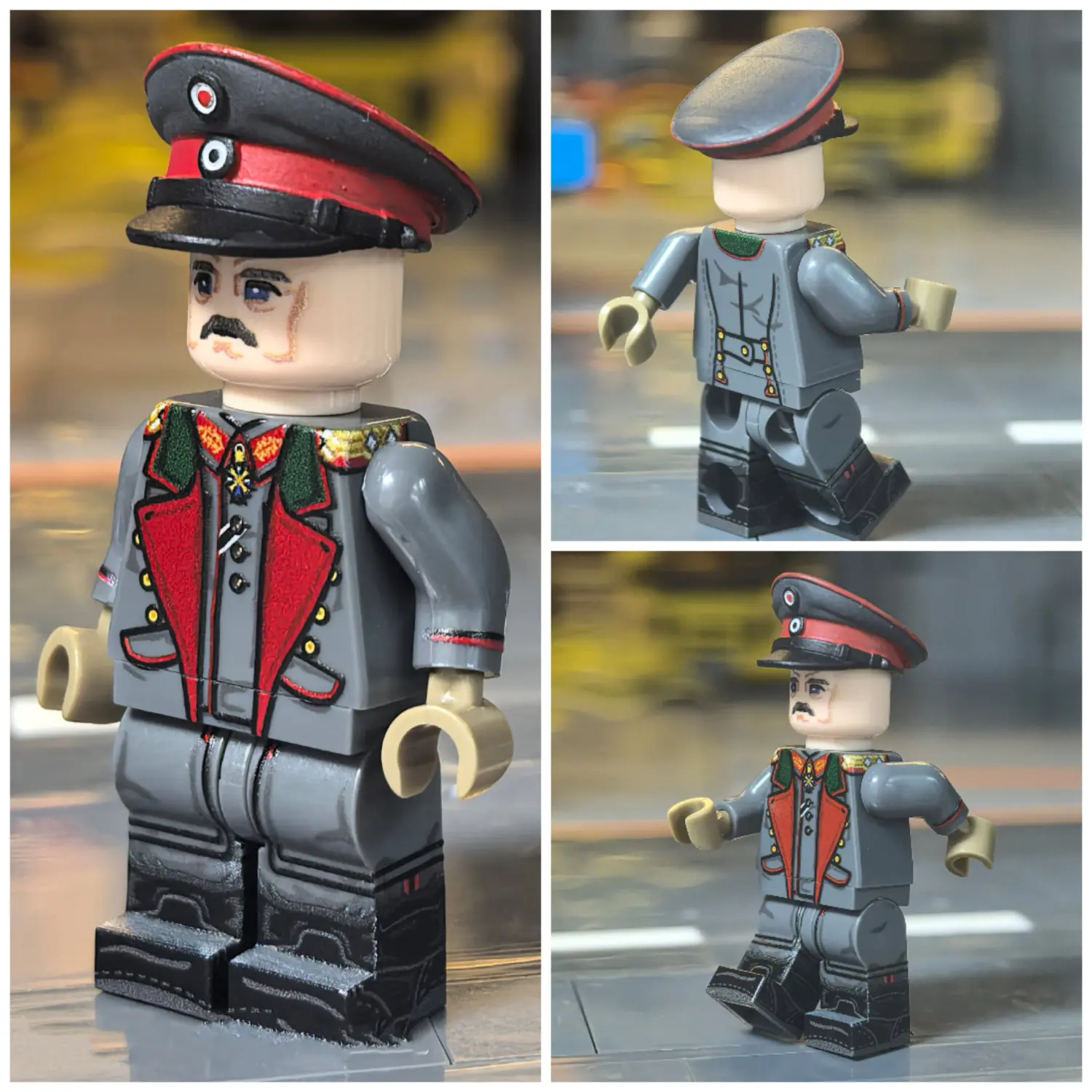
This custom-printed minifigure accurately captures the striking uniform of a high-ranking German General on the Western Front in 1918:
-
The Face: The figure features Ludendorff’s signature stern expression, bags under his eyes, and a prominent black mustache.
-
Headgear (Schirmmütze): He wears the standard German officer’s Peaked Cap in field grey. The cap features a red band and red piping, along with two circular cockades: the black-white-red imperial cockade on top, and the black-white Prussian cockade below it.
-
The Overcoat (General’s Mantel): The most distinct feature of this figure is the field grey overcoat with wide-open, bright Red Lapels. In the Imperial German Army, these crimson red lapels (Karmesinrot) were a specific privilege and identifier for General Staff officers and Generals.
-
Medals & Insignia:
-
At his neck, he wears the blue cross of the Pour le Mérite (the “Blue Max”), Germany’s highest military order.
-
On his shoulders, you can see the intricate gold and silver braided shoulder boards that denote his rank as a General.
-
The tunic worn under the coat features a red collar with intricate gold embroidery (Larisch-Stickerei), typical for Prussian generals.
-
-
Legwear: His legs feature printed field grey trousers with thick Red Stripes (Lampassen) running down the sides, paired with black officer’s marching boots. This double red stripe is the universal mark of a General.
Historical Background
-
The Mastermind: While Field Marshal Hindenburg was the public figurehead, General Erich Ludendorff was the chief strategist and the driving operational force behind the German army from 1916 to 1918.
-
The 1918 Spring Offensive: This figure’s 1918 designation is highly relevant. In the spring of 1918, Ludendorff launched the massive Kaiserschlacht (Emperor’s Battle), a series of massive attacks on the Western Front designed to win the war before the American forces could arrive in large numbers.
-
The Fall: After the initial success of the 1918 offensives turned into a strategic failure, Ludendorff suffered a nervous breakdown and was eventually forced to resign just weeks before the armistice. This figure captures him at the absolute height of his power and stress.

Reviews
There are no reviews yet