







Character Identification
Specific Name: General Erich von Falkenhayn (Chief of the German General Staff)
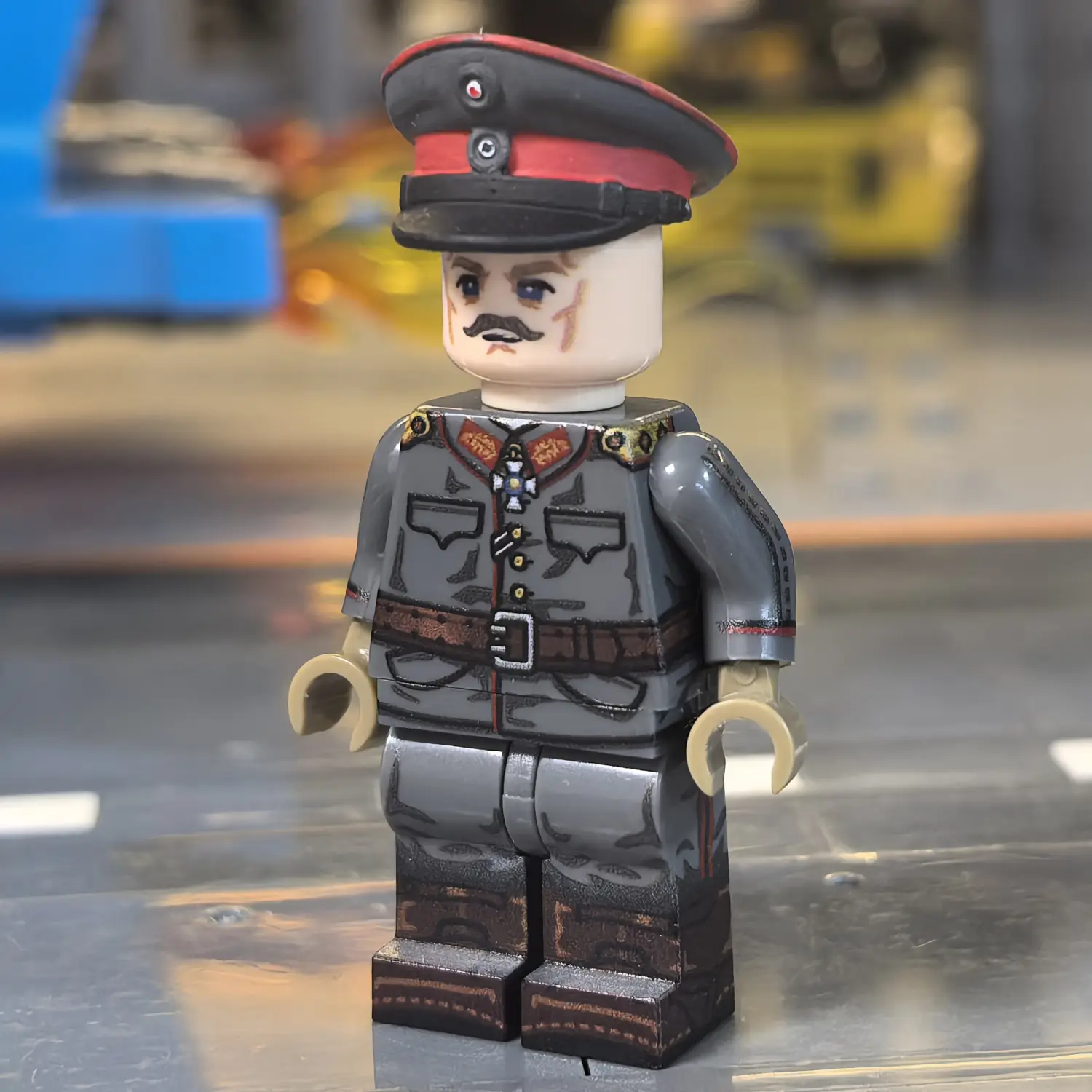
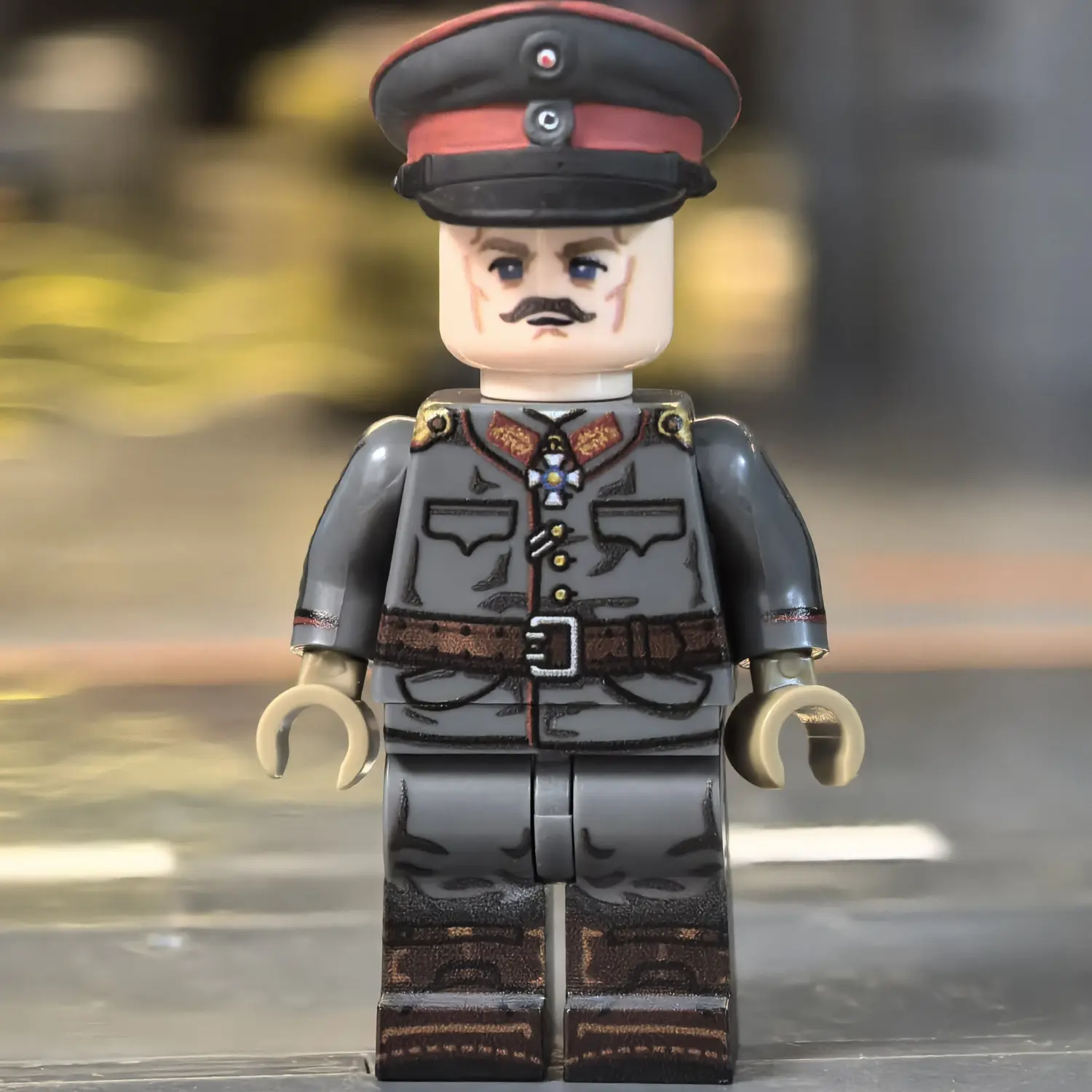
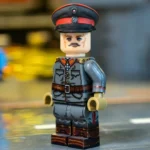
This custom minifigure represents one of the most significant figures of the German Empire (“Second Reich”) during World War I. Based on the uniform details and your specific reference, this is Erich von Falkenhayn, who served as the Prussian Minister of War and later the Chief of the General Staff.
Visual Description
This figure is dressed in the high-ranking uniform of a Prussian General Staff Officer (Generalstabsoffizier).
-
Headgear: He wears a Schirmmütze (Peaked Cap) with a red band and red piping, which denotes the General Staff. The two cockades on the front represent the national colors (Black-White-Red) and the state colors (likely Prussia’s Black-White).
-
Uniform: He is wearing the M1910/15 Feldgrau (Field Grey) Tunic. The most critical detail identifying his rank is the Red Collar Patches (Kragenpatten) featuring intricate gold/silver “Larisch” embroidery. This specific style of collar tab was reserved exclusively for Generals in the Imperial German Army.
-
Decorations: Around his neck hangs the Pour le Mérite (the “Blue Max”), the Kingdom of Prussia’s highest military order. Falkenhayn was a recipient of this prestigious medal.
-
Trousers: The trousers feature distinct Red Stripes (Lampassen) running down the sides. These wide red stripes were the hallmark of General Officers and members of the Great General Staff.
-
Face: The figure features a mustache typical of the era and scars on the cheeks, giving him the appearance of a veteran Prussian officer.
Historical Background
Erich von Falkenhayn (1861–1922) was a central figure in the early years of the Great War.
-
Chief of Staff: He took over command of the German Army in late 1914 after the failure of the Schlieffen Plan. He is historically defined by his belief that Germany could not win a decisive battle against the Allies due to their numbers.
-
The Battle of Verdun: Falkenhayn is infamous for masterminding the Battle of Verdun (1916). His strategy was not to capture territory, but to “bleed France white” (Ausblutung) by forcing the French army into a meat-grinder battle of attrition where he believed for every one German casualty, the French would suffer two or three.
-
Legacy: While a capable organizer, the horrific casualties at Verdun and failures on the Eastern Front led to his dismissal in 1916, where he was replaced by the duo of Hindenburg and Ludendorff.
Reviews
There are no reviews yet