

Variations
Introduction
Group Identification: The Divided Polish Forces of WWII
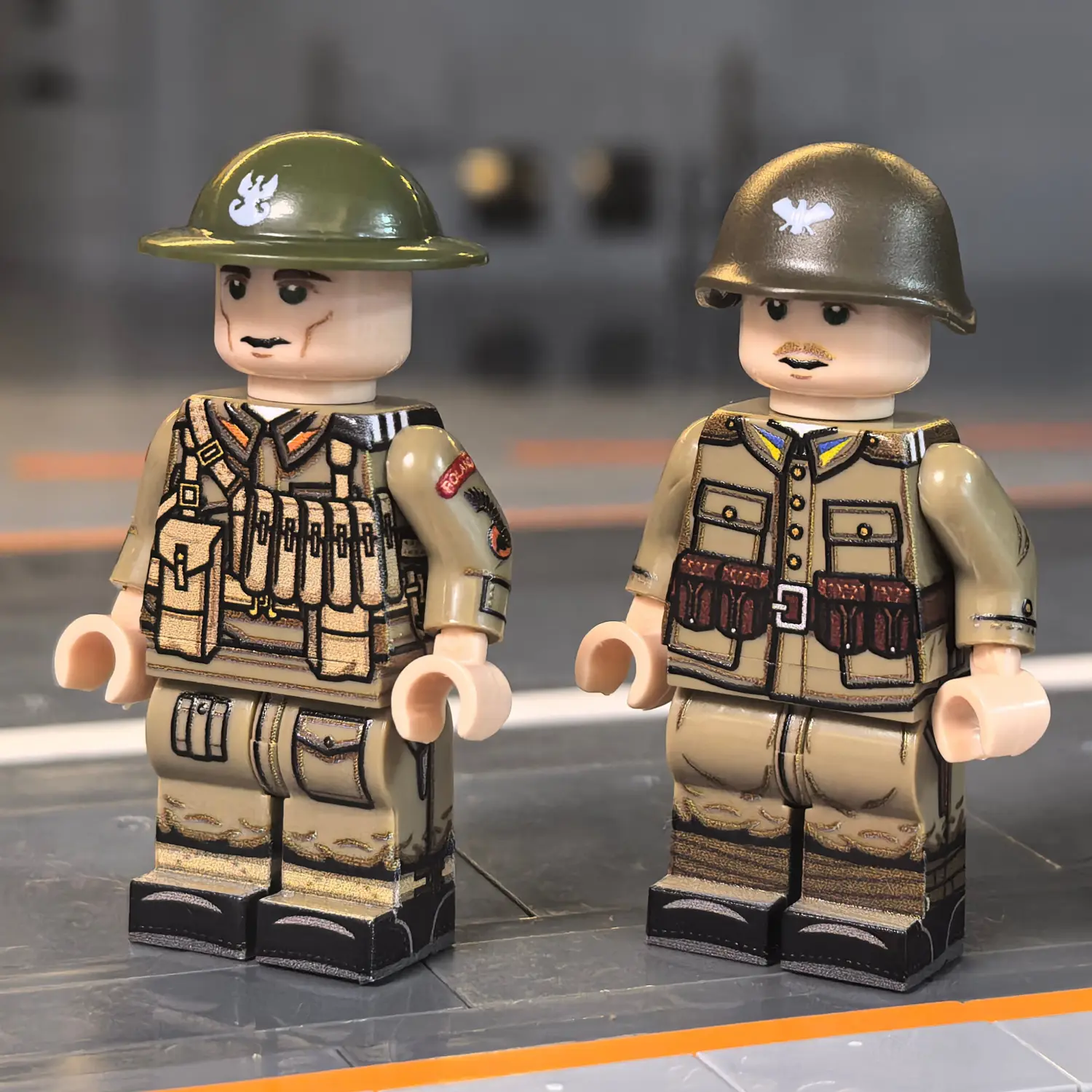
This image displays two custom-printed building block minifigures representing soldiers of Poland during World War II. Following the dual invasion and occupation of Poland in 1939 by Nazi Germany and the Soviet Union, the Polish military split into two primary factions fighting in exile. This image brilliantly captures that historical divide side-by-side: the Western forces (left) and the Eastern forces (right).
Here is a detailed breakdown of each figure:
1. The Left Figure: Polish Armed Forces in the West
-
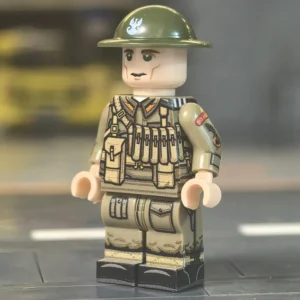
Specific Name: WWII Polish Armed Forces in the West Infantryman (Polskie Siły Zbrojne na Zachodzie)
-
Visual Details:
-
Headgear (Brodie Helmet): He wears a British olive drab Mk II “Brodie” Helmet. The critical detail is the white painted Crowned Polish Eagle on the front. The crown symbolized their continued allegiance to the legitimate Polish government-in-exile based in London.
-
The Uniform: He is dressed in standard British Khaki Battledress, complete with canvas Pattern 1937 web equipment heavily loaded with front-mounted ammunition pouches.
-
Insignia: On his left shoulder, there is a red curved patch reading “POLAND”, which was mandatory for all exiled Polish troops to distinguish them from regular British soldiers. He also features printed regimental collar pennants.
-
-
Historical Background: After the fall of Poland, tens of thousands of soldiers escaped through Europe to Great Britain. Reorganized under British command and fully equipped with British weapons and uniforms, these troops fought ferociously across the Western Front and North Africa. They are most famous for their pivotal roles in the Battle of Monte Cassino, the Battle of Normandy (Falaise Pocket), and the Battle of Arnhem.
2. The Right Figure: Polish People’s Army (Eastern Front)
-
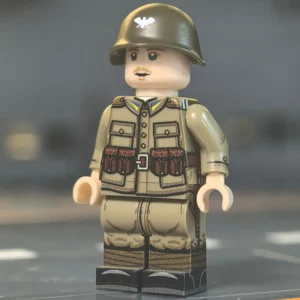
Specific Name: WWII Polish People’s Army Infantryman (Ludowe Wojsko Polskie – LWP)
-
Visual Details:
-
Headgear (Soviet-style Helmet): He wears a Soviet-style SSh-40 steel helmet. The defining detail here is the white painted eagle, which does not have a crown (often historically nicknamed the “Kurica” or hen). Soviet authorities enforced the removal of the royal crown to symbolize a new communist-aligned military identity.
-
Facial Features: He sports a traditional printed mustache, a popular grooming style among Polish troops.
-
The Uniform: He wears a more Soviet-influenced khaki tunic. His collar features yellow and blue pennants (Proporczyki), which are the traditional Polish military colors designating the Infantry branch.
-
Tactical Webbing: He wears a simple brown leather combat belt with standard leather rifle ammunition pouches, typical of Eastern Front supply lines.
-
-
Historical Background: Hundreds of thousands of Poles had been deported to Soviet gulags in 1939. After Germany attacked the USSR in 1941, the Soviets allowed these prisoners to form a new army. While some left for the West (Anders’ Army), those who remained formed the Soviet-backed First Polish Army in 1943. They fought brutally hard alongside the Soviet Red Army, pushing the Germans out of Ukraine and Poland, and ultimately participating in the final Battle of Berlin.
Reviews
There are no reviews yet