

Variations
Introduction
Group Identification: WWI Austro-Hungarian Stormtroopers (Sturmtruppen)
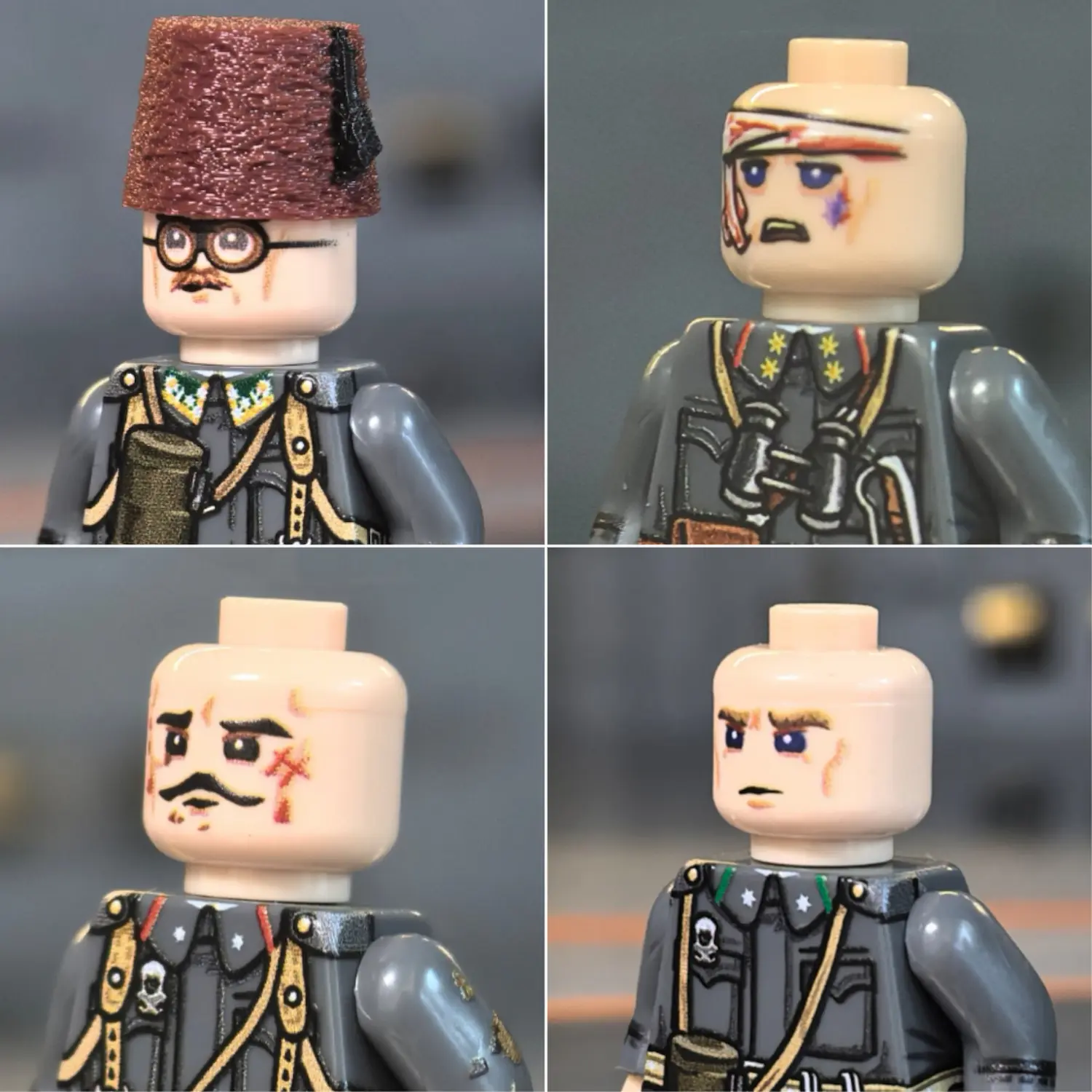
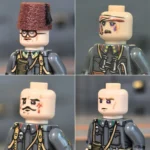
This image displays a collage of four highly detailed, custom-printed building block minifigures. They represent elite assault soldiers of the Austro-Hungarian Empire during World War I, specifically belonging to the fierce Stormtrooper (Sturmtruppen or Jagdkommandos) units. They all wear the late-war field-grey (Feldgrau) uniforms, but each features unique specialized gear, insignia, and battle damage.
Here is a detailed, one-by-one breakdown of the figures, reading from left to right, top row to bottom row:
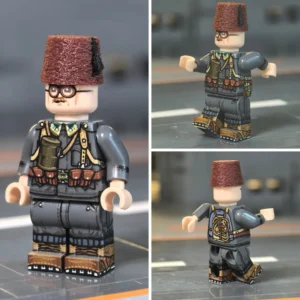
1. Top-Left: The Bosnian/Croatian Mountain Troop
Specific Name: WWI Austro-Hungarian Stormtrooper (Bosnian Regiment with Fez)
Visual Details: The most defining feature of this figure is the dark red Fez with a black tassel. He has a printed face with round spectacles and a mustache. On his collar, he wears green patches with yellow stars, indicating a Non-Commissioned Officer (NCO) rank. Strapped to his chest is a cylindrical gas mask canister for quick access.
Historical Background: The Austro-Hungarian Empire was multi-ethnic. Regiments raised from the Bosnia-Herzegovina region (Bosniaken) were considered some of the most elite and fearless troops in the army. To respect their cultural and religious heritage, they were officially issued the Fez as their standard headgear. They were frequently deployed as elite alpine shock troops on the grueling Italian mountain front.
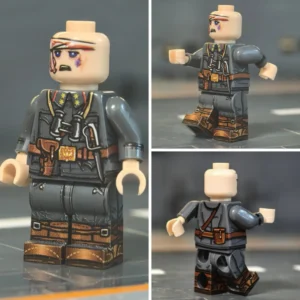
2. Top-Right: The Battle-Wounded Officer
Specific Name: WWI Austro-Hungarian Stormtrooper Officer (Wounded)
Visual Details: This figure is depicted bare-headed to showcase his severe battle injuries. He has a bloody white medical bandage wrapped around his head and purple/red bruises on his face. His dark collar tabs feature gold stars, designating him as a commissioned officer (likely an Oberleutnant). He wears a pair of binoculars on his chest and has a trench knife (Grabendolch) tucked directly into his belt for close-quarters combat.
Historical Background: Stormtrooper tactics required officers to lead from the absolute front line, infiltrating enemy trenches during rapid assaults. This resulted in extremely high casualty rates among leadership. The trench knife and binoculars are highly accurate tools for an officer navigating the deadly, claustrophobic environment of WWI trench networks.
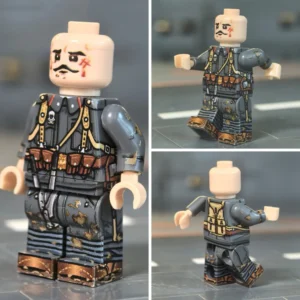
3. Bottom-Left: The Veteran Shock Trooper
Specific Name: WWI Austro-Hungarian Veteran Stormtrooper (Skull Insignia)
Visual Details: Also bare-headed, this soldier features a prominent black mustache, a stern “thousand-yard stare,” and fresh blood scrapes across his cheeks. On his right breast, he bears a distinct white skull (Totenkopf) insignia. He wears a complex gold Y-strap canvas harness over his grey tunic to support his heavy assault gear.
Historical Background: The skull badge was a powerful psychological symbol widely adopted by elite shock troops across the Central Powers (both Germany and Austria-Hungary). It marked the wearer as a specialized, fearless soldier who expected to face death daily. The facial wounds capture the gritty, exhausting reality of soldiers who survived repeated raids into “No Man’s Land.”
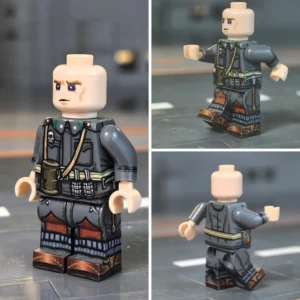
4. Bottom-Right: The Junior NCO
Specific Name: WWI Austro-Hungarian Stormtrooper Junior NCO
Visual Details: This bare-headed figure features printed blonde hair, a grim expression, and a faded combat scar on his left cheek. His collar features green patches with white stars, denoting a junior NCO rank (such as a Corporal or Korporal). Like the veteran next to him, he also proudly displays the skull (Totenkopf) insignia on his right breast.
Historical Background: Junior NCOs were the tactical backbone of the Stormtroopers. Instead of massive human-wave attacks, Austro-Hungarian assault tactics relied on small, highly mobile squads (Sturmpatrouillen) led by experienced Corporals and Sergeants. They bypassed strongpoints and used grenades and speed to collapse enemy defenses from the inside.
Reviews
There are no reviews yet