

Variations
Introduction
Group Identification: WWII Air Force Fighter Pilot Set
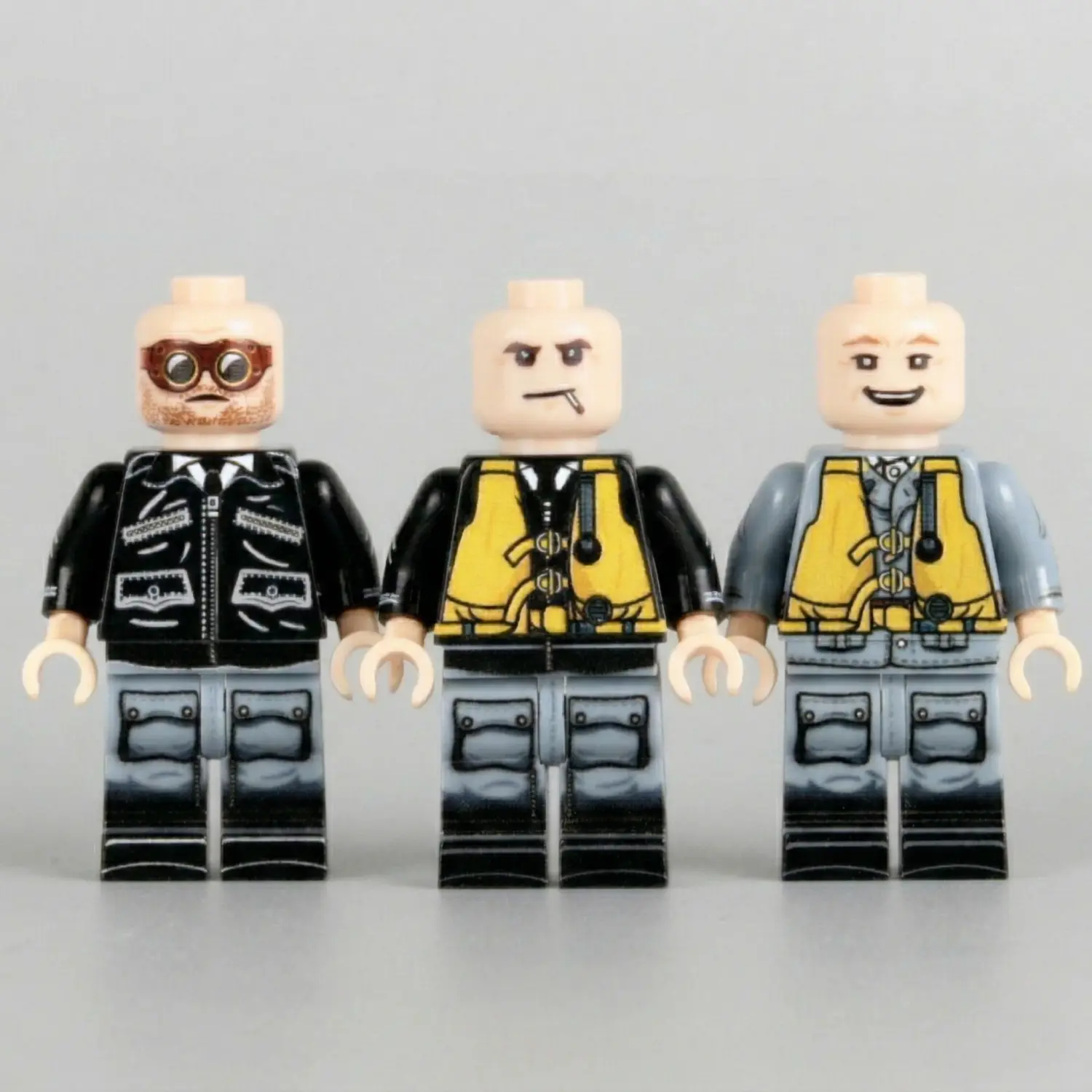
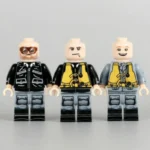
This image displays a set of three highly detailed custom building block minifigures representing World War II Air Force Fighter Pilots. Based on the specific combination of black leather jackets, blue-grey flight suits, and bright yellow life preservers, this group strongly represents European theater aviators—most closely resembling German Luftwaffe Fighter Pilots or Allied pilots flying maritime patrols.
Currently, all three figures are displayed without headgear, exposing the standard top stud where a flight helmet or officer’s cap would normally be attached.
Here is a detailed, one-by-one breakdown of the figures from left to right:
1. Left Figure: The Veteran Ace (Goggles & Leather Jacket)
-
Specific Name: WWII Fighter Pilot (Leather Bomber Jacket)
-
Facial Features: This pilot features a rugged, battle-weary expression with printed brown stubble. The most prominent detail is a pair of vintage aviator flight goggles printed directly over his eyes, featuring brown leather frames and dark lenses.
-
Uniform: He is wearing a highly detailed black leather flight jacket decorated with printed silver zippers and snap-button pockets. Underneath the heavy leather, the collar of a formal white officer’s shirt and black tie is clearly visible.
-
Lower Body: He wears light grey flight trousers featuring large cargo pockets on the thighs, finishing with printed black military boots.
2. Center Figure: The Over-Water Patroller (Life Vest & Cigarette)
-
Specific Name: WWII Fighter Pilot (Leather Jacket & Survival Vest)
-
Facial Features: This figure features a tough, confident expression with a printed cigarette or cigar resting in the corner of his mouth, giving him a classic, gritty aviator aesthetic.
-
Uniform & Gear: Over his black leather flight jacket, he is wearing a bright yellow inflatable life vest. You can see the printed securing straps, buckles, and a black manual inflation tube resting on his left chest. Like the first figure, he wears the officer’s shirt and tie underneath.
-
Lower Body: He shares the same grey cargo map-pocket trousers and black boots as the rest of the squad.
3. Right Figure: The Standard Aviator (Blue-Grey Flight Suit)
-
Specific Name: WWII Fighter Pilot (Blue-Grey Flight Suit & Survival Vest)
-
Facial Features: This pilot features a clean-shaven, wide smiling expression, representing a high-spirited or eager fighter ace.
-
Uniform & Gear: Instead of a black leather jacket, this pilot wears a light blue-grey flight jacket (highly reminiscent of the German Fliegerbluse). Over this uniform, he also wears the high-visibility yellow survival life vest equipped with the chest inflation tube. He retains the white shirt and tie at the collar.
-
Lower Body: His grey cargo trousers and black boots match the other two figures perfectly.
Historical Background
During World War II, fighter pilots faced extreme and unforgiving environments, requiring highly specialized gear:
-
Leather Flight Jackets & Goggles: Fighter cockpits at high altitudes were freezing and often unpressurized. Heavy leather jackets were issued to block the biting wind and keep pilots warm. Flight goggles were vital survival tools; if the canopy was shattered by enemy fire or oil leaked from the engine, goggles protected the pilot from being blinded.
-
The Yellow Life Vest: Because much of the aerial combat in Europe took place over the English Channel or the Mediterranean Sea, pilots were issued pneumatic life preservers. The Allies famously called these the “Mae West”, while the Germans called them the Schwimmweste. They were worn deflated in the cramped cockpit and were colored bright yellow so that search-and-rescue aircraft could easily spot a downed pilot bobbing in the dark ocean water.
-
Cargo Pockets: The large pockets on their thighs were called map pockets. Cockpits were incredibly cramped, so pilots needed a place on their bodies to store navigation maps, flare guns, and emergency rations.
-
Shirt and Tie: Despite the rugged exterior gear, pilots were commissioned officers. It was standard military dress code to wear a formal shirt and tie beneath their flight gear.
Reviews
There are no reviews yet