

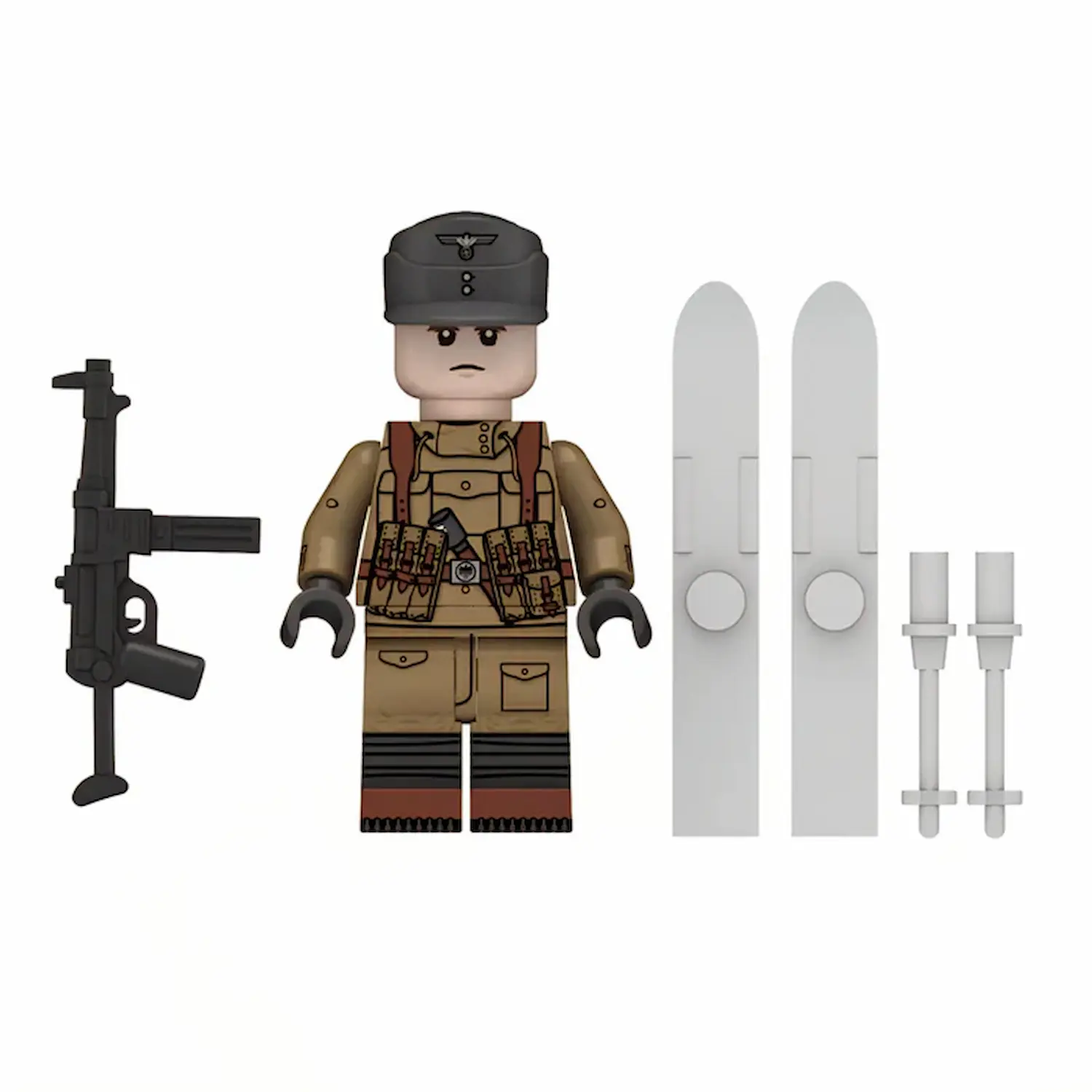
The Figure: WWII German Mountain Trooper (Gebirgsjäger)
This toy minifigure represents an elite soldier of the German Mountain Troops (Gebirgsjäger) during World War II. These specialized infantry units were trained for warfare in alpine terrain and harsh winter conditions, making the included ski equipment a defining feature.
-
Headgear: He wears the distinctive Bergmütze (Mountain Cap) in field grey. This cap features a short visor and ear flaps that could be buttoned under the chin in cold weather. The front of the cap displays the Wehrmacht Eagle insignia (Hoheitszeichen) and a button, which is historically accurate for this unit.
-
Uniform: The figure is dressed in a Tan/Khaki Wind Anorak (Windbluse). This reversible windbreaker was a staple of the mountain troops, worn over the standard wool uniform to protect against wind and snow. The print details show the lace-up neck and chest pockets typical of this smock.
-
Tactical Gear:
-
MP40 Pouches: On his chest, he wears a set of Leather Magazine Pouches designed for the MP40 Submachine Gun. The pouches are detailed with flaps and studs.
-
Combat Knife: A combat knife or bayonet handle is tucked into his gear on the chest, ready for close-quarters use.
-
-
Legs: The legs feature printed details representing Puttees (leg wrappings) worn over mountain boots. These were essential for keeping snow out of the boots and supporting the ankles while skiing or climbing.
-
Accessories (Winter Equipment):
-
Skis and Poles: The set includes a pair of White Skis and Ski Poles. Ski troops were crucial on the Eastern Front and in the campaigns in Norway, allowing for rapid movement across deep snow where standard infantry would be bogged down.
-
Weapon: He is armed with a black MP40 Submachine Gun, the standard automatic weapon for squad leaders and elite troops.
-
Historical Background: The Gebirgsjäger were considered among the best soldiers in the German army. Recognizable by the Edelweiss flower emblem often worn on their caps or sleeves, they fought in some of the most difficult theaters of the war, including the mountains of Norway, the Caucasus Mountains in Russia, and the Italian Alps. Their ability to fight on skis made them highly effective in winter campaigns.

Reviews
There are no reviews yet