

Character Identification: WWII Polish People’s Army Infantryman (Eastern Front Exile Forces)
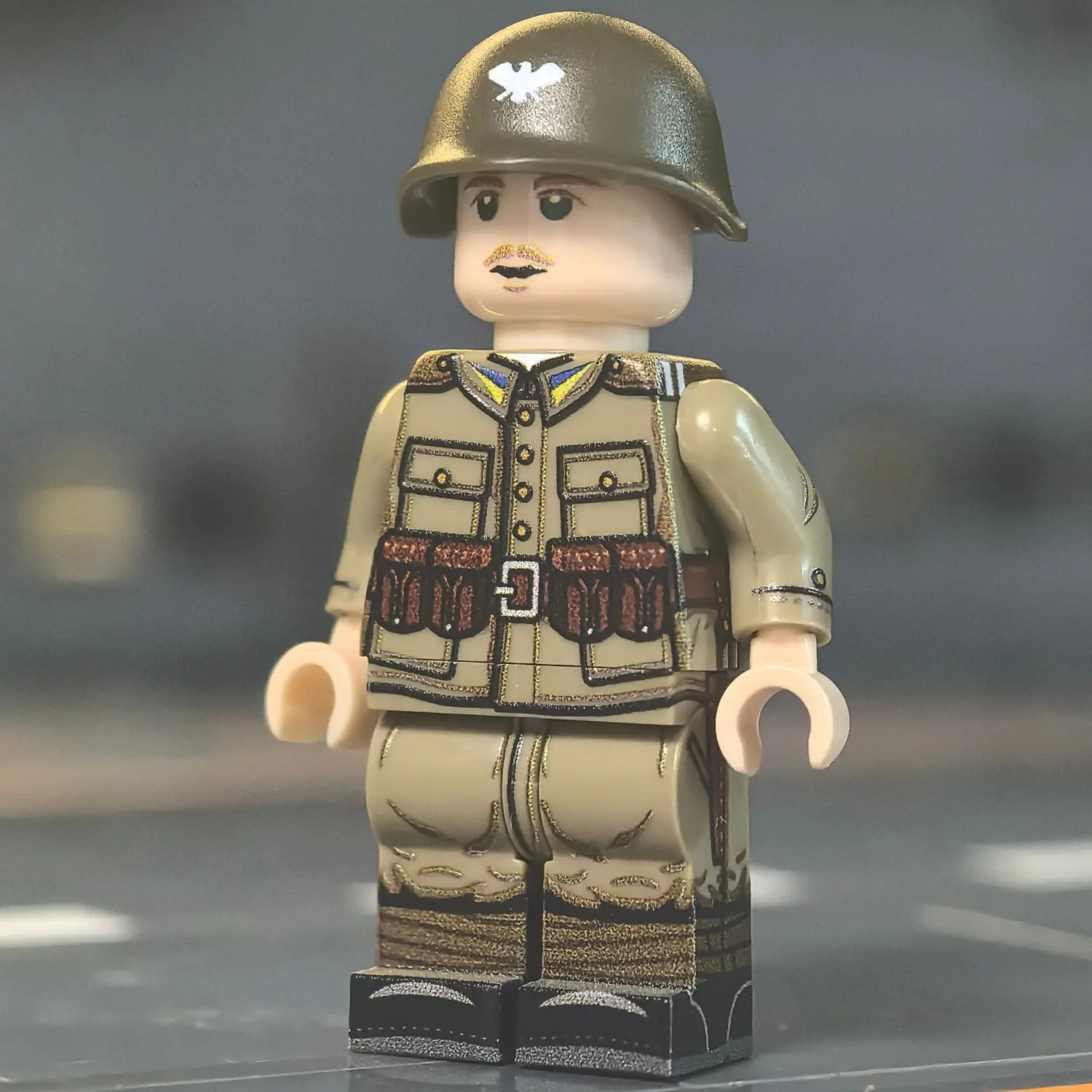
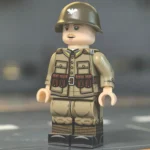
This custom-printed building block minifigure represents a frontline infantry soldier of the Polish People’s Army (Ludowe Wojsko Polskie – LWP) during the later stages of World War II. While your prompt mentions “Polish Exile Troops” (波兰流亡部队), this specific figure represents the exiled Poles who formed a Soviet-backed army in the East, fighting alongside the Red Army to liberate Poland, rather than the Polish Armed Forces in the West who wore British uniforms.
Specific Name and Visual Details
-
Specific Name: WWII Polish People’s Army Infantryman (LWP / First Polish Army)
-
Headgear (The Uncrowned Eagle): The figure wears an olive-drab steel helmet (resembling the Soviet SSh-40). The most defining feature is the white painted Polish Eagle on the front. Crucially, this eagle does not have a crown. This specific design, sometimes historically nicknamed the “Kurica” (hen), was enforced by Soviet authorities to remove the royal crown from the traditional Polish coat of arms, symbolizing the new communist-aligned military.
-
Facial Features: He features a classic printed mustache, a grooming style highly traditional and popular among Polish military men of that era.
-
The Uniform and Insignia: He wears a khaki/olive-drab tunic that blends Soviet-style cuts with traditional Polish military elements.
-
Collar Pennants (Proporczyki): On his collar, you can clearly see printed triangular pennants in yellow and blue. In the Polish military, these colors historically designated the Infantry branch.
-
Shoulder Epaulettes: The white piping on the edges of his shoulder boards denotes his specific rank within the Polish military structure.
-
-
Tactical Webbing and Gear:
-
Front: He wears a brown leather combat belt with multiple brown leather ammunition pouches (designed to hold stripper clips for rifles like the Mosin-Nagant).
-
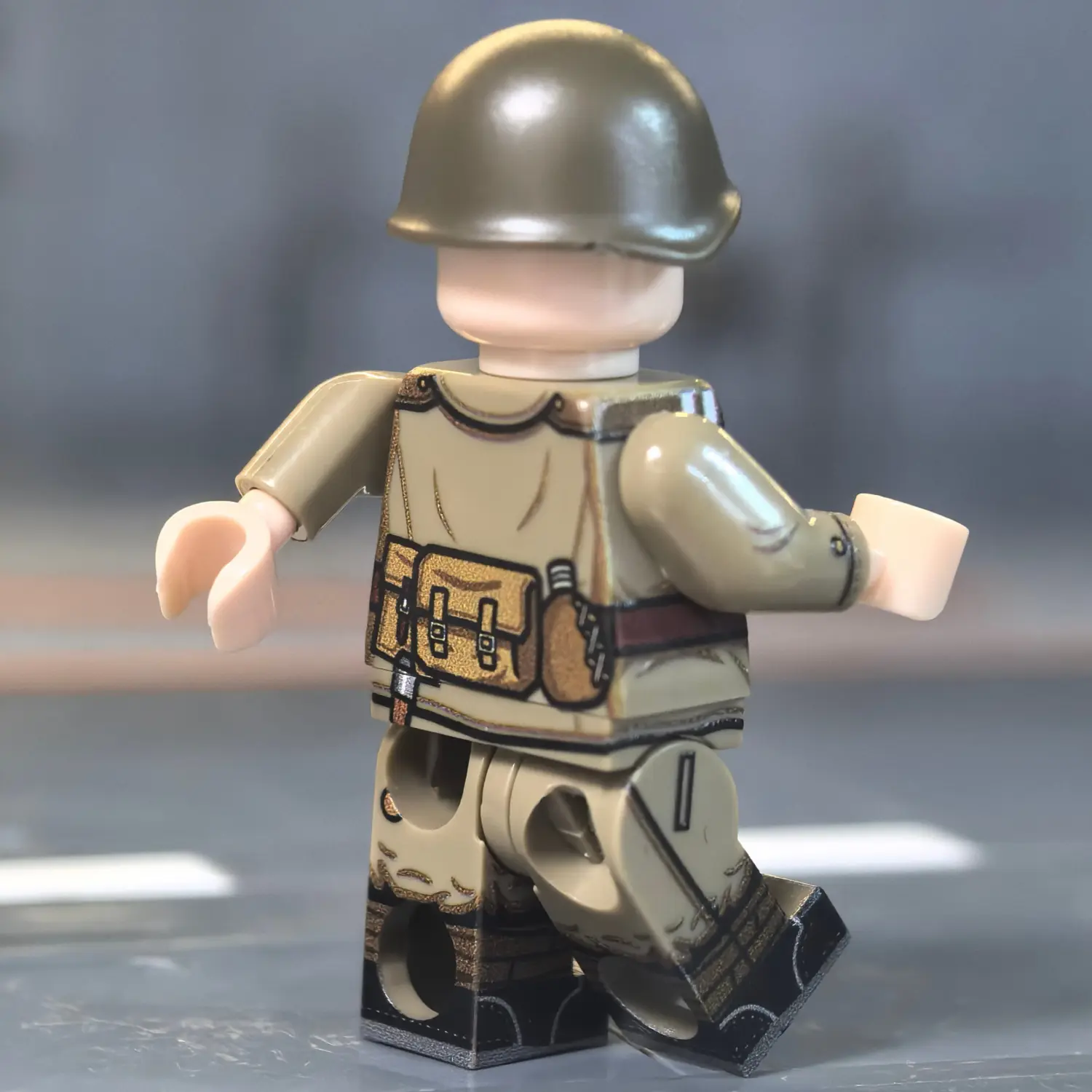
Back: The rear view shows highly detailed 360-degree printing, featuring a canvas haversack (bread bag), a military canteen, and the handle of an entrenching tool (shovel) tucked into his belt.
-
-
Lower Body and Footwear: His trousers are tucked into short black military boots, wrapped with printed puttees (cloth leg wraps), which were common among Eastern European forces due to leather shortages.
Historical Background: The “Two” Polish Exile Armies
When Nazi Germany and the Soviet Union invaded and partitioned Poland in 1939, the Polish state ceased to exist on the map, but its military continued to fight in exile. This led to a split in the Polish armed forces:
-
The Western Exile Army: The official Polish government-in-exile fled to London. Their troops (like Anders’ Army and Maczek’s armored division) fought under British command in Italy, Normandy, and North Africa, wearing British uniforms with Polish insignia.
-
The Eastern Exile Army (Shown Here): Hundreds of thousands of Poles had been deported to Soviet gulags in 1939. After Nazi Germany betrayed the USSR in 1941, the Soviets allowed these Polish prisoners to form a new army. While many left for the West (Anders’ Army), those who remained in the USSR formed the First Polish Army (Berling’s Army) in 1943.
-
The Polish People’s Army (LWP): This Soviet-backed force fought brutally hard on the Eastern Front alongside the Red Army, participating in massive battles to push the Germans out of Ukraine, Poland, and eventually taking part in the Battle of Berlin. This minifigure perfectly captures the unique blend of Soviet-supplied gear (like the helmet shape) and fierce Polish national identity (the collar pennants and the painted eagle).
Reviews
There are no reviews yet