
Variations
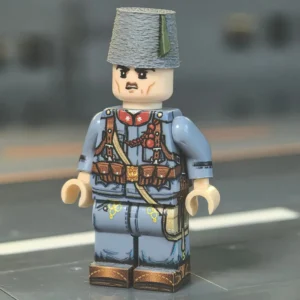
Introduction
Group Identification: Eastern and Central European Military Minifigures (WWI & WWII)
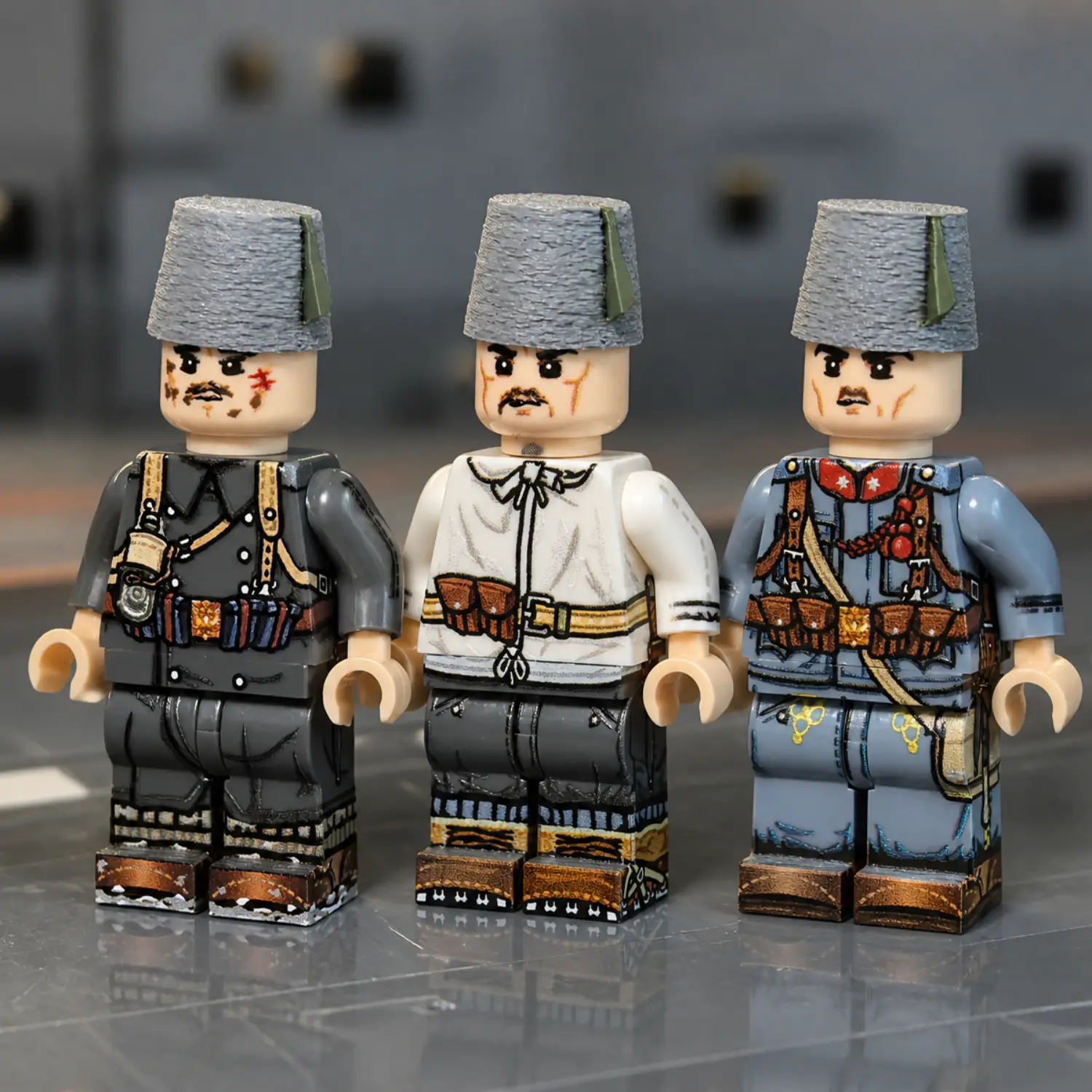
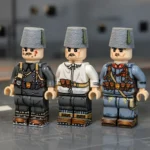
This image displays a collection of three custom-printed building block minifigures representing different historical soldiers from Eastern and Central Europe during the First and Second World Wars. A unifying visual theme among them is the use of traditional tall fur hats (common in Balkan and Carpathian regions) paired with their respective military uniforms.
Here is a detailed, one-by-one breakdown from left to right:
1. Left Figure: WWI Serbian Army Infantryman (Winter Greatcoat)
-
Specific Name: WWI Royal Serbian Army Infantryman (Winter Variant)
-
Visual Details: * Headgear: He wears a tall, grey textured fur hat with a green side tassel, historically known as a Šubara, a traditional Balkan sheepskin hat.
-
Facial Features: His face is heavily smudged with combat dirt and features a prominent red cross-shaped scar and a black mustache.
-
Uniform & Gear: He is dressed in a heavy dark grey winter greatcoat. Over this, he wears canvas suspenders, a brown leather belt with dark blue ammunition pouches, and uniquely, a military canteen strapped directly to his chest. His heavy brown boots are printed with white snow/frost, indicating a freezing combat environment.
-
-
Historical Background: During World War I, the Serbian Army faced severe logistical shortages. To survive the brutal mountainous winters—especially during the tragic “Great Retreat” across Albania in 1915—soldiers often supplemented their standard-issue greatcoats with traditional civilian peasant gear like the Šubara fur hats to prevent freezing to death.
2. Middle Figure: WWII Romanian Mountain Trooper (Vânători de Munte)
-
Specific Name: WWII Romanian Winter Soldier / Mountain Trooper
-
Visual Details:
-
Headgear: He wears a similar tall, grey fur hat with a green tassel. In the Romanian context, this represents the Căciulă, a traditional sheepskin winter hat.
-
Facial Features: He has a battle-hardened face with a scar, a mustache, and is depicted smoking a pipe.
-
Uniform & Gear: He wears a white winter camouflage smock with string ties over his dark grey uniform. He has a brown leather belt with standard brown dual-ammunition pouches.
-
Footwear: His lower legs feature striped puttees (leg wraps), and his brown mountain boots are printed with prominent metal ice cleats/hobnails for gripping icy terrain.
-
-
Historical Background: During World War II, Romania sent massive troop contingents to the Eastern Front. The elite Romanian Mountain Troops (Vânători de munte) fought in horrific winter conditions in the Caucasus and at Stalingrad. The combination of the traditional Căciulă hat for warmth and the white snow smock for camouflage was vital for frontline survival and combat effectiveness in the snow.
3. Right Figure: WWI Austro-Hungarian / Hungarian Soldier
-
Specific Name: WWI Hungarian Army Soldier (Early-War Hechtgrau Uniform)
-
Visual Details:
-
Headgear: He also wears the tall grey fur hat with the green tassel, representing localized or irregular unit headwear within the empire.
-
Facial Features: He features a stern expression with a mustache, a small soul patch, and a scar on his left cheek.
-
Uniform & Gear: He is dressed in a highly distinctive light blue-grey tunic. His collar features red collar tabs with white stars, indicating his rank. He wears an intricate set of brown leather webbing, including a cross-shoulder strap and multiple ammo pouches across his waist. He has brown puttees and hobnailed boots.
-
-
Historical Background: The light blue-grey uniform—known as Pike-Grey (Hechtgrau)—is the definitive hallmark of the Austro-Hungarian Army during the early years of World War I (1914-1915). Before switching to standard field-grey, the empire’s forces, including the Hungarian Honvédség, marched to war in this color. The red collar tabs with stars are classic Austro-Hungarian rank insignia, while the fur hat suggests he may belong to an auxiliary, guard, or specific regional unit that retained traditional folk elements.
Reviews
There are no reviews yet