

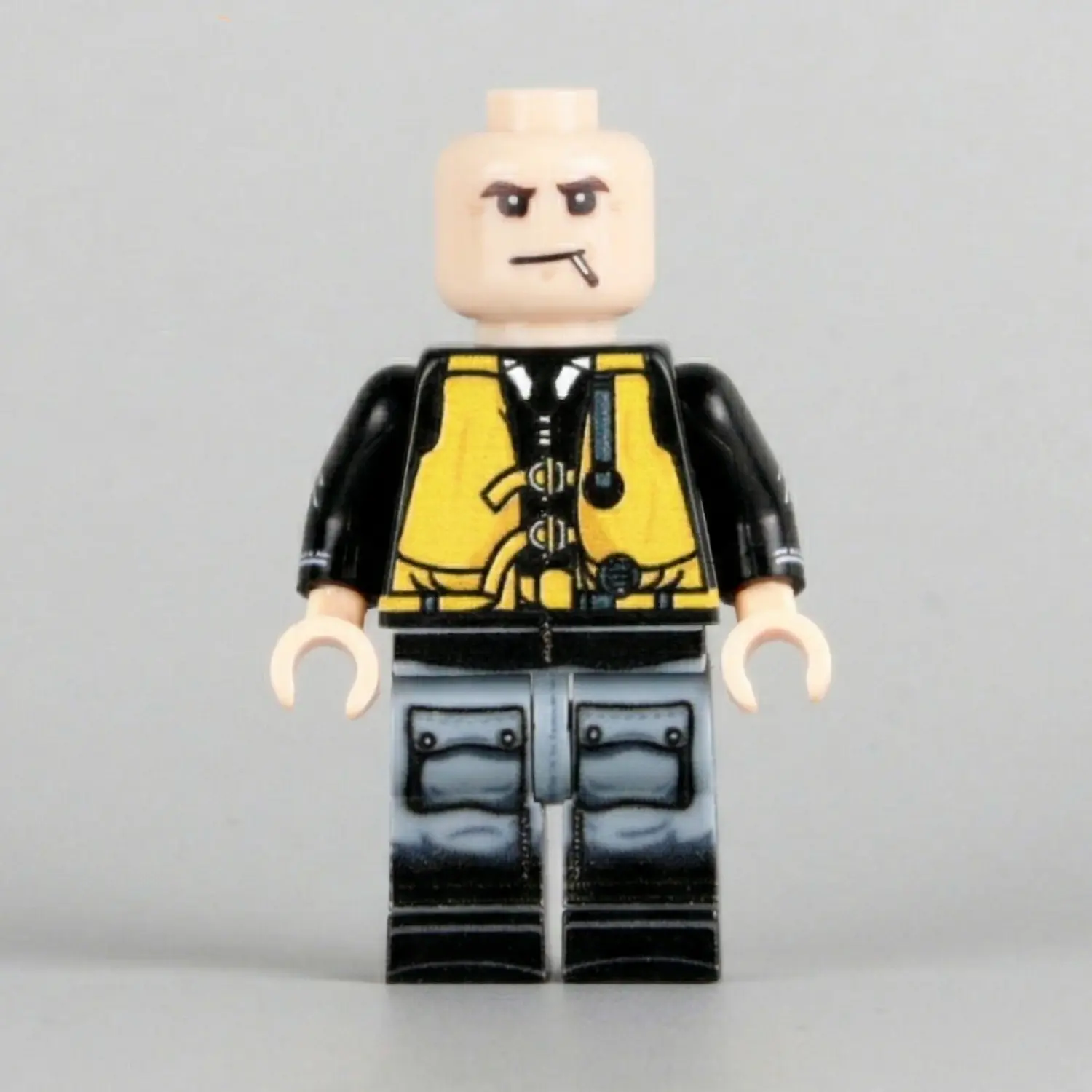
Character Identification: WWII Air Force Fighter Pilot (Over-Water Operations)
This custom building block minifigure represents a classic World War II Air Force Fighter Pilot. Based on the highly specific uniform details—most notably the bright yellow life preserver worn over a dark flight jacket—this figure depicts a pilot equipped for maritime or over-water combat operations, such as the Battle of Britain or Pacific Theater patrols.
Specific Name and Uniform Details
-
Specific Name: WWII Military Aviator / Fighter Pilot (with Survival Life Vest)
-
Head and Facial Features: The figure is currently shown without headgear (exposing the standard stud for attaching a helmet or cap). He features a tough, battle-hardened facial expression and is printed with a cigarette or cigar hanging from the corner of his mouth, giving him a rugged, classic aviator aesthetic.
-
The “Mae West” Life Vest: The most prominent feature of this minifigure is the bright yellow inflatable life vest printed over his jacket. In the Allied forces, this was famously nicknamed the “Mae West” (or the Schwimmweste in the German Luftwaffe). The printing details include inflation tubes, securing straps, and metal buckles.
-
Flight Jacket & Collar: Underneath the yellow vest, he wears a black leather bomber/flight jacket. Peeking out from the collar is a formal white shirt and black tie, a common practice for commissioned officer pilots during the era.
-
Flight Trousers and Boots: The lower half consists of light grey flight trousers equipped with large, buttoned cargo pockets on the thighs. These were essential for pilots to store maps, flares, and survival tools in the cramped cockpit. The legs finish with printed black military boots.
Historical Background
During World War II, aerial combat frequently took place over large bodies of water, such as the English Channel, the Mediterranean Sea, and the vast Pacific Ocean. If a fighter plane was damaged in combat or suffered engine failure, pilots were forced to either bail out via parachute or ditch their aircraft in the sea.
To survive in the water, pilots were universally issued pneumatic life preservers. These vests were intentionally colored bright yellow to make the downed aviator highly visible from the air to search and rescue planes (like the Catalina flying boats or German Seenotdienst rescue planes). The vests were worn deflated over the pilot’s flight jacket to save space in the tight cockpit and were inflated using a CO2 cartridge or by blowing into a manual inflation tube once the pilot was in the water.
The aesthetic of this specific figure—a rugged pilot smoking a cigarette, wearing an officer’s shirt and tie beneath a heavy flight jacket and a bulky yellow survival vest—perfectly captures the stressful, high-stakes reality of WWII aviators who faced the dual threats of enemy fire and the unforgiving ocean.
Reviews
There are no reviews yet