

Character Identification: WWII German Infantry Squad Leader (NCO)
Specific Name and Equipment Details
-
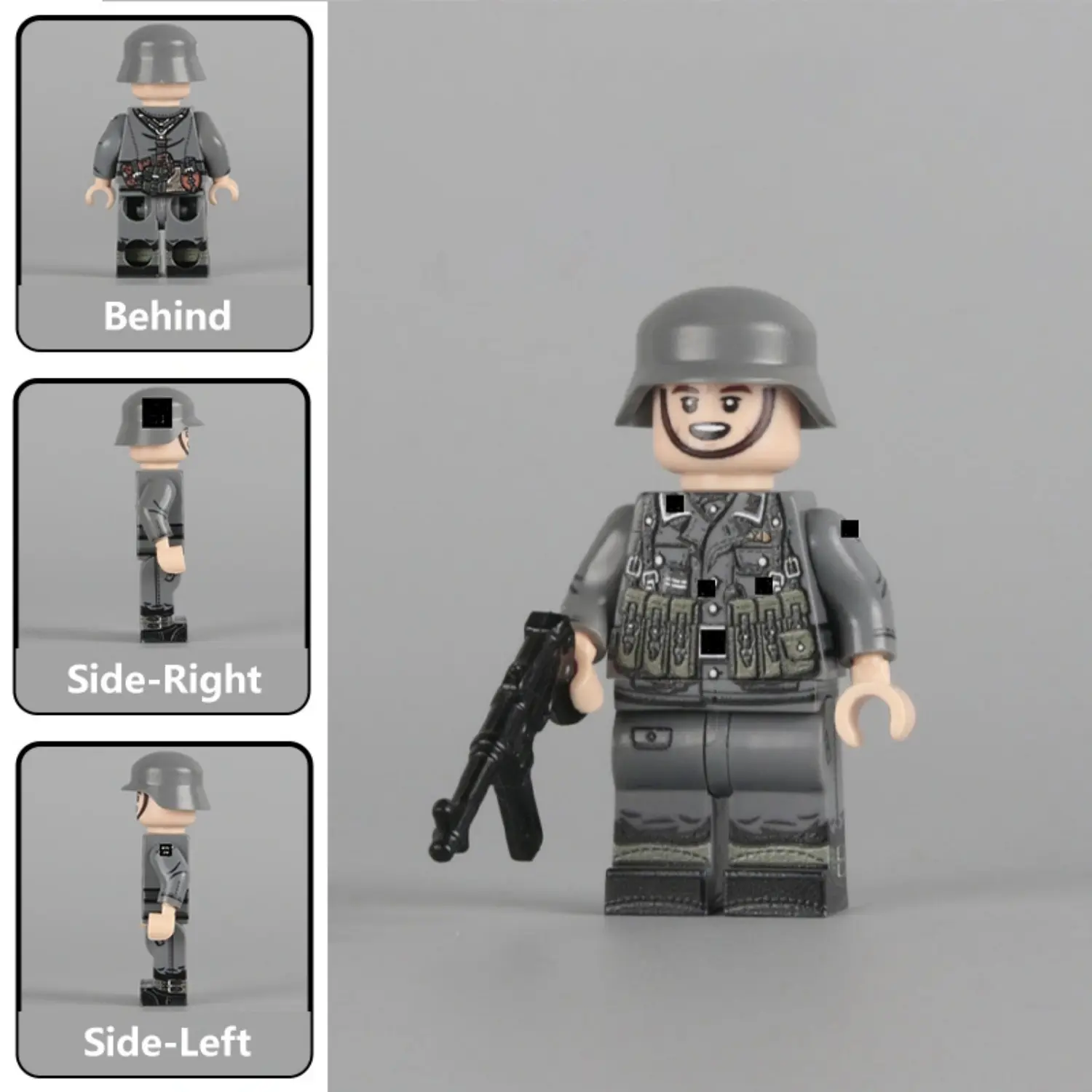
Specific Name: WWII German Army (Wehrmacht/Waffen-SS) Squad Leader / Submachine Gunner.
-
Headgear: The figure wears the iconic field-grey Stahlhelm (steel helmet) secured with a printed chin strap.
-
The Uniform: He is dressed in the standard Field-Grey (Feldgrau) combat tunic and matching trousers, which was the universal base uniform for German ground forces.
-
Chest Gear (Ammunition Pouches): Over his tunic, he wears a distinctive set of olive-green canvas pouches. These are historically accurate MP40 Magazine Pouches. Each set typically held three 32-round magazines, providing the squad leader with ample ammunition for close-quarters engagements.
-
The Weapon: The figure is armed with a highly detailed replica of the MP40 (Maschinenpistole 40). This famous submachine gun is easily identified by its downward-pointing magazine, pistol grip, and folding stock.
-
Footwear: The lower legs feature printed olive-green canvas gaiters (Gamaschen) and black low ankle boots. This is a highly accurate late-war detail, as severe leather shortages forced the German military to replace their traditional tall leather “jackboots” with this combination.
-
Manufacturer Watermarks: The black squares with the letters “HTL JM” covering the right collar, breast, and helmet are digital watermarks used by the manufacturer to censor historical insignia (like the eagle or runic symbols) to comply with international toy retail regulations.
Historical Background
During World War II, the German infantry squad was built entirely around the firepower of the general-purpose machine gun (like the MG34 or MG42). However, to protect the machine gunner and provide mobile, rapid firepower during an assault, the Squad Leader (NCO) was uniquely equipped with an MP40 submachine gun.
While regular riflemen carried slow-firing, bolt-action Kar98k rifles, the NCO could use his MP40 to lay down a heavy volume of fully automatic suppressive fire at close range. This combined-arms tactic made the German infantry squad highly lethal and adaptable.
The transition to canvas webbing (like his green magazine pouches) and canvas gaiters with low boots reflects the harsh economic realities of the later war years (1943–1945). As the German war machine suffered resource shortages, expensive and time-consuming leather gear was phased out in favor of cheaper, mass-produced canvas alternatives.
Reviews
There are no reviews yet