
Variations
Introduction
Character Identification
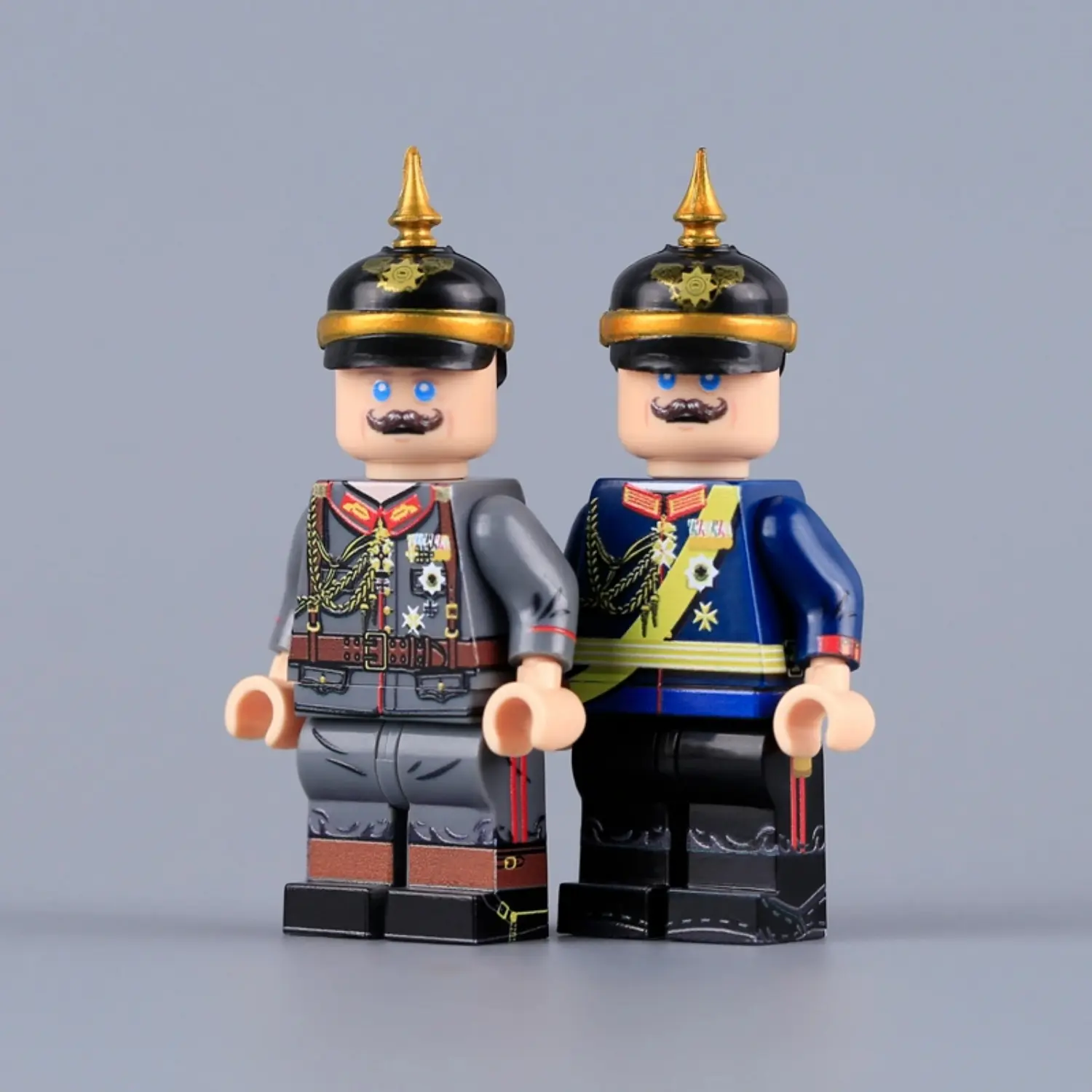
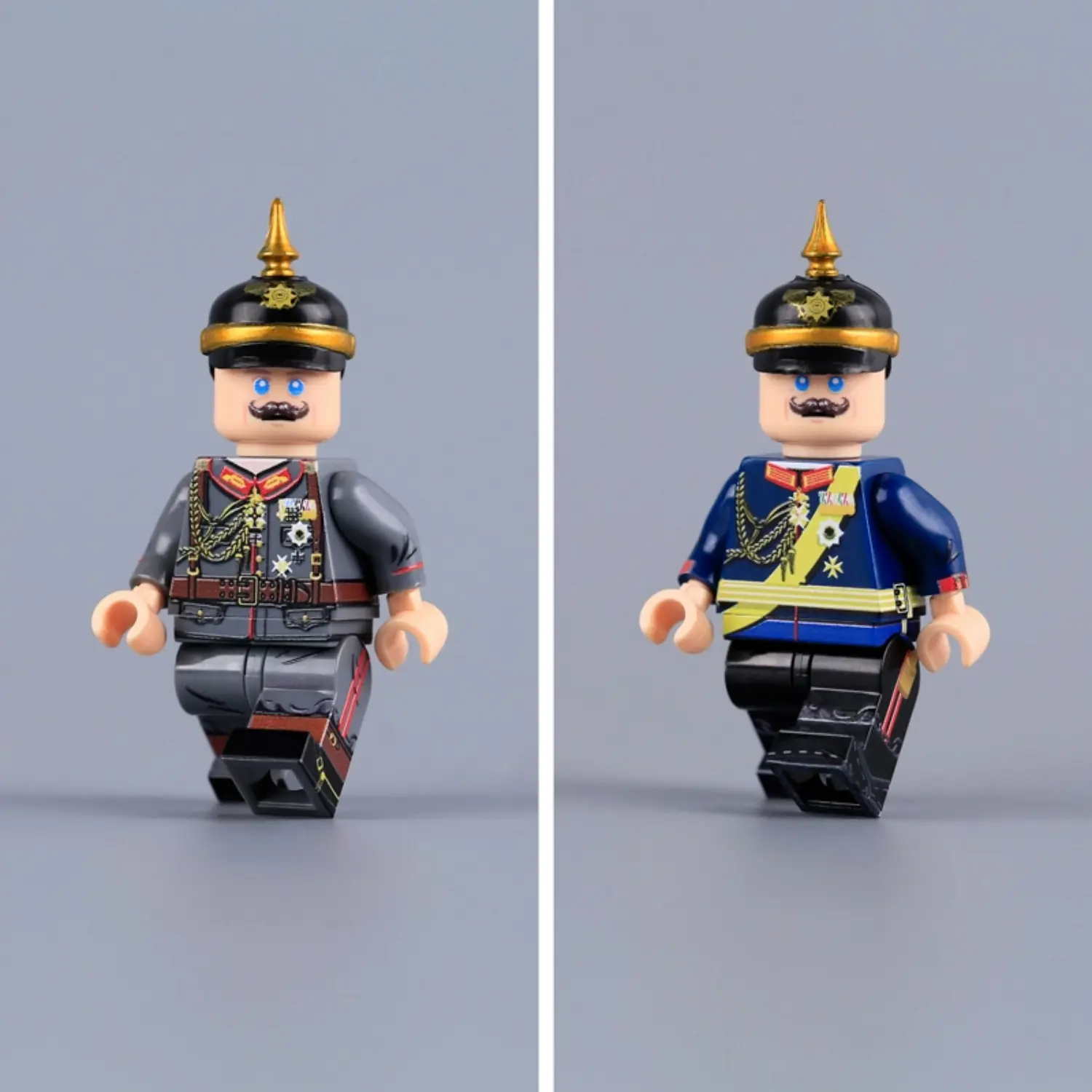
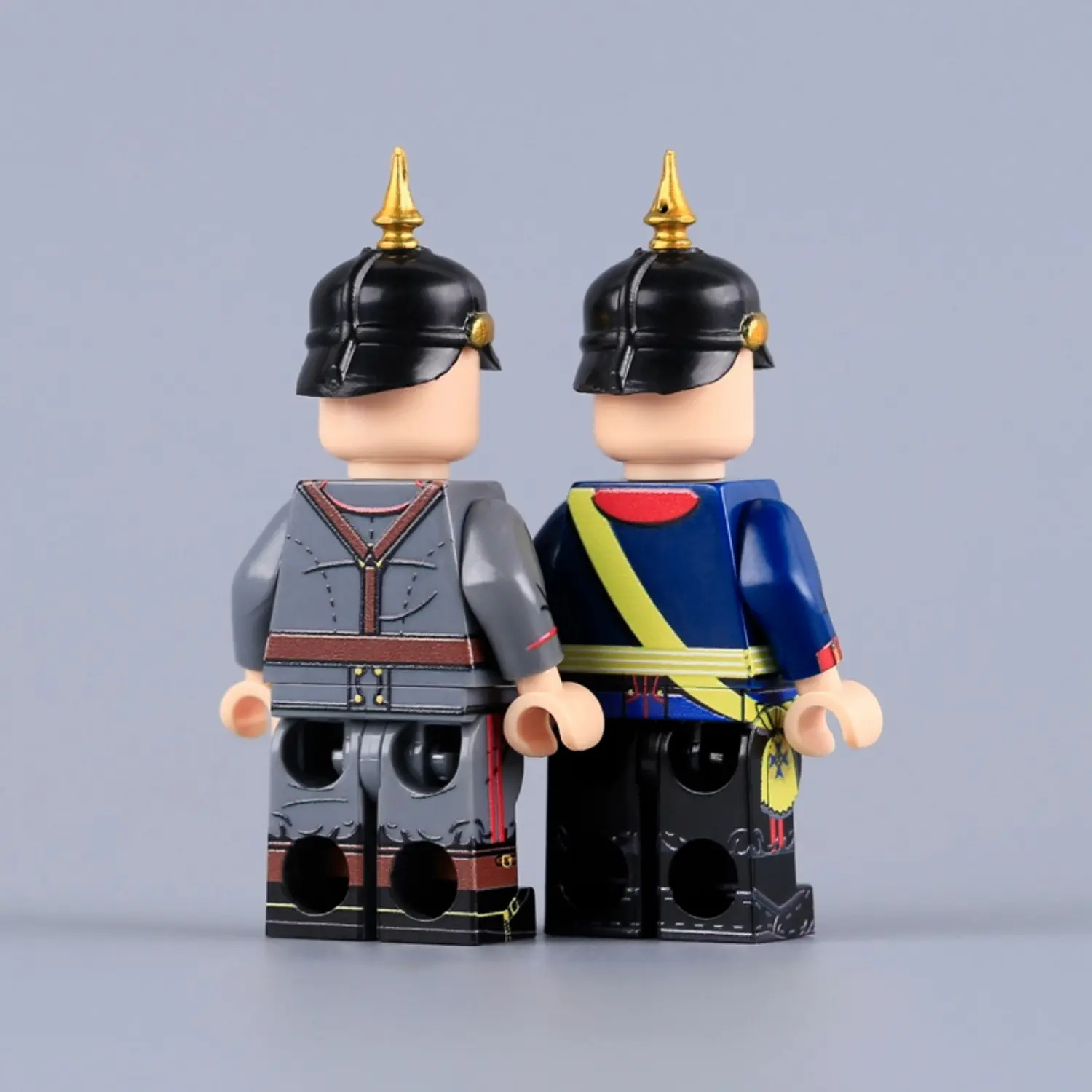
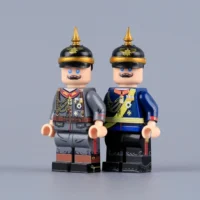
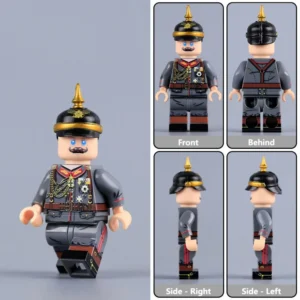
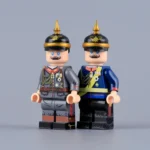
This image features two highly detailed custom building block minifigures, compatible with standard brick systems. They represent high-ranking officers of the Prussian Army / German Empire from the World War I era. While generic, their specific features, especially the mustache, strongly resemble the depiction of Kaiser Wilhelm II, the last German Emperor.
Kaiser Wilhelm II Style Officer (World War I – Early/Field Service)
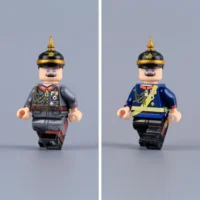
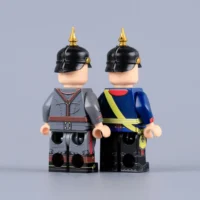
This figure (the second one from the left in the group shot, though pictured as the left figure when standing alone, based on the file numbering) represents the quintessential Prussian commander.
-
Uniform and Accouterments:
-
Headgear: He wears the iconic Pickelhaube (spiked helmet) in black leather with brilliant gold-colored brass fittings, a decorative front plate (likely representing the Prussian eagle), and a sharp spike.
-
Tunic: He is dressed in a Feldgrau (field grey) tunic, which became the standard color for the German Army just prior to WWI to replace brightly colored parade uniforms for actual combat.
-
Decorations: The torso printing is highly detailed, featuring multiple historical awards. Prominently displayed is a series of medals and an ribbon bar, including what appears to be the Iron Cross. He also wears the distinctive gold and silver Aiguillettes (braided cords) on his right shoulder, a sign of high-ranking military staff or adjutants.
-
Facial Features: The figure features a classic molded Kaiser Wilhelm II-style mustache, blue eyes, and a stern expression.
-
-
Historical Background: When World War I broke out in 1914, the Pickelhaube was still standard headgear for all German troops, including officers of the highest rank. While frontline troops covered these helmets in drab cloth for camouflage (and later replaced them with steel Stahlhelm), the Kaiser and his generals frequently wore the un-covered, gilded versions at headquarters or when reviewing troops behind the lines. This uniform style represents the “gilded age” of Prussian militarism meeting the realities of industrialized warfare.
Kaiser Wilhelm II Style Officer (Parade/Ceremonial Dress)
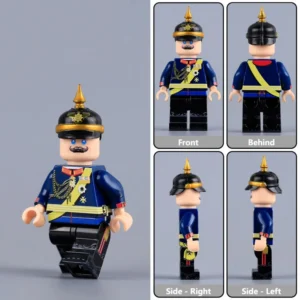
This figure (pictured as the right figure in the group shot, and as the right figure when standing alone) represents the peak of Imperial German ceremonial pageantry.
-
Uniform and Accouterments:
-
Headgear: He wears the same gilded Pickelhaube spiked helmet as his counterpart.
-
Tunic: He is dressed in a brilliantly colored, traditional Dunkelblau (dark blue) Prussian ceremonial tunic (Waffenrock). Blue was the traditional color of the Prussian military for centuries before the switch to Feldgrau for combat.
-
Decorations: This figure is exceptionally ornate. In addition to a neck award and breast star medals (including the Iron Cross), he prominently wears a ceremonial yellow/gold sash across his chest. Golden Aiguillettes are also visible. His trousers are black with a thick red stripe (Lampassen), reserved for generals and high-command staff.
-
Facial Features: This figure features the identical blue eyes and stylized upturned mustache.
-
-
Historical Background: Pre-war Imperial Germany was deeply steeped in military tradition, and parade uniforms were incredibly important for court life, diplomacy, and displaying military might. The Kaiser was known for owning hundreds of uniforms and changing them frequently based on the occasion or the regiment he was visiting. This “Dunkelblau” uniform, accessorized with the golden helmet, sash, and massive mustache, represents the arrogant splendor of the European monarchies on the eve of their collapse in 1914.
Reviews
There are no reviews yet