

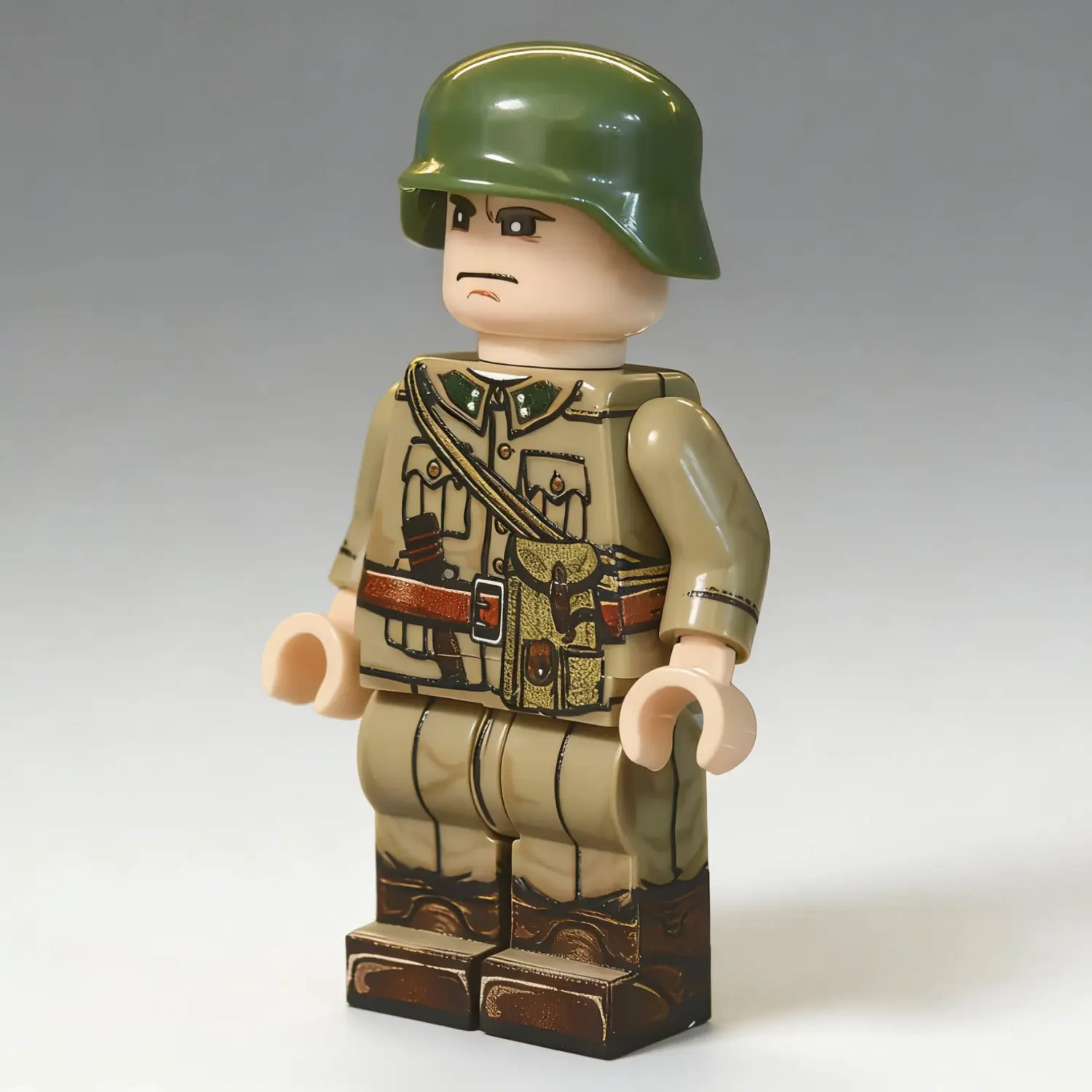
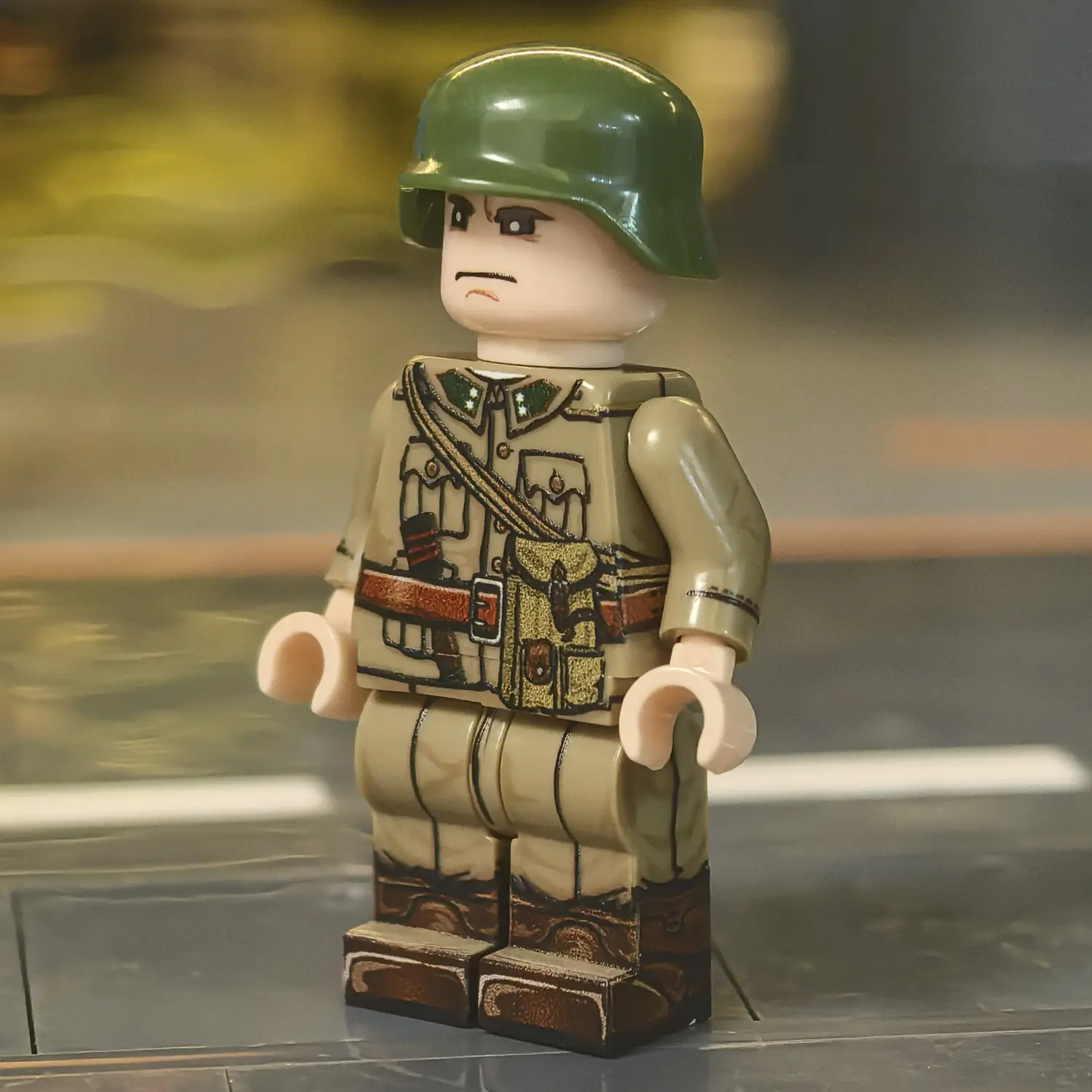
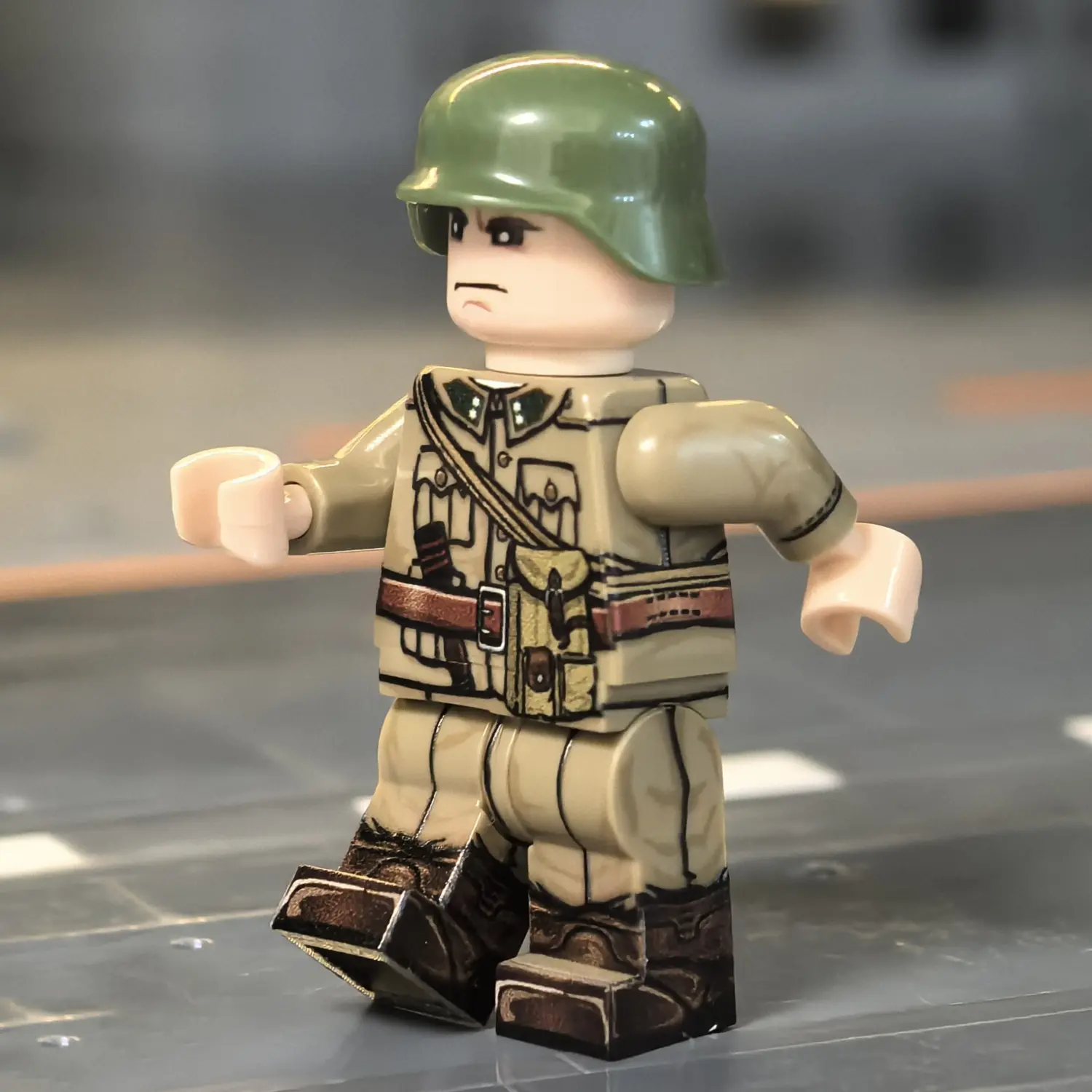
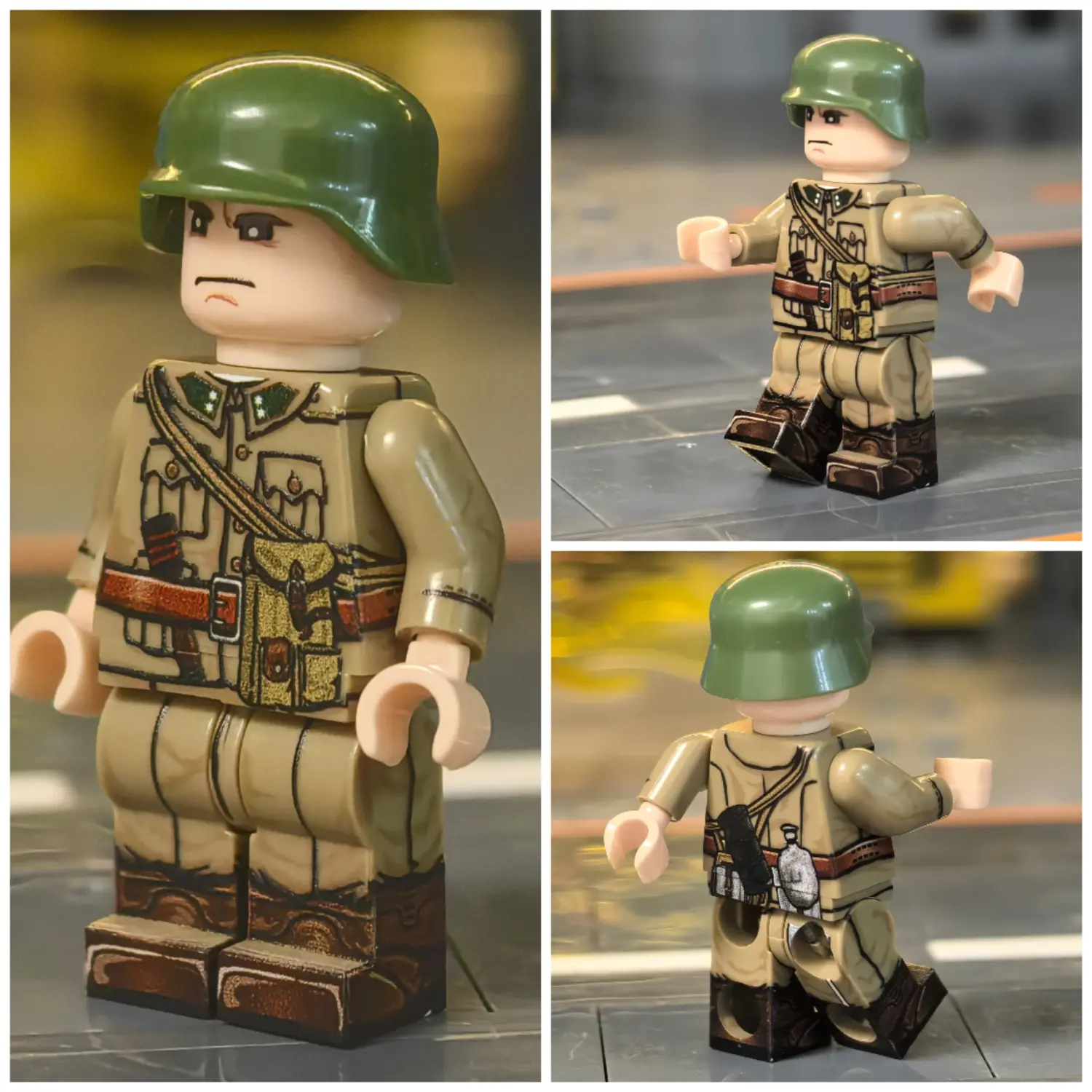
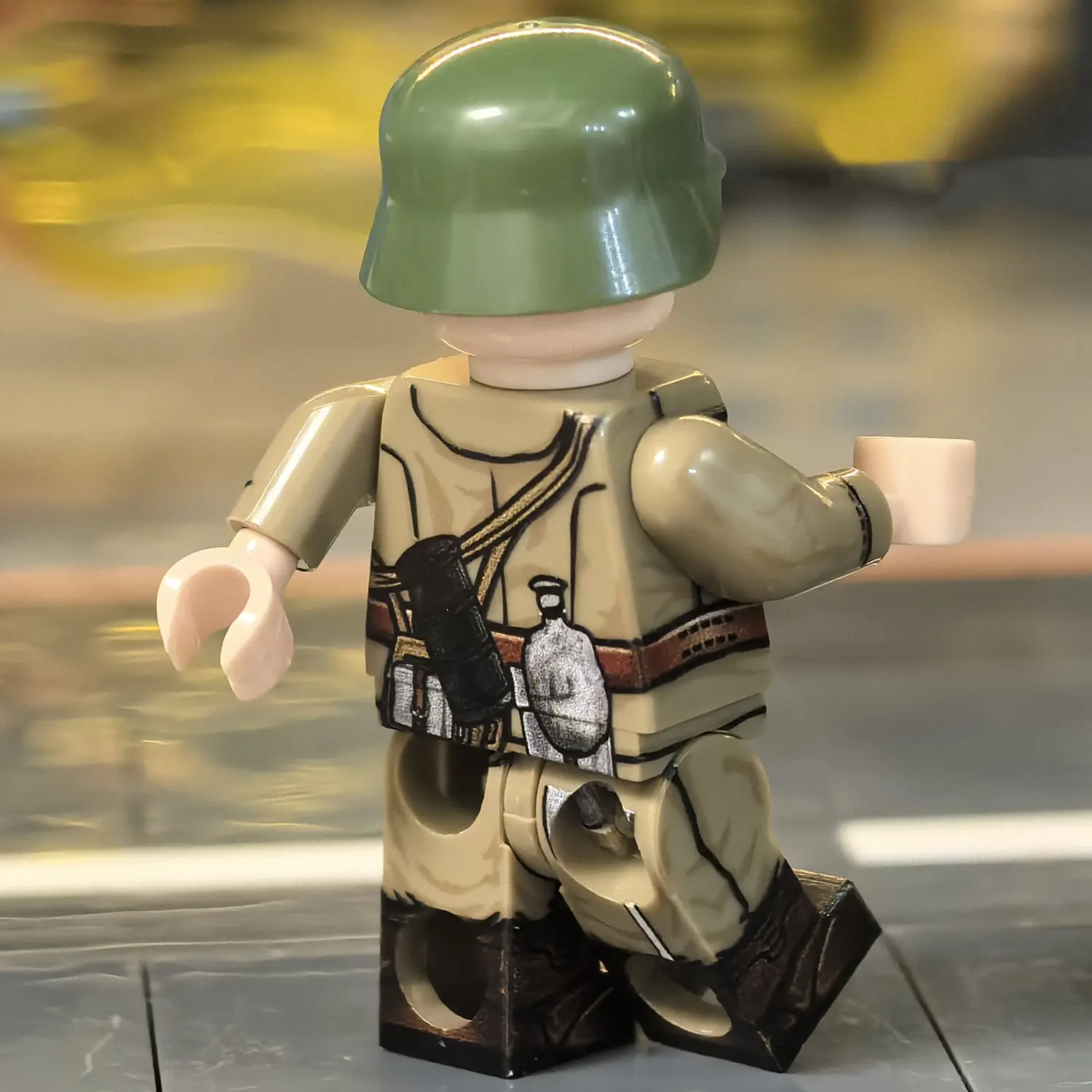
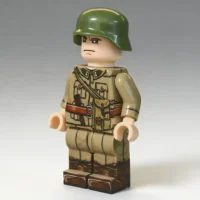
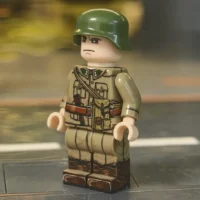
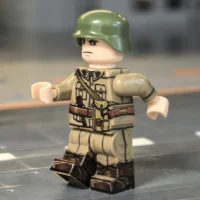
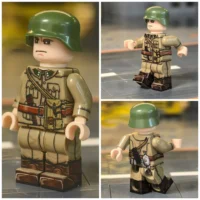
this figure accurately represents a World War II Royal Hungarian Honvéd Infantryman, specifically a Non-Commissioned Officer (NCO) wearing the M43 Field Uniform. Specifically, he is likely an infantry Corporal (Honvéd Gyalogos Tizedes) or perhaps a Sergeant (Szakaszvezető).
Here is a comprehensive, one-by-one detail of the figure’s features with historical context.
Detailed Description and Historical Context
Uniform and Rank Details:
-
Minifigure Subject: A single Hungarian infantry soldier from World War II. “Honvéd” is the traditional Hungarian name for a member of the armed forces, meaning “Defender of the Homeland.”
-
Uniform Tunic and Trousers: The figure is dressed in a field tunic and matching trousers printed in a specific mustard-yellow or light khaki-brown color, which is a historically accurate approximation of the field-issue uniforms of the Royal Hungarian Honvéd Army (Magyar Királyi Honvédség). The uniform is intended to represent the M43 Field Tunic, introduced late in the war (around late 1943) to simplify production while retaining the general cut of previous models like the M39. It features detailed printing of four pleated pockets.
-
Branch and Rank Insignia: The key to this figure’s specialized identification is on the collar. The collar patches are distinctly visible with printed markings. In the Hungarian military, branch colors were prominent (red for infantry, for example). This figure has collar tabs with two small stars, which historically signifies the rank of an NCO. Depending on precise coloring (which can be hard to determine on small prints), this represents either an infantry Corporal (Honvéd Gyalogos Tizedes) or an infantry Sergeant (Szakaszvezető), a position responsible for leading a squad or fire team. His face print has a stern and battle-weary expression.
-
Helmet and Footwear: The soldier wears an olive green steel helmet, which historically would be a Hungarian-manufactured M35 or M38 Sisak (Helmet). While shared design aspects with German helmets are evident, the color and slight shape nuances are historically specific to Hungary. His lower legs feature exceptionally detailed printing of standard brown leather combat boots with rugged soles.
Field Gear and Equipment Details:
-
Belt and Load-Bearing Equipment: The minifigure is heavily laden with functional field gear. A dark brown leather belt with a printed buckle secures his equipment, supported by leather Y-strap suspenders.
-
Ammunition Pouches: On his front right hip is a dark brown ammunition pouch of a standard German/Hungarian style, designed to carry rifle clips for his main weapon (historically, this might be a Mannlicher 35M or 43M rifle).
-
NCO Gear: Slung across his chest is a specialized brown leather strap leading to a detailed green/canvas map case or equipment pouch on his front left. Historically, this type of specialized gear was more commonly carried by NCOs and officers, reinforcing his status as a squad or platoon leader.
-
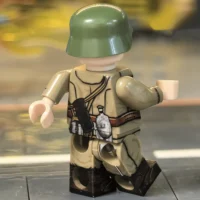
Rear Field Kit: The rear view shows his comprehensive field kit. Attached centrally to his belt is a green, ribbed gas mask canister (a shared Axis design) with a silver field canteen and a leather-strapped entrenching tool (spade) affixed to the canister. Below this is a canvas bread bag.
Historical Role and Background:
-
Historical Context: The Royal Hungarian Army (Magyar Királyi Honvédség) was a key Axis ally fighting primarily on the devastating Eastern Front against the Soviet Union. Hungarian Honvéd infantry divisions fought in major campaigns, including the initial invasion of Ukraine, the catastrophic Battle of Voronezh (Stalingrad offensive), and the desperate, bloody defense of Budapest from 1944–1945. These NCOs were crucial, often leading exhausted and under-equipped Hungarian troops in harsh, sub-zero conditions with extreme bravery against overwhelming Soviet numbers. This minifigure brings to life a specific, specialized fighter on that overlooked front.
Reviews
There are no reviews yet