

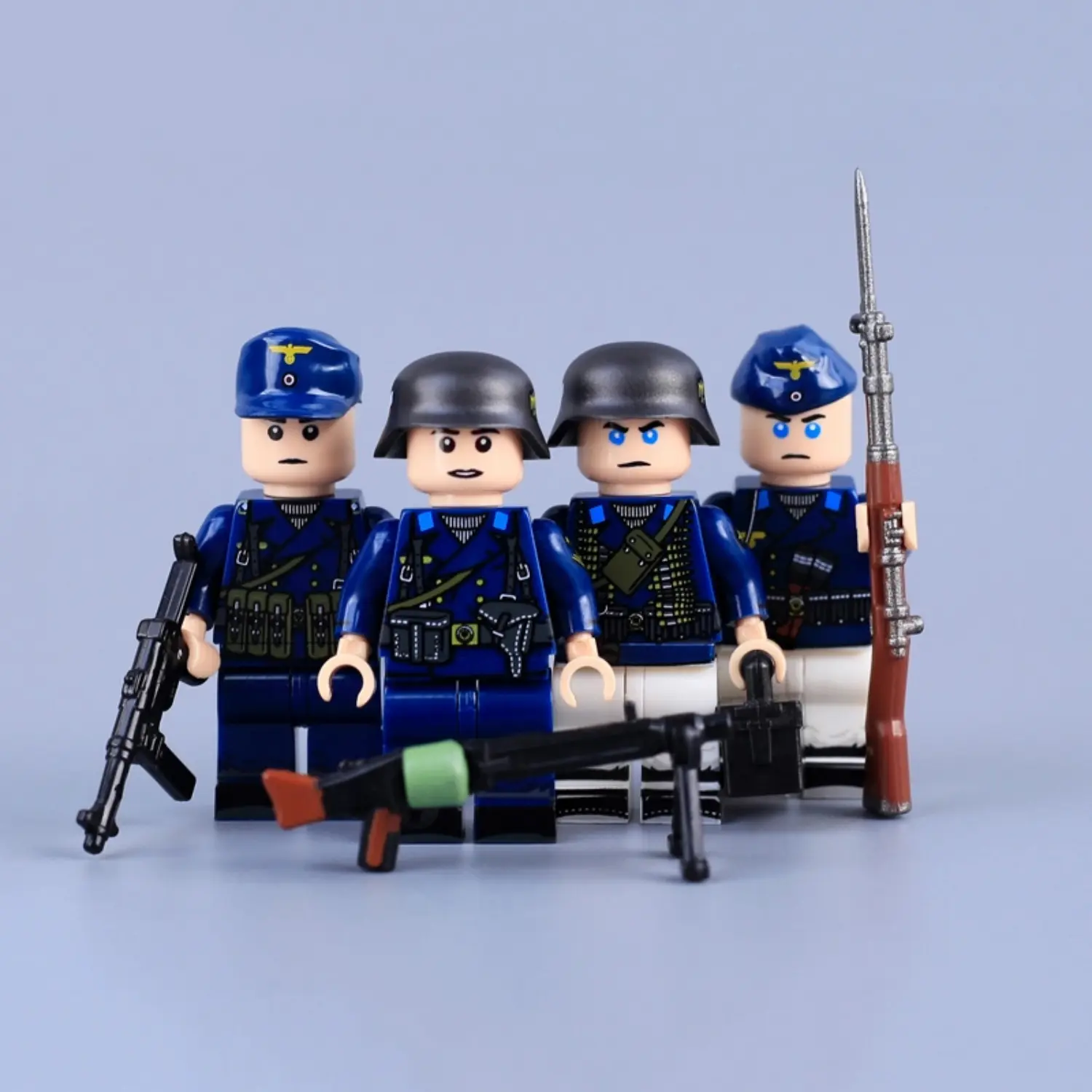
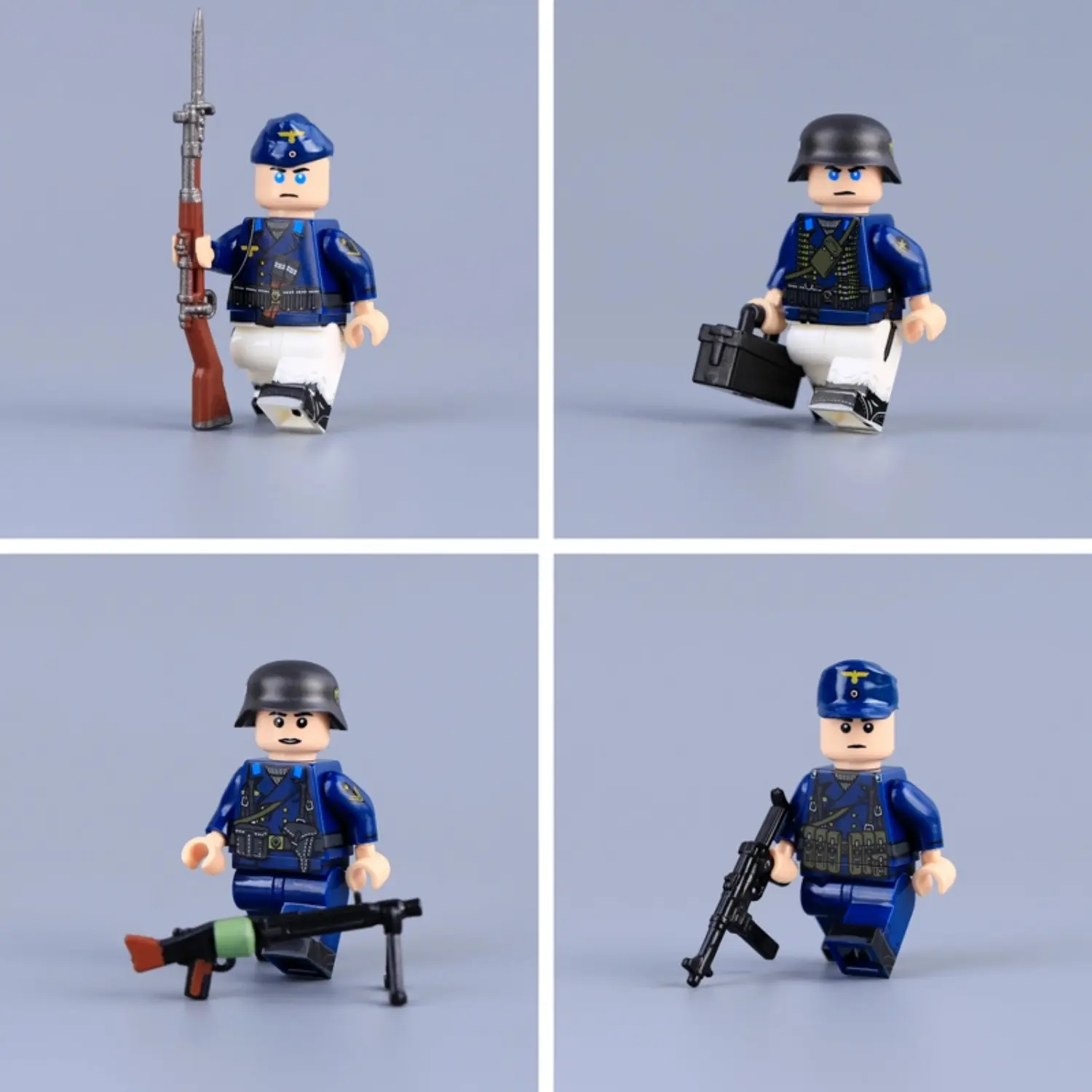
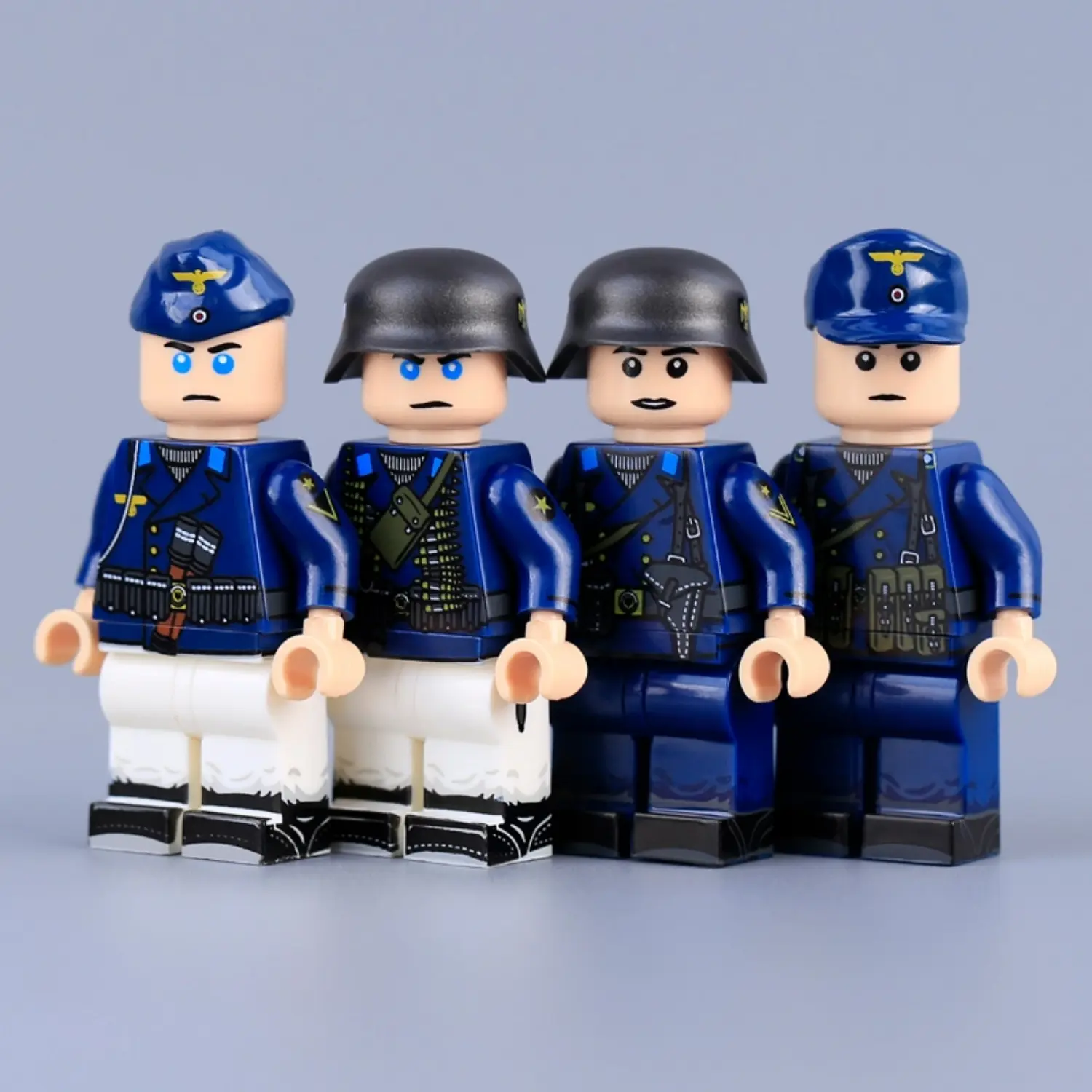
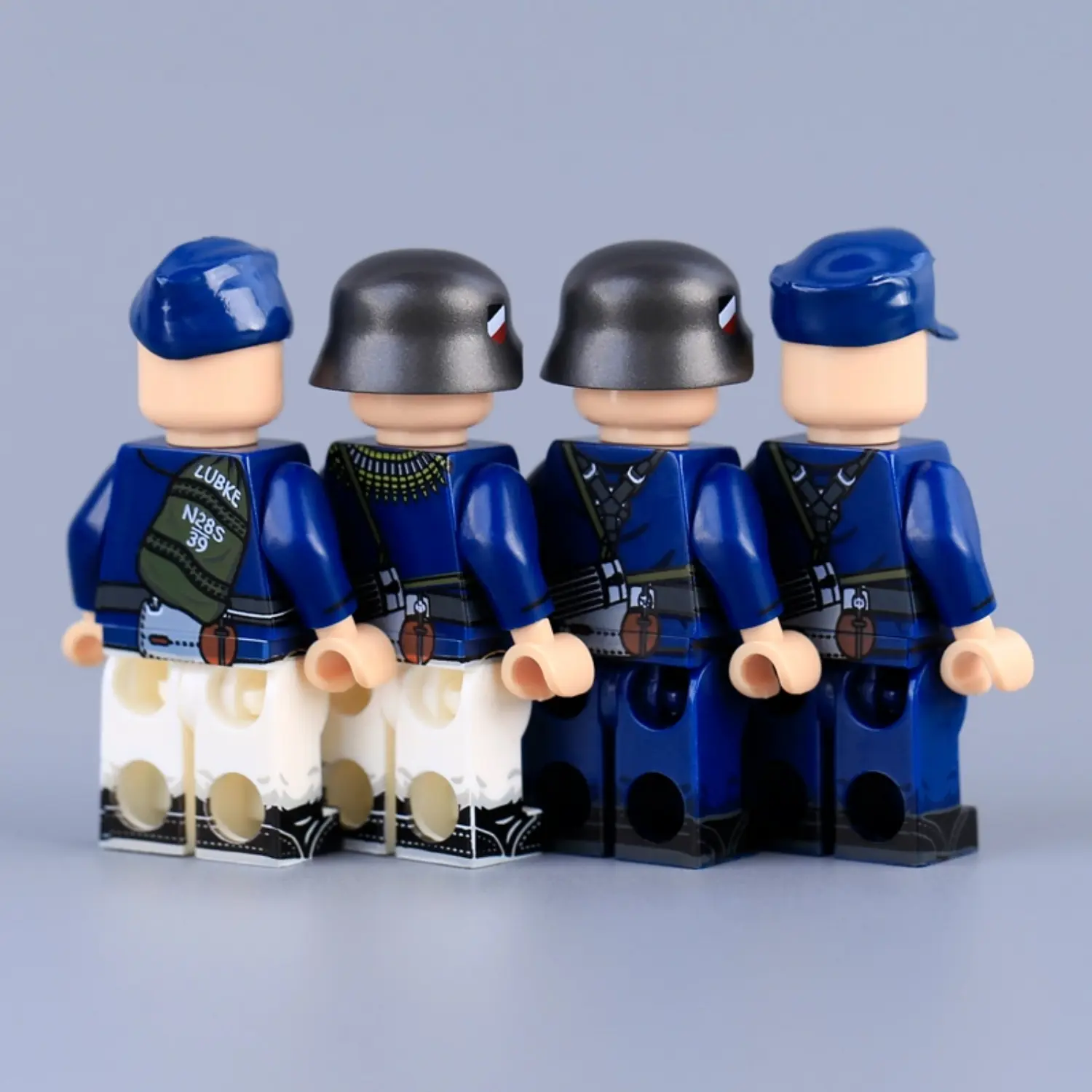
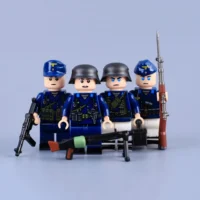
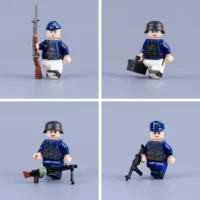
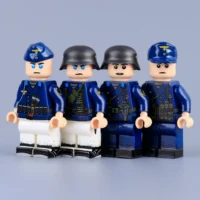
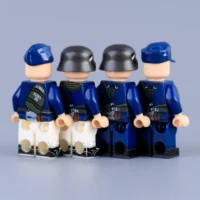
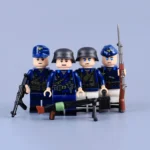
This image displays a complete 4-figure set of WW2 German Kriegsmarine Coastal Assault Troops. Together, they represent a highly specialized naval infantry squad attached to the Coastal Artillery (Marine-Küstenartillerie).
Here is the one-by-one breakdown of each character in the squad, from left to right:
1. The Coastal Assault Sergeant (Far Left)
-
Visual Identification: This figure wears a full navy blue uniform and a blue M43 field cap featuring the golden naval eagle. His torso is printed with olive-drab canvas magazine pouches.
-
Weapon: He is armed with an StG 44 (Sturmgewehr 44) assault rifle.
-
Historical Background: As a Non-Commissioned Officer (NCO) or Squad Leader, his role was to command the defense of a specific coastal bunker or trench sector. Because Allied forces often tried to flank or infiltrate these positions, NCOs were given highly effective, late-war automatic weapons like the StG 44 to provide devastating close-quarters firepower during bunker raids.
2. The Primary Machine Gunner (Center Left)
-
Visual Identification: Dressed in the full blue double-breasted tunic and trousers, wearing a dark grey Stahlhelm (steel helmet). His belt features printed standard ammunition pouches and a black pistol holster for a sidearm.
-
Weapon: He is positioned directly behind a heavy Machine Gun (representing an MG 34 or MG 42) mounted on a bipod.
-
Historical Background: This soldier represents the anchor of the squad’s defense. Machine gunners stationed along the Atlantic Wall were tasked with laying down massive amounts of suppressive fire over the beaches to halt amphibious landings. They carried pistols for personal defense in case the enemy overran their gun nest.
3. The Assistant Machine Gunner / Ammo Bearer (Center Right)
-
Visual Identification: He wears a steel helmet and a blue tunic paired with distinct white summer trousers. His torso is heavily draped with printed machine gun ammunition belts.
-
Weapon/Gear: He carries a heavy black ammunition box (Patronenkasten) in his left hand.
-
Historical Background: A heavy machine gun cannot operate without a dedicated assistant. This “Ammo Bearer” had the grueling job of carrying heavy metal tins of bullets, hauling spare barrels, and physically feeding the ammunition belts into the machine gun so the primary gunner could fire continuously without jamming.
4. The Coastal Assault Trooper / Rifleman (Far Right)
-
Visual Identification: Wearing a blue folding garrison cap (Schiffchen) and the blue tunic paired with white summer trousers. His belt has two stick grenades (Stielhandgranate 24) tucked into it for quick access.
-
Weapon: He holds a Kar98k bolt-action rifle equipped with a long, fixed bayonet.
-
Historical Background: This represents the standard naval infantryman bracing for a brutal assault. While their main job was artillery, the threat of Allied commandos meant these sailors trained for vicious hand-to-hand trench combat. The fixed bayonet and easily accessible grenades show he is ready to clear trenches or defend the corridors of a concrete bunker.
Historical Context: The Naval Infantry
During World War II, the Kriegsmarine Coastal Artillery was responsible for defending Germany’s naval bases and the sprawling fortifications of the Atlantic Wall. While standard German army (Heer) troops wore field-grey, these men retained their proud navy blue uniforms. The mixture of blue tunics with white trousers (worn by the two figures on the right) was standard naval summer working dress, frequently seen at coastal garrisons in warmer months or Southern European theaters before combat intensified.
Variations
Introduction
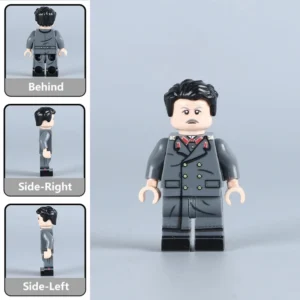
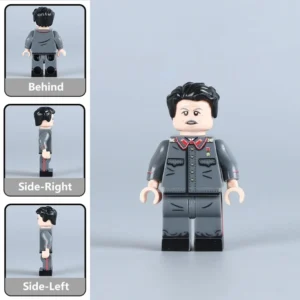
these two custom building block minifigures represent two different historical portrayals of Joseph Stalin, the leader of the Soviet Union (USSR) during World War II.
1. Joseph Stalin (Wartime Greatcoat Version)
The figure on the left depicts Stalin in his iconic Military Greatcoat (known in Russian as a shinel).
-
Uniform Details: He is wearing a long, double-breasted grey wool coat featuring two rows of gold buttons. The collar is adorned with red and gold patches, signifying his supreme rank.
-
Historical Role: This version represents Stalin’s appearance during outdoor military reviews, such as the famous 1941 October Revolution Parade, or at high-level wartime conferences like Tehran or Yalta. It portrays him as the Supreme Commander overseeing the defense of the Soviet Union against the German invasion.
2. Joseph Stalin (Marshal’s Tunic Version)
The figure on the right represents Stalin in his formal Marshal’s Tunic.
-
Uniform Details: This figure features a shorter grey military jacket. Key details include the red piping (stripes) on the sleeves and trousers, which were reserved for high-ranking Soviet Marshals and Generals. On his left chest, he wears the “Gold Star” medal, representing the Hero of the Soviet Union, the nation’s highest honorary title.
-
Historical Role: This version reflects Stalin’s appearance in the later years of the war (roughly 1943–1945). After the victory at Stalingrad, Stalin took on more formal military titles, eventually being named Generalissimo of the Soviet Union. This uniform symbolizes the transition of the Red Army from a defensive force to a victorious superpower.
Historical Background
Joseph Stalin was the central figure of the Soviet Union during the Great Patriotic War (the Eastern Front of WWII). Under his absolute command, the Soviet Union endured the largest and most brutal theater of the war.
Stalin was responsible for the total mobilization of the Soviet population and industry, which eventually allowed the Red Army to crush the forces of Nazi Germany. While his leadership was characterized by extreme ruthlessness, he is historically remembered as one of the “Big Three” Allied leaders—alongside Winston Churchill and Franklin D. Roosevelt—who shaped the outcome of the war and the political map of the post-war world.
Reviews
There are no reviews yet