

Character Identification: WW2 French Resistance Fighter (Maquisard)
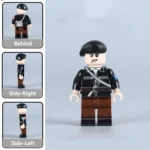
This custom building block minifigure specifically represents a member of the French Resistance (often referred to as the Maquis or FFI – French Forces of the Interior) during the Second World War.
Uniform and Equipment Details
-
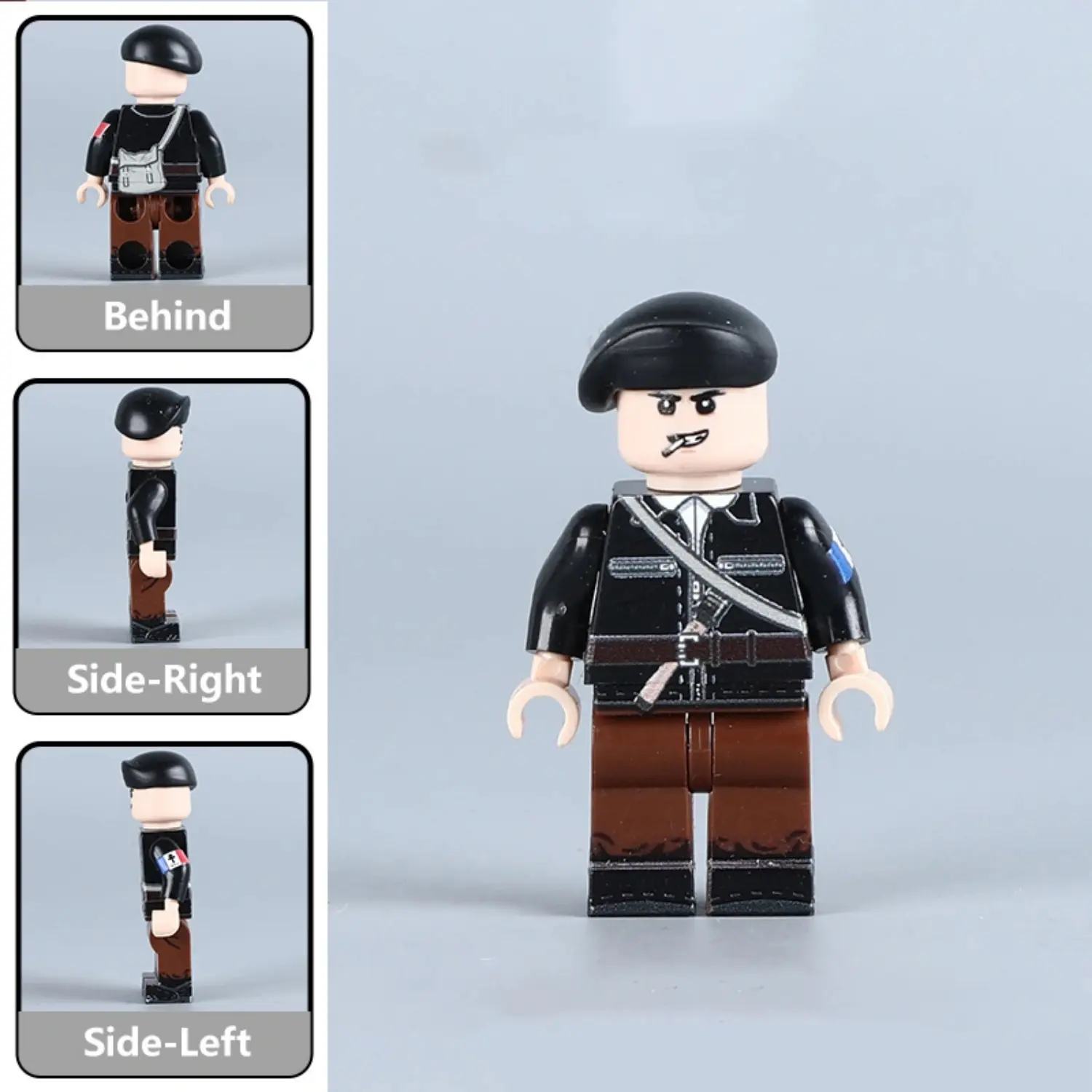
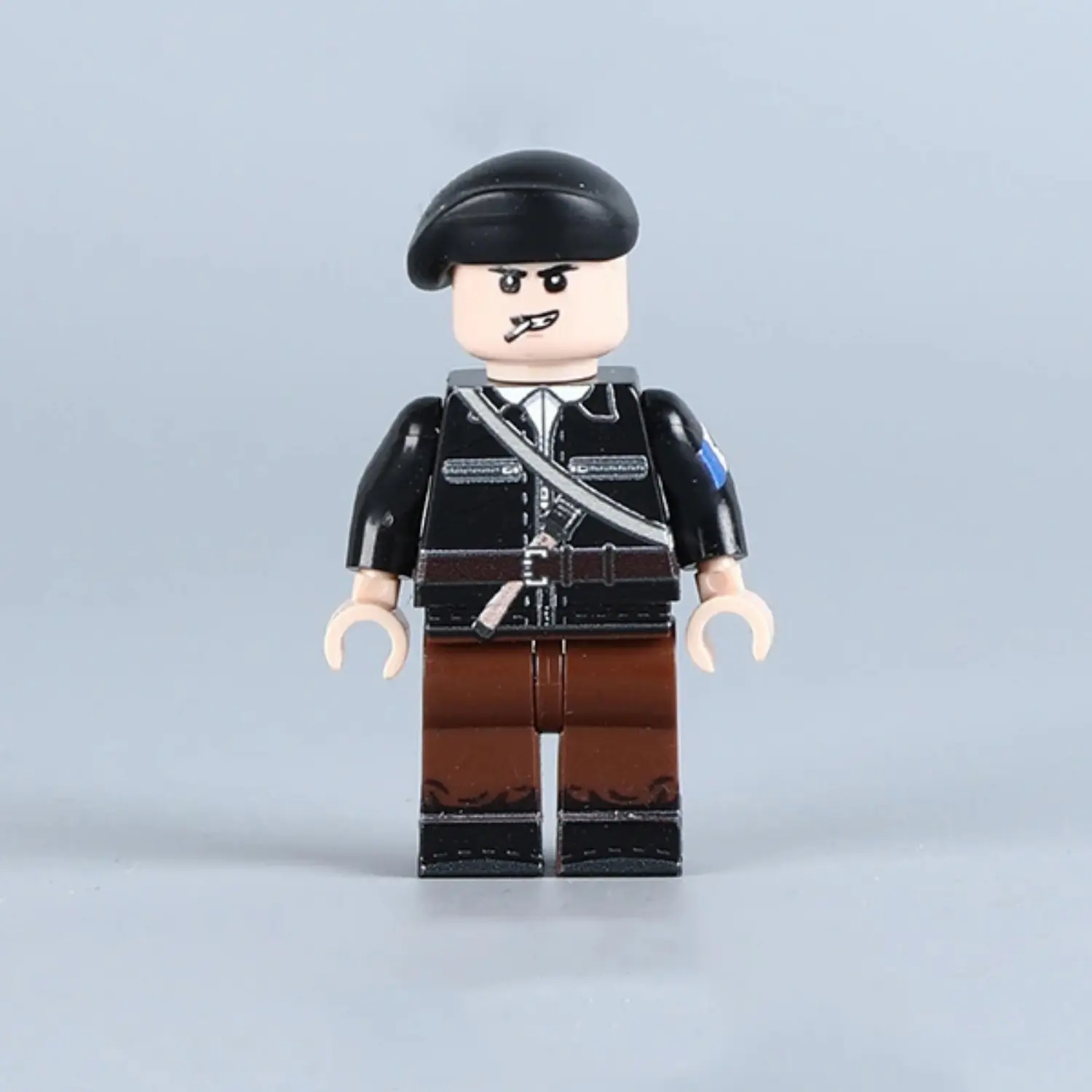
Headgear: The figure wears a classic black Beret, a timeless symbol of French culture that was adopted by resistance fighters as a practical and patriotic piece of headgear.
-
Clothing: He is dressed in a mix of civilian and paramilitary attire, featuring a black button-up jacket over a white-collared shirt and brown trousers tucked into black boots. This “everyday man” look reflects the clandestine nature of the resistance.
-
Insignia: On the left arm, there is a prominent Tricolour (Blue, White, Red) armband featuring the Cross of Lorraine. This was the official symbol of Free France led by General Charles de Gaulle and served as the rallying sign for those fighting against German occupation.
-
Gear: The torso is printed with a brown leather belt and a silver-buckled strap running diagonally across the chest. On his back, he carries a grey satchel or messenger bag, likely used for carrying explosives, secret documents, or extra ammunition.
-
Character Expression: The face print features a smirking expression with a cigarette in the corner of his mouth, capturing the rugged and defiant “underground” persona of a guerrilla fighter.
Historical Background
The French Resistance played a vital role in the liberation of France during World War II. After the fall of France in 1940, diverse groups of men and women formed “underground” networks to sabotage German infrastructure, gather intelligence for the Allies, and assist downed Allied pilots.
Members of the Resistance, known as Maquisards, often operated in rural areas or within occupied cities. Because they were not part of a formal standing army, they rarely had standard uniforms. Instead, they wore civilian clothes with specific markers—like the Cross of Lorraine armband—to identify themselves to allies during the heat of battle. Following the D-Day landings in June 1944, these fighters intensified their efforts, significantly disrupting German reinforcements and helping Allied forces reclaim French territory.
Reviews
There are no reviews yet