

Variations
Introduction
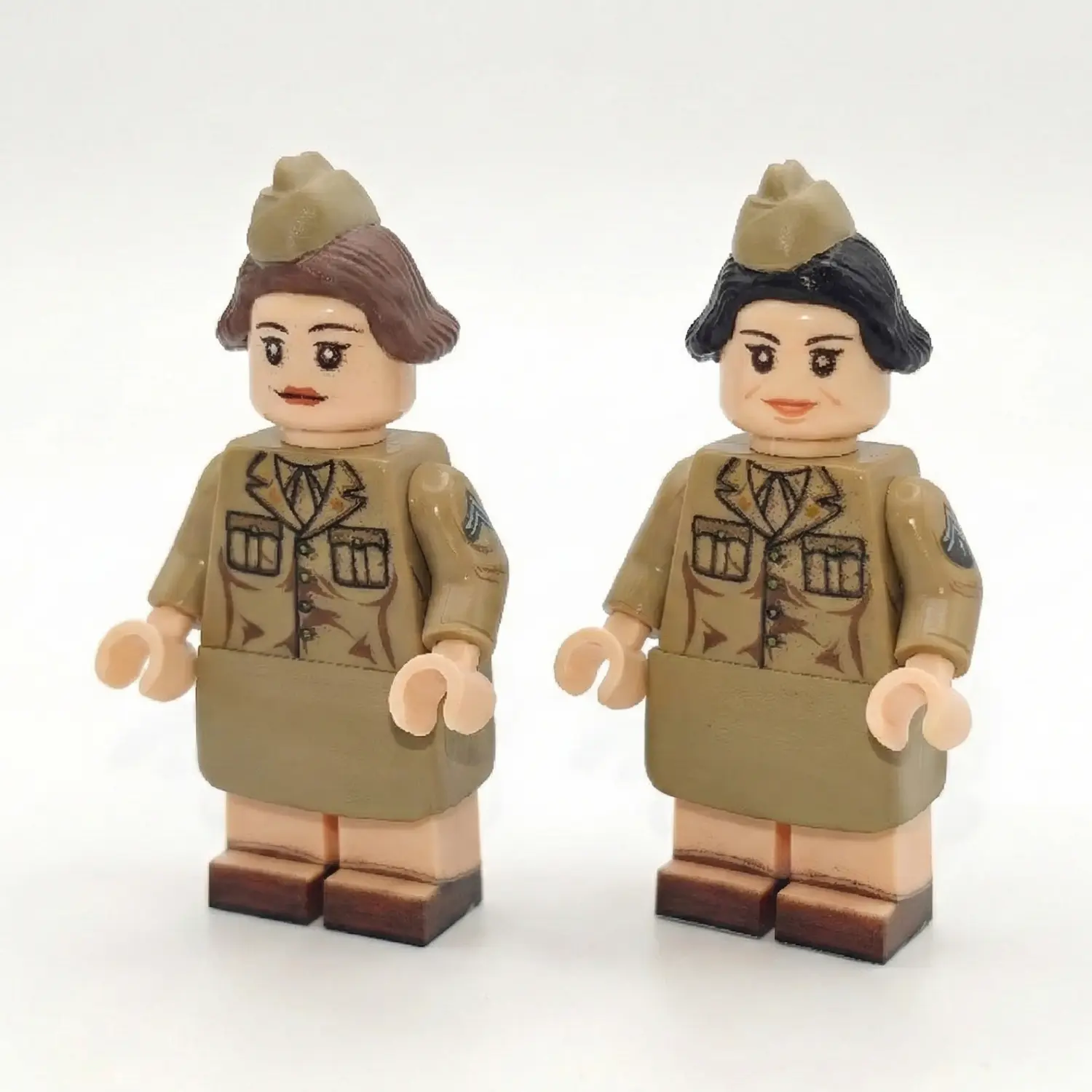
The image displays two custom building block minifigures representing soldiers from the World War II United States Women’s Army Corps (WAC). Both figures are dressed in the authentic Khaki Summer Service Uniform, which features a sharply tailored tunic jacket paired with a matching khaki skirt instead of standard military trousers, completed with standard brown service shoes. Both women wear the classic khaki garrison cap (often called an overseas cap) tilted to the side, but they have distinct hair colors and specific rank insignia printed on their left sleeves that tell their individual historical stories.
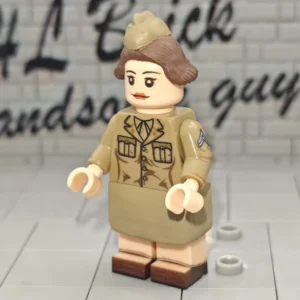
The character on the left is a WWII WAC Corporal. This figure is distinguished by her molded brown hairpiece and the insignia on her left shoulder sleeve, which displays two chevron stripes. In the US military, these two stripes specifically designate the rank of Corporal, a junior Non-Commissioned Officer (NCO). Historically, achieving the rank of Corporal meant this woman had proven her capability in her specific non-combat trade and was given junior leadership and supervisory responsibilities over other enlisted privates working in clerical, supply, or communication roles.
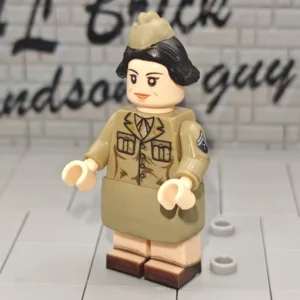
The character on the right is a WWII WAC Technician Fifth Grade (often abbreviated as Tec 5). This figure features a black hairpiece, and her left sleeve displays the printed chevron of a Technician rank, characterized by the stripes with a small letter “T” centered directly beneath them. Historically, the US Army established Technician ranks during WWII to recognize soldiers who possessed highly specialized, critical technical skills but who did not serve in a combat leadership role. Women holding this specific rank often worked as highly trained radio operators, cryptographers, switchboard operators, or motor pool mechanics.
During World War II, the creation of the Women’s Army Corps (WAC) was a massive cultural milestone. It allowed over 150,000 American women to volunteer and serve in the regular military under the famous rallying cry, “Free a man to fight.” While they were kept out of direct frontline combat, their contributions in these administrative, logistical, and technical roles were absolutely vital to the Allied victory. This specific lightweight khaki uniform was the standard issue for warm weather environments, stateside training camps, or rear-echelon headquarters both in the US and overseas.
Reviews
There are no reviews yet