

Character Identification
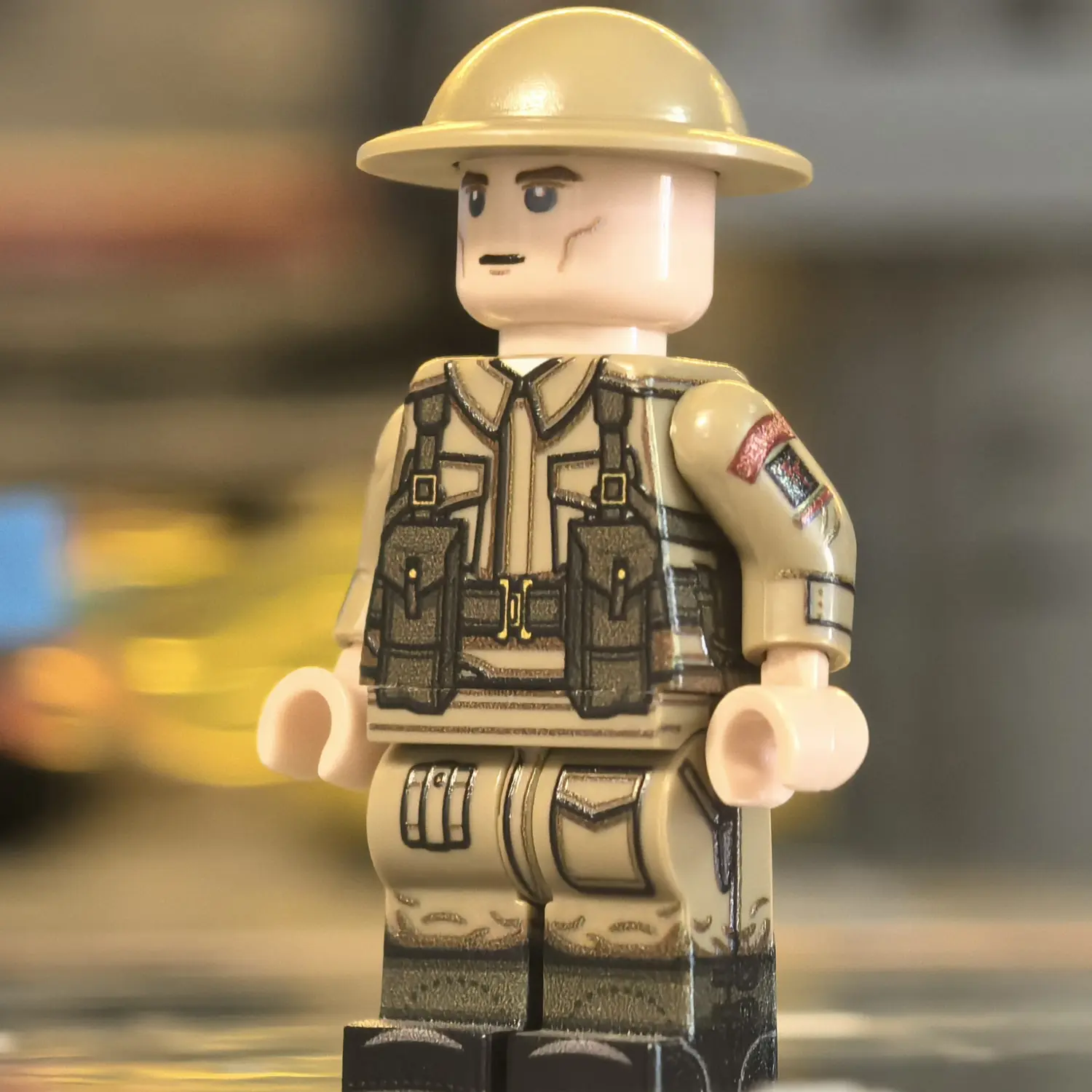
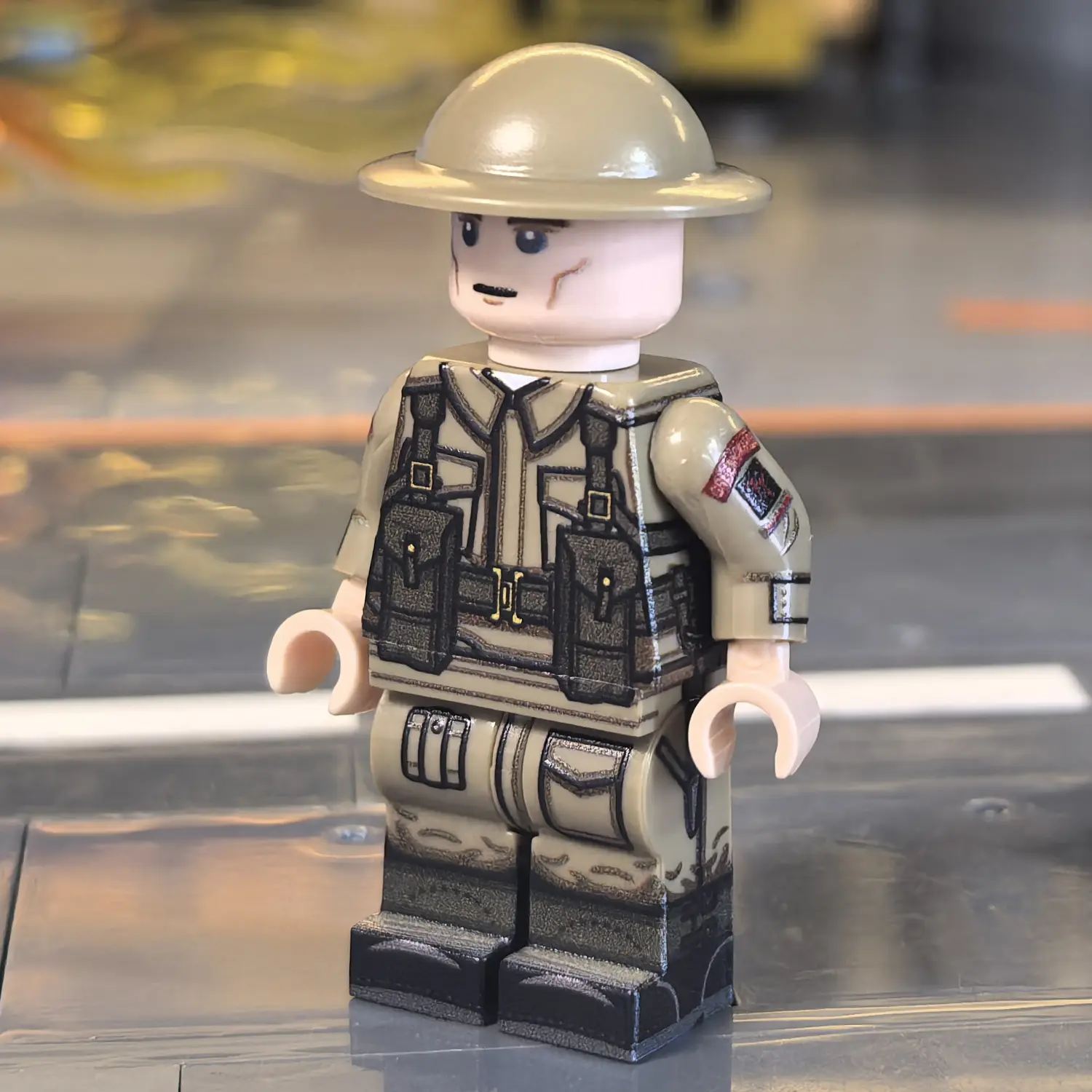
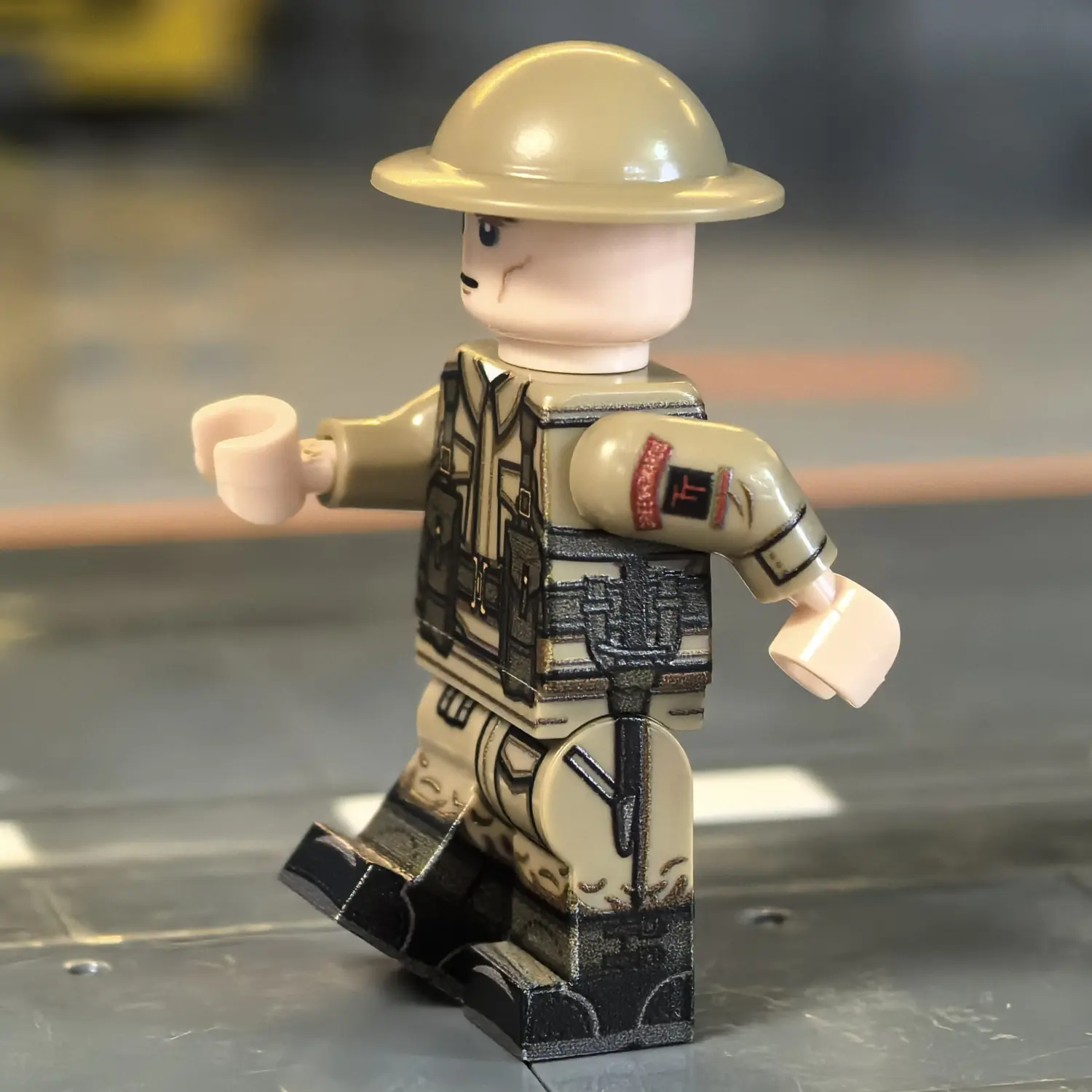
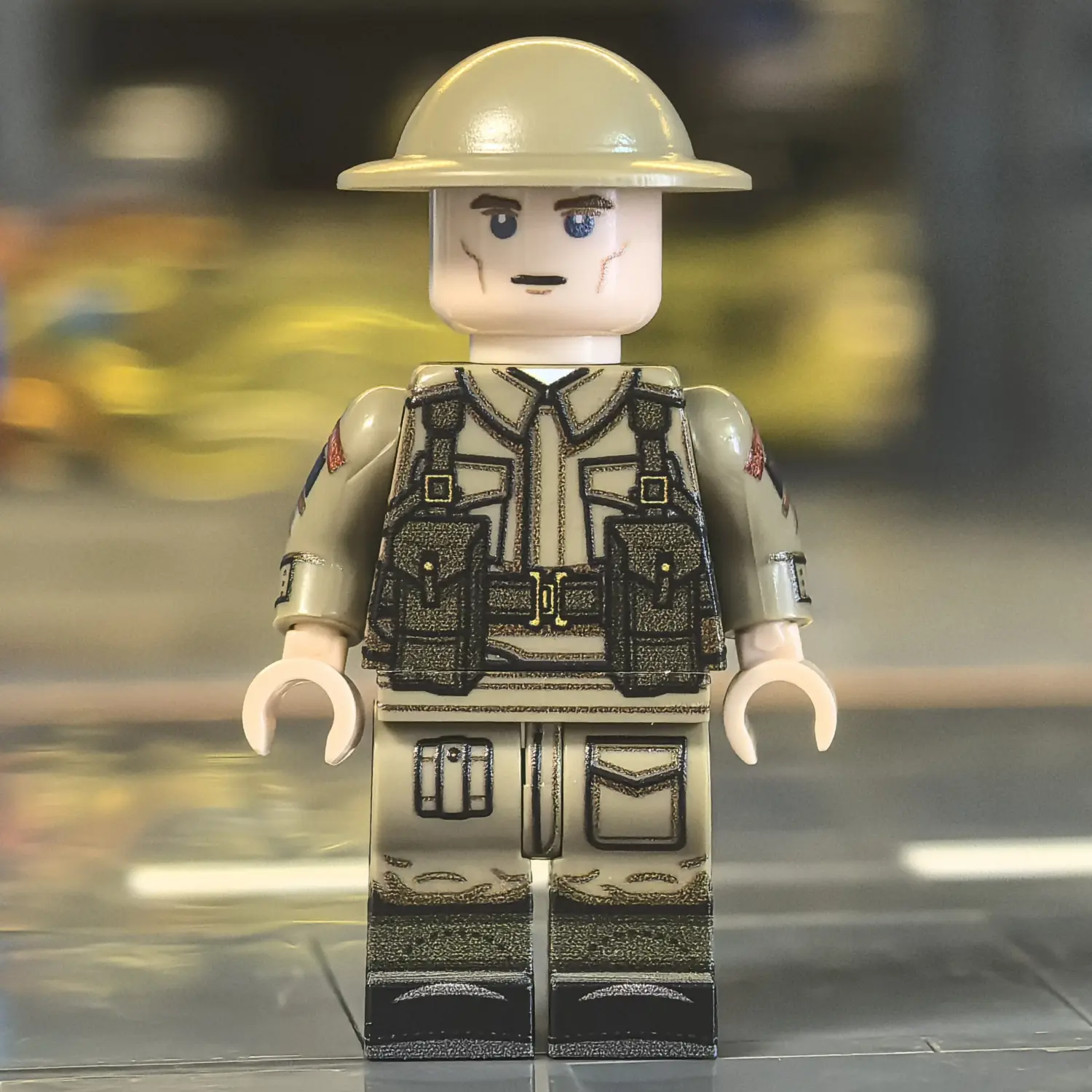
Specific Name: WWII British Army Infantryman (The “Tommy” – Pattern 37 Battle Dress)
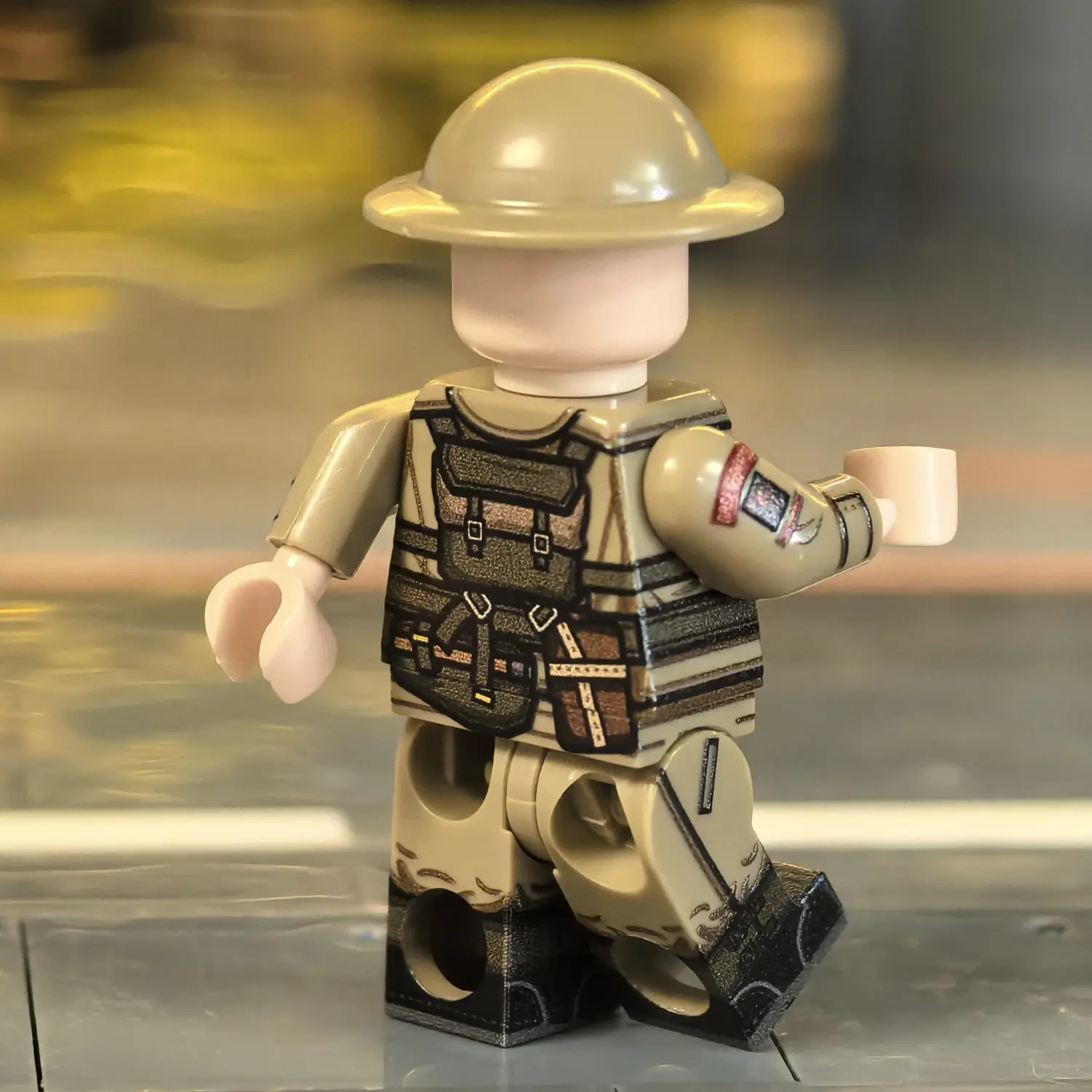
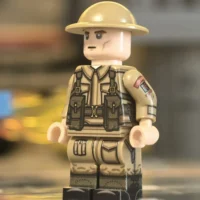
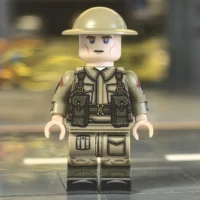
This figure represents a standard British Commonwealth Soldier from World War II. The filename explicitly refers to “P37,” which stands for the Pattern 1937 Web Equipment, the standard issue tactical gear for British forces throughout the war.
Visual Description
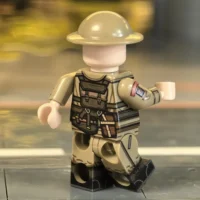
This custom-printed minifigure is designed with highly accurate details specific to the British Army:
-
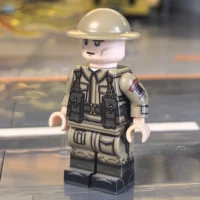
The Webbing (P37): The defining feature of this figure is the printed equipment on his chest. He wears the Pattern 37 Webbing harness. You can see the two large, boxy Basic Pouches on the chest, which were designed to hold Bren gun magazines, grenades, or rifle ammunition. The brass buckles and canvas texture are clearly detailed.
-
Headgear: He wears the iconic Mk II “Brodie” Helmet. This wide-brimmed steel helmet is synonymous with British troops in both World Wars. The color matches the uniform, suggesting a desert or arid environment camouflage.
-
Uniform: He is dressed in the 1937 Pattern Battle Dress (or potentially Khaki Drill for North Africa). The tunic features the characteristic pleated breast pockets and a concealed button fly.
-
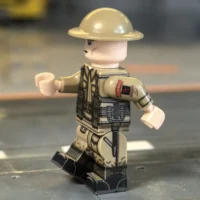
Unit Insignia: On his left sleeve, there are specific printed details:
-
Shoulder Title: A red curved patch (known as a “flash”) at the top, typically identifying the regiment.
-
Divisional Patch: Below that is a square patch, likely a Divisional Insignia (such as the 7th Armoured Division “Desert Rats” or an Infantry Division patch).
-
-
Legs: The legs feature printed Anklets (Gaiters) worn over black “Ammo Boots”. This short canvas legging style replaced the long WWI puttees and is a hallmark of the WWII British soldier. There is also a large map pocket printed on the front left thigh, a specific feature of Battle Dress trousers.
Historical Background
-
“Tommy”: British soldiers were affectionately known as “Tommies.” They fought in every major theater of the war, from the deserts of North Africa to the jungles of Burma and the beaches of Normandy.
-
Pattern 37 Gear: This webbing system was revolutionary for its time, made of pre-shrunk cotton webbing (often treated with a colored paste called “Blanco”). It was modular, allowing soldiers to detach or add pouches depending on their role (rifleman, officer, etc.).
-
Battle Dress: The short jacket and high-waisted trousers seen here were designed for mechanization and ease of movement, influencing military fashion worldwide (even the US “Ike Jacket” was based on it).
Reviews
There are no reviews yet