
Variations
-

Minifigure – Late Qing Kansu Brave / Gansu Army Soldier (Wuwei Rear Division – Dong Fuxiang’s “Muslim Braves”) (LEGO Compatible)
$9.99 -
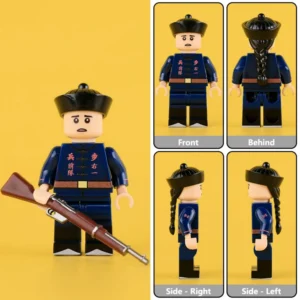
Minifigure – Late Qing Dynasty Infantry Soldier / Squad Leader (Imperial Chinese Army – “New Army” Era) (LEGO Compatible)
$9.99 -
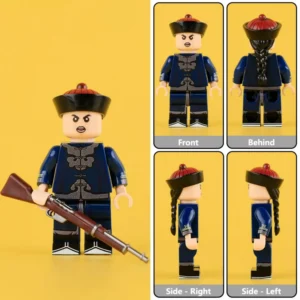
Minifigure – Late Qing Dynasty Imperial Soldier / Bannerman (Manchu Army Infantry) (LEGO Compatible)
$9.99 -
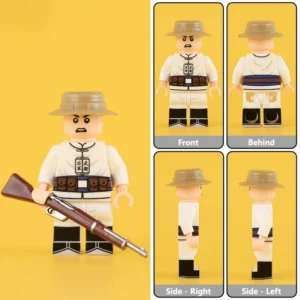
Minifigure – Late Qing Dynasty “Wuwei Corps” Soldier (Right Division) (Imperial Chinese Army – Yuan Shikai’s New Army) (LEGO Compatible)
$9.99
Introduction
Product Overview: Late Qing Dynasty Imperial Army Series
(The “New Army” & Boxer Rebellion Era Squad)
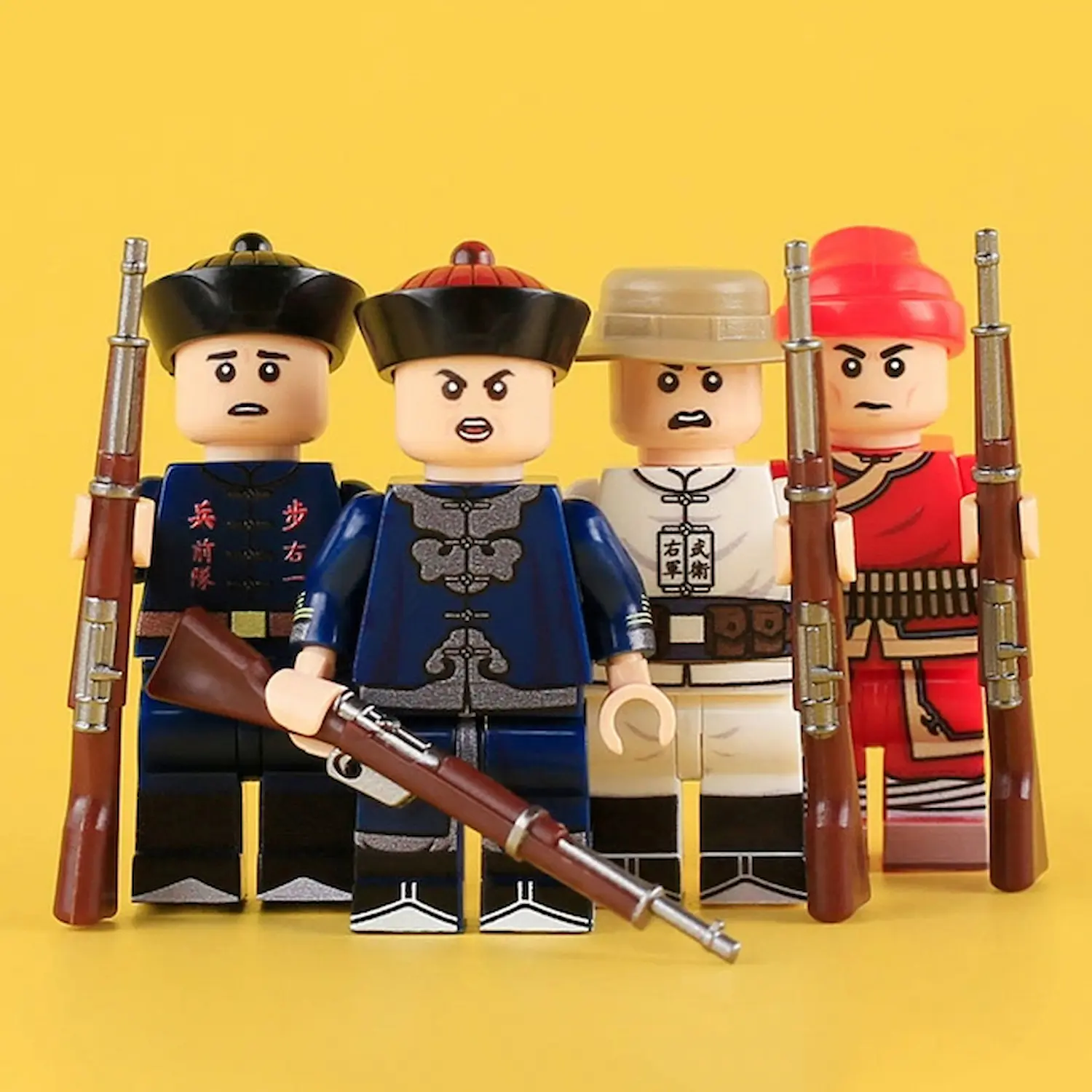
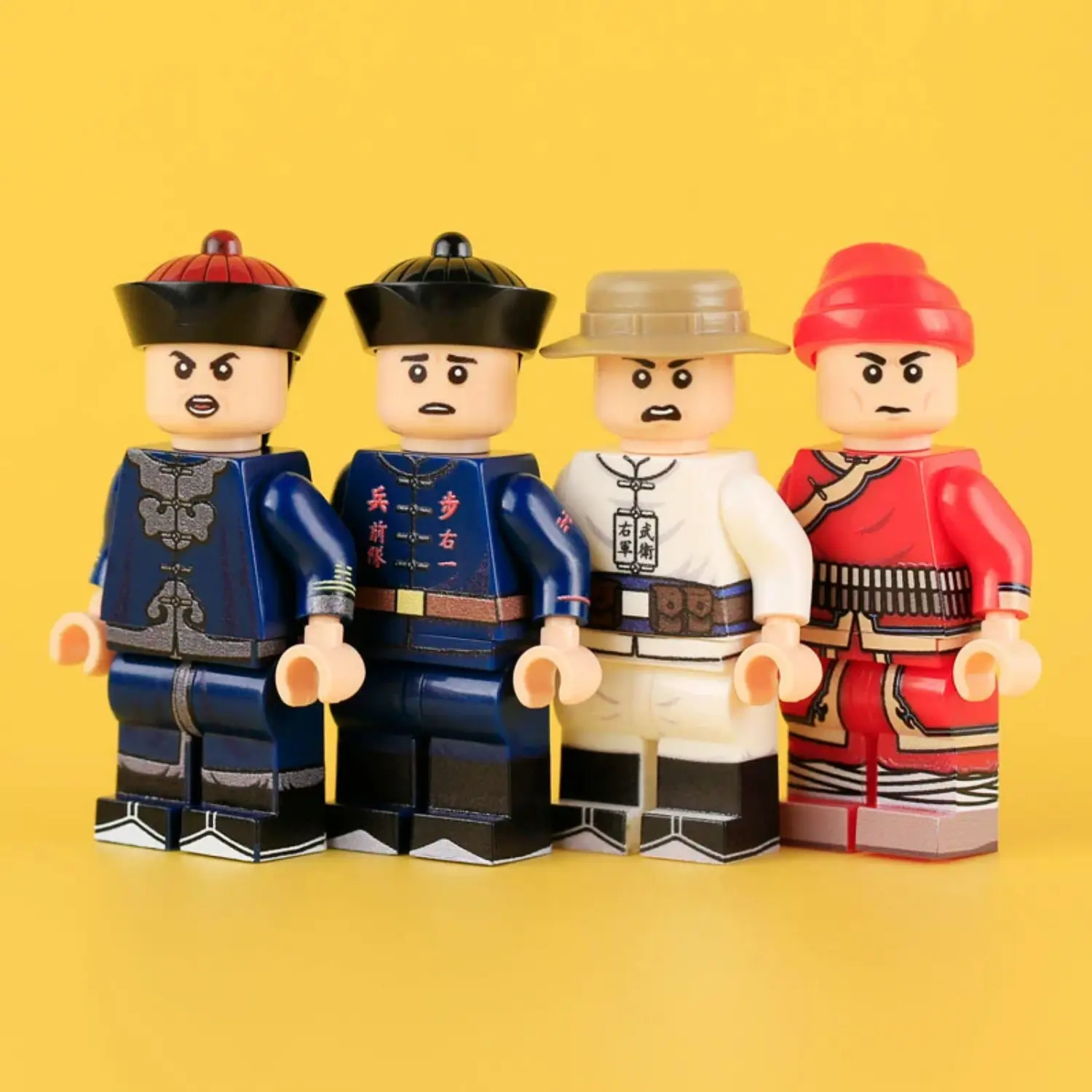
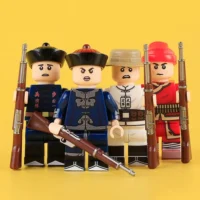
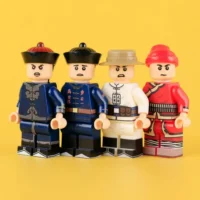
This image displays a set of four historical figures representing the diverse and chaotic military forces of the Great Qing Empire (China) during the late 19th and early 20th centuries (approx. 1895–1911). This specific collection illustrates the “Self-Strengthening Movement,” where traditional Manchu units fought alongside modernized Western-style corps and regional militias.
Here is the breakdown of the four characters, from left to right:
1. The Provincial Infantryman (Far Left)
Specific Name: New Army / Provincial Vanguard Soldier
-
Visual Description: This soldier wears a functional Dark Blue Tunic typical of the “Green Standard Army” or early modernized units.
-
Insignia: The red Chinese text on his chest reads “Infantry – Right – First” (right side) and “Soldier – Vanguard Squad” (left side).
-
Headgear: He wears the black official’s cap with a black knob.
-
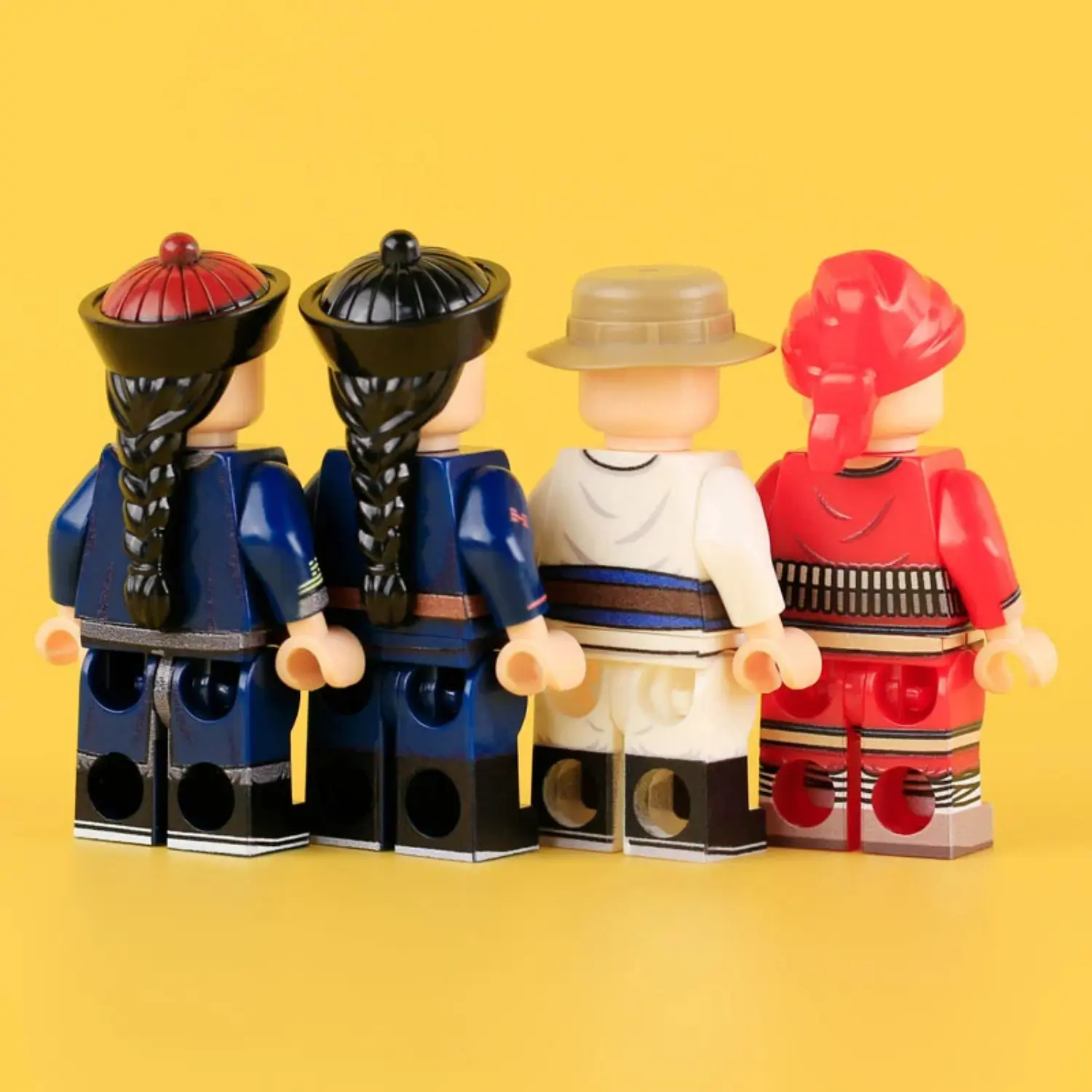
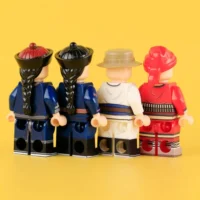
Historical Context: He represents the transitional soldier—drilled in Western tactics and armed with a modern Bolt-Action Rifle, but still wearing the traditional cloth uniform and queue (braid) of the empire.
2. The Imperial Bannerman (Center Left)
Specific Name: Manchu Eight Banners Soldier / Officer
-
Visual Description: This figure is the most traditional of the group. He wears a Dark Blue Tunic featuring elaborate Grey/Silver Embroidery on the chest (cloud or knot patterns), indicating a higher status or a more prestigious unit like the capital guards.
-
Headgear: He wears the official hat topped with a prominent Red Finial (Knob), which denoted rank in the Qing civil and military hierarchy.
-
Role: Historically, the Bannermen were the elite hereditary troops of the Emperor. By 1900, they were often considered ineffective, but many were re-equipped with rifles like the one this figure carries to defend Beijing.
3. The Modernized Soldier (Center Right)
Specific Name: Wuwei Corps (Right Division) Soldier
-
Visual Description: Distinct from the others, he wears a White/Cream Summer Uniform with a blue sash.
-
Insignia: The text on his chest identifies him as “Wuwei Right Army,” the unit commanded by the powerful general Yuan Shikai.
-
Headgear: He wears a tan Broad-Brimmed Hat (straw or pith style), practical for field campaigns.
-
Historical Context: The “Wuwei Corps” (Guards Army) was the most modern fighting force in China at the time. The Right Division specifically was trained by German instructors and became the foundation of the famous Beiyang Army.
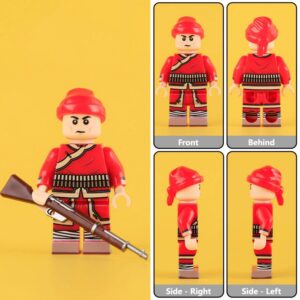
4. The Kansu Brave (Far Right)
Specific Name: Muslim “Brave” / Gansu Army Soldier
-
Visual Description: He is instantly recognizable by his All-Red Uniform and Red Turban.
-
Gear: A heavy Ammo Bandolier is printed around his waist, emphasizing his role as a frontline shock trooper.
-
Historical Context: These were Chinese Muslim troops from the west (Gansu province) led by General Dong Fuxiang. Known as the “Kansu Braves,” they were feared for their ferocity during the Siege of the Legations (1900), where they fiercely attacked foreign forces in Beijing.
Historical Background
-
The Boxer Rebellion (1900): This set perfectly encapsulates the Chinese forces that fought against the Eight-Nation Alliance. You have the Kansu Braves (who led the attacks), the Wuwei Corps (who defended the capital), and the Bannermen (who guarded the Forbidden City).
-
Weapons: All figures are armed with Mauser-style Rifles (likely Hanyang 88s), accurately reflecting the Qing Dynasty’s massive importation of German arms to modernize their military before its collapse in 1911.


Reviews
There are no reviews yet