
Character Identification
Specific Name: Qing Dynasty Imperial Army Officer / Commander
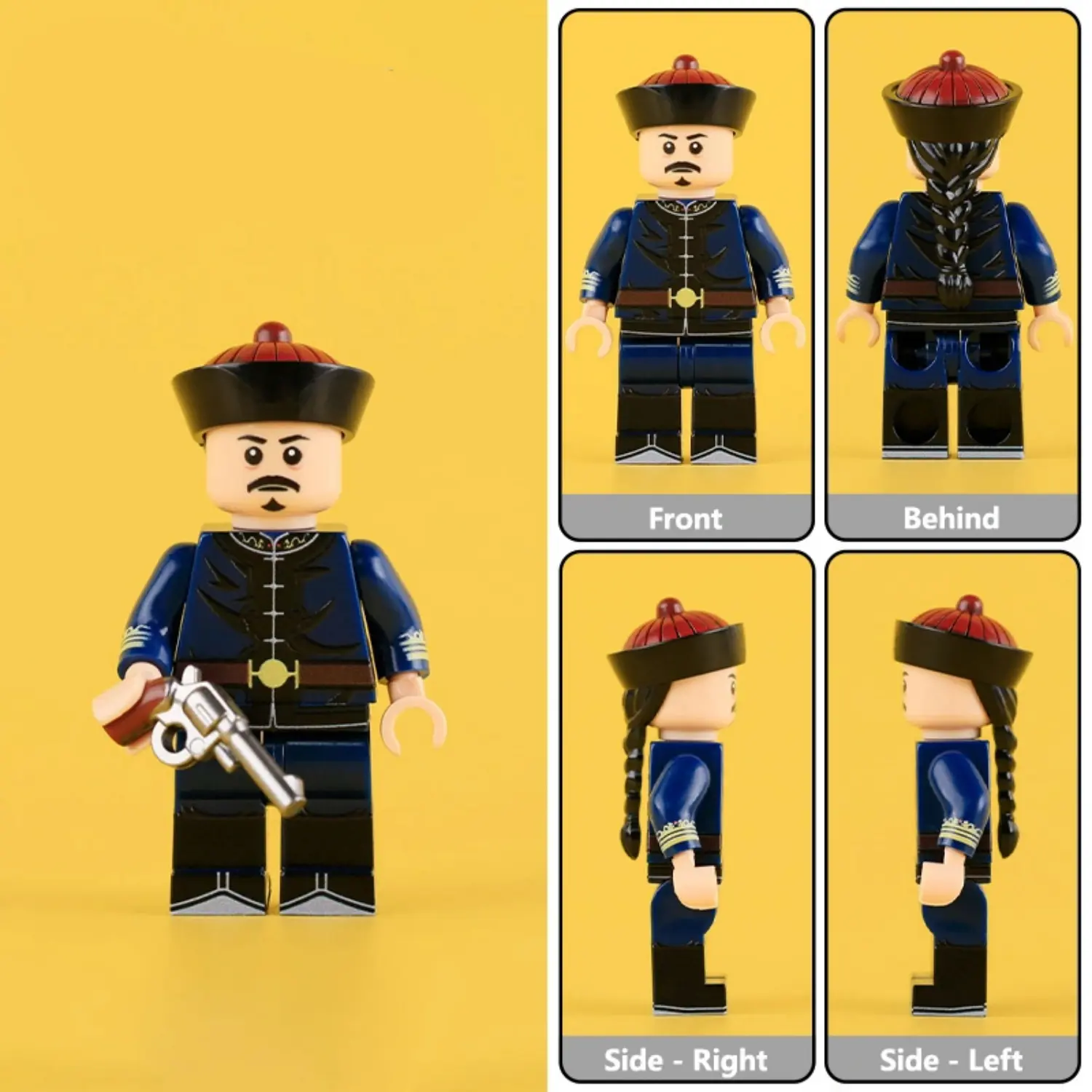
The text explicitly labels this figure as “MTUV094 Qing Dynasty Officer”. This represents a high-ranking military leader from the Late Qing Dynasty (late 19th to early 20th century), characterized by the blend of traditional Manchu attire and modern Western weaponry.
Visual Description
This custom-printed minifigure features specific details that denote rank and the transitional period of Chinese military history:
-
Headgear: He wears the traditional Official’s Hat (Guanmao) in black with an upturned brim and a prominent Red Button/Knot on the crown. In the Qing ranking system, the color and material of the hat knob denoted specific rank levels.
-
Hair (Key Cultural Detail): The back view clearly shows a long, braided Queue (Pigtail). This hairstyle was mandatory for all male subjects of the Qing Empire; cutting it off was considered treason, while keeping it was a sign of loyalty to the Manchu court.
-
Face: The figure has a printed Mustache and Goatee, giving him a stern, mature, and authoritative appearance suitable for a commander.
-
Uniform: He wears a dark blue Magua (Riding Jacket) featuring traditional frog buttons.
-
Rank Insignia: Uniquely, the sleeves feature Three Gold Stripes. This styling mimics Western naval or army rank braiding, reflecting the modernization efforts of the “Self-Strengthening Movement” where Western military standards were being adopted.
-
-
Weapon: He holds a silver Revolver. The pistol is historically significant as it was exclusively an officer’s sidearm. Its presence dates this figure to the late 1800s (e.g., during the Boxer Rebellion or First Sino-Japanese War), distinguishing him from soldiers who would carry spears or swords in earlier eras.
Historical Background
-
The Self-Strengthening Movement: This figure represents a pivotal moment in Chinese history. While he wears the traditional clothes of the old empire, he carries a modern firearm. This reflects the Qing Dynasty’s desperate attempt to modernize its military with Western technology while maintaining traditional Chinese/Manchu culture.
-
The Officer’s Role: Officers like this would have commanded units such as the “New Army” or regional defense forces. They were often caught between the rigid traditions of the Imperial Court and the harsh reality of modern industrial warfare against foreign powers.
-
The Revolver: The importation and later domestic production of revolvers (like the Mauser C96 or Webley copies) changed close-quarters combat for Chinese officers, replacing the traditional Jian (sword) as the primary symbol of authority on the battlefield.
Reviews
There are no reviews yet