

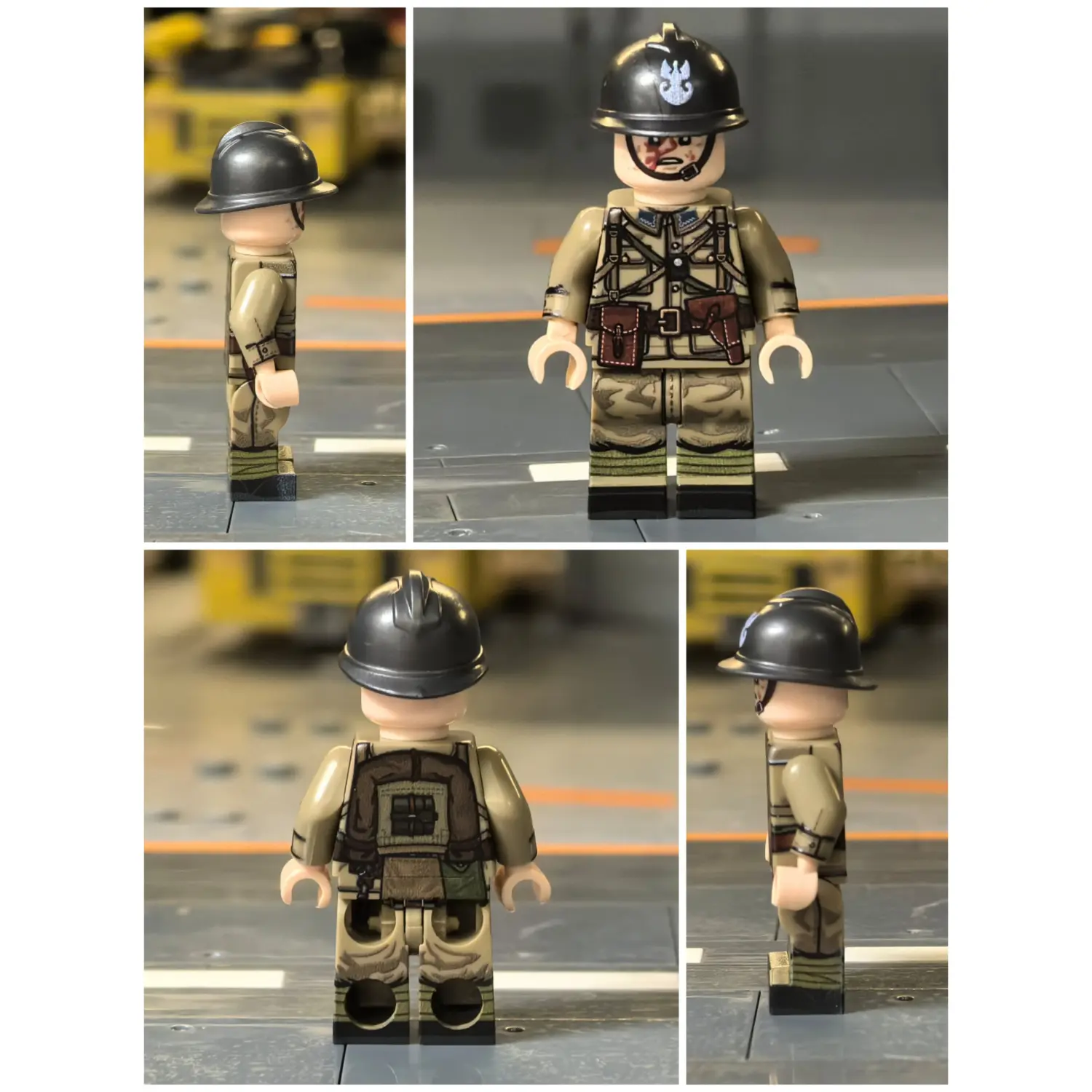
The Figure: WWII Polish Light Machine Gunner (Madsen Gunner)
This toy minifigure represents a battle-hardened soldier of the Polish Army during the 1939 Defensive War. According to the file name (“Madsen Machine Gunner”), he is a specialist trained to operate the Madsen Wz. 1903/24 light machine gun, a weapon widely used by Polish cavalry and infantry units.
-
Headgear: He wears the dark green Wz.15 Adrian Helmet featuring the painted White Eagle (Orzeł Biały) on the front.
-
Significance: The presence of the Adrian helmet suggests this soldier might belong to a cavalry brigade or a reserve unit, as frontline infantry were transitioning to the newer Wz.31 helmet. The white eagle remains the symbol of his defiance against the invaders.
-
-
Face (Battle Damage): Unlike the other figures in this series, this soldier features a “Wounded” Face Print. There are distinct traces of blood and dirt on his right cheek and chin. This detail emphasizes the brutal reality of the September Campaign, depicting a soldier who has already survived close-quarters combat or shelling.
-
Uniform: He wears the standard Khaki Field Tunic with Blue Zig-Zag Collar Patches (Patki), identifying him as Infantry.
-
Tactical Gear:
-
Ammunition Pouches: The printing on his belt shows large, brown leather pouches distinct from the standard rifleman’s clip pouches. These are designed to hold the curved top-loading magazines for the Madsen machine gun.
-
Pistol Holster: A brown leather holster is printed on his left hip. Machine gunners carried pistols (like the Vis wz. 35) for self-defense since their primary weapon was heavy and difficult to use in sudden close encounters.
-
Backpack: The rear view shows full field marching gear, including a backpack frame and rolled bedding, indicating he is on a long deployment.
-
Historical Background: The Madsen Machine Gun was one of the first true light machine guns in the world. Poland purchased them in the 1920s and used them extensively in the Cavalry Brigades and armored trains. During the German invasion in 1939, gunners like this one provided crucial mobile fire support. The “wounded” look of this figure pays tribute to the intense and often desperate fighting Polish troops endured while delaying the Wehrmacht’s advance toward Warsaw.
Reviews
There are no reviews yet