

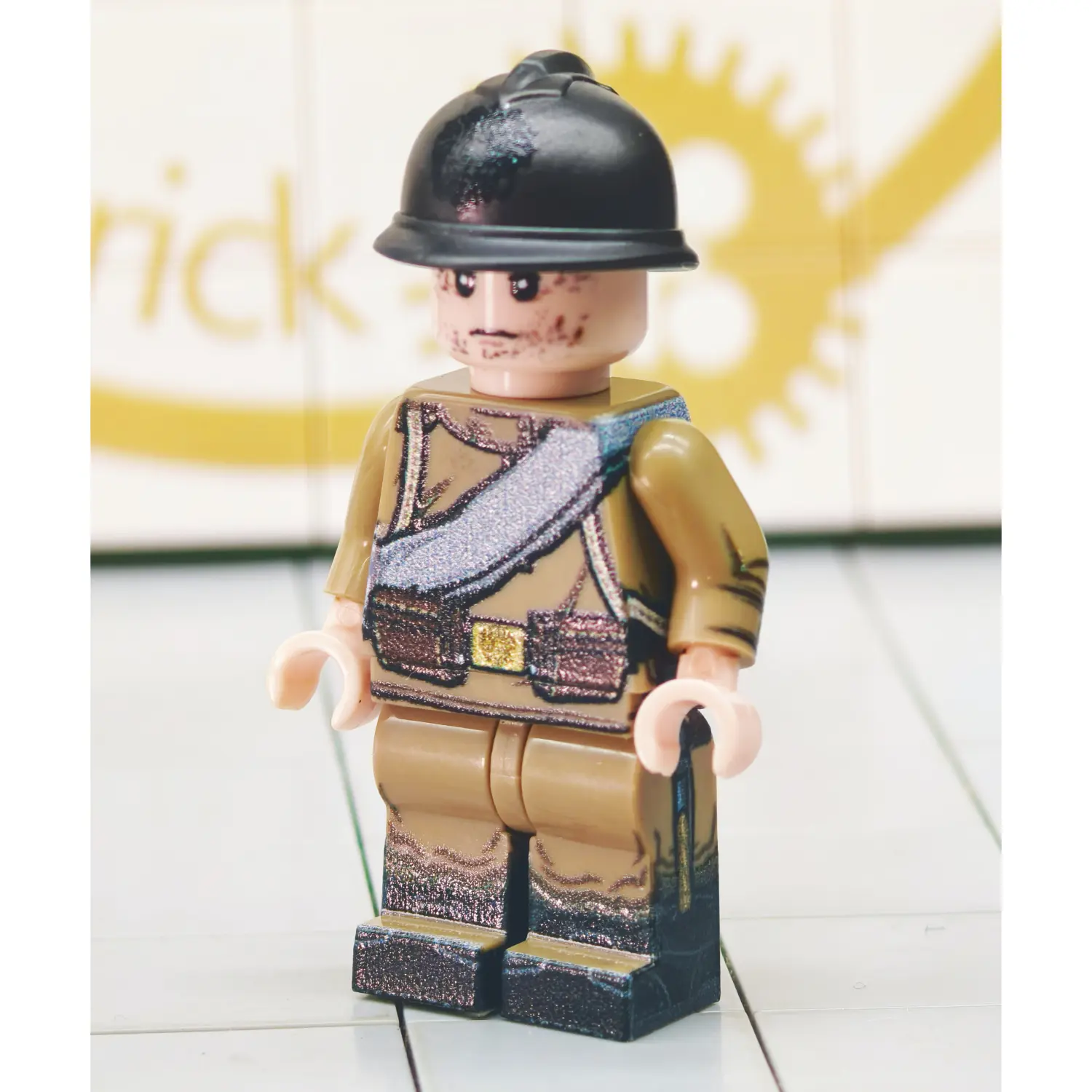
The Figure: WWI Russian Imperial Infantryman (Battle-Worn Version)
This toy minifigure represents a Russian Imperial Army Soldier (Ryadovoy) during World War I, specifically depicting a soldier who has been in the thick of trench warfare. While very similar to the previous infantryman, this figure is distinguished by his “Battle-Damaged” appearance, representing the grueling reality of the Eastern Front.
-
Headgear: He wears a dark M1915 Adrian Helmet.
-
Historical Context: As noted with the previous figures, the Russian Empire received large shipments of these helmets from their French allies. By 1916, they were commonly issued to shock battalions and the Russian Expeditionary Force in France.
-
-
Distinctive Gear (The Skatka): Like his comrade, he wears the iconic Grey Rolled Greatcoat (Skatka) draped diagonally across his torso from left shoulder to right hip. This method of carrying the heavy wool coat was unique to the Russian army and offered minor protection against bayonet thrusts.
-
Uniform: He wears the standard Khaki “Gymnastirka” Tunic.
-
Belt: The print details show a brown leather belt with the gold Imperial Eagle Buckle, the symbol of the Tsar.
-
-
Face (Key Difference): The most defining feature of this specific figure is the Face Print. Unlike the cleaner soldiers, his face is covered in Dirt, Stubble, and Splatter (mud or dried blood). This gritty detail captures the exhaustion and harsh conditions of trench life, where soldiers often went weeks without washing or shaving.
-
Legs: The legs feature “dual-molded” or printed Black Boots, representing the high leather jackboots (sapogi) worn by Russian troops. The bottom of the tunic is printed onto the hips for a seamless look.
Historical Background: The “Russian Steamroller” mobilized millions of men, but they faced severe logistical issues. Soldiers on the front lines endured freezing winters, mud, and artillery barrages often without adequate supplies. This figure, with his dirty face and mismatched gear (French helmet, Russian uniform), perfectly embodies the 1916-1917 era soldier—exhausted but enduring, fighting right up until the collapse of the Empire and the Russian Revolution.

Reviews
There are no reviews yet